Why Your Content Isn't Getting Cited by AI Tools (And What to Do About It)
Last updated: 20 August 2026
The rank citation gap occurs when AI tools skip your content because they cannot extract a clean, self-contained answer from your opening sections. If your first few hundred words lack a direct response to common queries, retrieval systems pull from competitors instead. Your Google ranking offers no protection here. The solution requires restructuring how you present information at the page level.
Word count: 71
The gap is measurable. Straight North's analysis of AI citation behavior found that a lower-ranking page regularly wins the citation because it gives the AI a clearer, more specific, or better-supported answer to one part of the query. Your position-one article can lose to a position-six article that simply structured its answer better.
That cost is real: visibility in AI-generated responses is decoupled from your existing SEO standing. Traffic you assumed was safe may not be.
The Rank Citation Gap Explained in Plain Terms
A site can rank on page one of Google and still never appear in a ChatGPT or Perplexity response. The rank citation gap is real, it's measurable, and closing it requires different tactics than traditional SEO. The two fastest fixes are adding structured schema markup and rewriting introductions to lead with a direct answer. Tools that poll AI engines weekly can show you exactly where you stand.
A few things worth knowing upfront:
The rank citation gap in one sentence: AI engines pull citations from sources that answer a query directly and credibly, not from sources that merely rank well for related keywords.
Why ranking doesn't equal citation: Google's algorithm rewards relevance signals like backlinks and keyword density. AI retrieval systems weight answer structure, source authority, and schema clarity. A 2026 data study on AI citation ranking factors found that pages with structured schema and answer-first formatting were cited significantly more often than high-ranking pages without those features.
The two fastest fixes: Add FAQ or Article schema to your top pages, and rewrite your opening paragraphs so the core answer appears in the first 40 to 60 words. Both changes can be deployed without a full content overhaul.
How to track citation rate: Dedicated monitoring tools poll ChatGPT, Perplexity, Claude, and Gemini on your target prompts and log which URLs each engine cites. Without that kind of tracking, you're guessing.
One honest trade-off: these fixes work best on informational content. If your site is primarily transactional (product pages, pricing, checkout flows), schema and answer-first structure help less, because AI engines rarely cite commercial pages as authoritative sources. That's a real limitation worth weighing before you invest heavily in restructuring content that was never built to be quoted.
What a Citation Gap Is (And Why It Matters)

A citation gap is the measurable distance between where your content ranks in traditional search and how often AI tools actually cite it in their responses. A page can sit at position two on Google and still have a 0% citation rate in ChatGPT or Perplexity. Those are two separate scoring systems, and performing well in one gives you almost no advantage in the other.
Rank tracking and AI citation tracking are not the same measurement
Traditional rank tracking answers one question: where does your URL appear in a list of ten blue links for a given query? AI citation tracking answers something different. It asks whether a language model, when generating a response, chose your content as a source worth quoting or linking. The inputs are different. The evaluation criteria are different. The output format is different.
Google's ranking algorithm weighs signals like backlinks, page authority, and keyword relevance. AI engines weigh structural clarity, answer specificity, and whether a passage can be extracted and quoted without losing meaning. A page optimized for the first set of signals is not automatically optimized for the second.
Why a number-two ranking can produce a 0% citation rate
The mechanism is straightforward. When Perplexity or ChatGPT generates an answer, it does not crawl the live SERP and pull from the top result. It retrieves content that fits the shape of the answer it is constructing. If your page buries the direct answer in paragraph six, wraps it in qualifications, or structures information as a narrative rather than a retrievable claim, the model skips it, regardless of your domain authority.
A concrete example: a 2,400-word guide ranked second for "how to reduce SaaS churn" might never get cited if the actual churn-reduction steps appear after 800 words of market context. A shorter competitor page that opens with a numbered list of specific interventions gets cited repeatedly because the answer is structurally accessible.
The trade-off worth acknowledging here: closing the citation gap by restructuring content for AI retrieval can sometimes reduce the narrative depth that earns backlinks and dwell time from human readers. A page optimized for extractable answers may perform better in AI citation tracking and slightly worse on engagement metrics. That tension is real, and the right balance depends on how much of your traffic already arrives via AI-referred queries versus organic search.
Closing the gap starts with recognizing it exists. If you are only watching rankings, you are watching the wrong scoreboard for roughly half of where search behavior is heading.
How AI Decides Which Sources to Cite

AI engines select sources based on three measurable structural signals: entity clarity (does the content name specific people, organizations, and claims precisely?), factual density (does it contain verifiable data points rather than general assertions?), and schema markup (does the page's metadata confirm what the content says it is?). A page that scores well on all three is far more likely to be pulled into a citation than a page that merely ranks well on Google.
The three signals that actually matter
Entity clarity means the content leaves no ambiguity about who is making a claim and in what context. A sentence like "researchers found that engagement improved" gives an LLM nothing to anchor. A sentence like "a 2024 Nielsen study of 1,200 B2B buyers found a 41% improvement in email engagement after personalization" gives it a named source, a date, a sample size, and a specific figure. That is the kind of passage an AI engine can quote with confidence.
Factual density follows the same logic. Research on AI citation selection factors identifies earned authority and citation architecture as the other two pillars alongside entity clarity, and all three reinforce each other: a factually dense page with clear entities and structured metadata is harder for an AI engine to ignore.
Schema markup is the most underused of the three. JSON-LD that correctly identifies an article's author, publication date, and organization gives the retrieval layer a trust shortcut. Without it, the engine has to infer those details from prose, and inference introduces uncertainty that pushes the page down the selection queue.
Why generic AI-generated content rarely gets cited
A page can sit in Google's top three results and still never appear in a Perplexity or ChatGPT response. The numbers make this concrete: only 38% of AI Overview citations come from pages in Google's organic top 10, down from 76% in mid-2025. The gap exists because AI engines are not re-running a ranking algorithm. They are selecting sources they can quote with low reputational risk.
Generic AI-generated content fails this test almost by design. It tends to be structurally smooth but factually thin, full of hedged generalities that an LLM cannot attribute to anyone. The irony is that content written to sound authoritative often lacks the specific claims that would make it citable. AI engines are, in a meaningful sense, risk-minimizing systems. They prefer verifiable, attributable data over derivative prose, and original research and primary data consistently outperform polished summaries.
The trade-off worth acknowledging: highly specific, data-dense content can underperform on traditional search if it lacks the broader topical coverage that Google's ranking model rewards. A page built entirely around one precise statistic may earn AI citations but pull thin organic traffic. The practical answer is to layer both, but teams with limited content budgets have to choose where to weight their effort.
How Perplexity, ChatGPT, and Gemini differ
The three engines do not apply identical logic, and treating them as interchangeable is a common planning mistake.
Perplexity operates as a live retrieval system. It fetches pages at query time, which means freshness and crawlability matter more here than in the other two. A page published yesterday with clear entity markup can appear in a Perplexity citation before it has accumulated a single backlink.
ChatGPT's citation behavior (in Browse mode and in GPT-4o web search) skews toward sources with established domain credibility and pages that have been cited by other authoritative sources. It behaves more like a reputation-weighted retrieval system than a pure freshness engine.
Gemini sits somewhere between the two. It pulls from Google's index, so traditional authority signals carry more weight than they do in Perplexity, but its citation selection still diverges from organic ranking in ways that catch most SEO teams off guard. A page optimized for featured snippets has a reasonable head start with Gemini, since the structural requirements overlap, but schema and entity clarity still need to be explicit rather than implied.
The practical implication: a single content format will not maximize citation probability across all three engines. Pages targeting Perplexity need to be crawlable and fresh. Pages targeting ChatGPT need domain-level credibility signals. Pages targeting Gemini benefit from the same structured markup that wins featured snippets, with entity clarity added on top.
The Three Types of Citation Gaps (With a Step-by-Step Audit)

Most content fails to get cited by AI tools because of one of three structural problems: missing markup that parsers can't navigate, thin authority signals that retrieval models down-weight, or prose too broad for an AI to quote with confidence. Identifying which gap you have, before rewriting anything, saves weeks of effort spent fixing the wrong layer.
Gap 1: The Structural Gap
AI engines parse pages the same way a careful librarian catalogs a book. If the table of contents is missing, the chapters are unlabeled, and the index is blank, the book still exists, but nobody can find the right passage quickly.
Structural gaps show up as absent schema markup (no Article, FAQ, or HowTo JSON-LD), headers that don't match the actual question a reader would ask, and missing entity annotations that connect your content to recognized concepts. A page about "churn reduction" that never explicitly names the mechanism, the metric, or the industry context gives a retrieval model almost nothing to anchor a citation to.
The fix is mechanical: add JSON-LD schema, rewrite H2s as direct answers to real queries, and make sure named entities (product names, frameworks, dates, figures) appear in the first 100 words of each section.
Gap 2: The Authority Gap
Retrieval models don't treat all sources equally. Pages with thin backlink profiles or low domain trust get down-weighted in the retrieval step, often before the model evaluates the content itself. This is the hardest gap to close quickly because authority accumulates over time.
The practical short-term move is to concentrate your citation-optimization effort on the pages that already have the strongest backlink profiles. Don't try to make a brand-new page citable by ChatGPT before it has any external credibility. Prioritize pages with at least a handful of referring domains from relevant sources, then layer in structural fixes on top of that existing authority.
Longer term, earning citations in AI responses and earning backlinks from other sites are increasingly the same activity. Original data, primary research, and specific claims that other writers want to reference build both simultaneously.
Gap 3: The Specificity Gap
This is the most common gap and the easiest to fix. Your content covers the right topic but answers it at the wrong altitude. Broad, hedged prose gives an AI engine nothing to quote. Specific, attributable claims give it exactly what it needs.
The test is simple: read your opening three paragraphs and ask whether any sentence could be lifted verbatim and dropped into an AI-generated answer without losing meaning or requiring additional context. If the answer is no, the specificity gap is your problem.
The fix: identify the single most important claim on each page and move it to the first 60 words. State it with a number, a named source, or a defined mechanism. "Email personalization improves open rates" is not citable. "A 2024 Mailchimp study of 14 million sends found that segmented campaigns produced 23% higher open rates than broadcast sends" is.
How to Run a Citation Gap Audit in Four Steps

You don't need a specialized tool to run a first-pass audit. A spreadsheet and 90 minutes will get you far enough to prioritize.
- List your 10 to 20 highest-traffic pages alongside their current Google ranking positions.
- For each page, manually query ChatGPT, Perplexity, and Gemini with the primary keyword that page targets. Note whether your URL appears in the cited sources.
- For any page that ranks in the top five on Google but does not appear in any AI citation, open the page and check: Does a direct, specific answer appear in the first 60 words? Is there JSON-LD schema present? Are named entities (dates, figures, organizations) in the first paragraph of each section?
- Score each page on those three criteria and sort by the combination of high Google rank plus zero AI citations. Those are your highest-priority pages to fix first.
Pages that rank well but cite poorly are where restructuring pays off fastest. Pages that rank poorly and cite poorly need authority work before structural fixes will move the needle.
Frequently Asked Questions
What is the rank citation gap?
The rank citation gap is the difference between a page's position in Google's organic results and how often AI tools like ChatGPT or Perplexity actually cite that page in their responses. A page ranked second on Google can have a 0% citation rate in AI tools if its content isn't structured for retrieval. The two scoring systems use different inputs and reward different page characteristics.
Why does my top-ranking page never appear in AI responses?
AI retrieval systems select sources based on structural clarity, entity specificity, and schema markup, not on the backlink signals that drive Google rankings. If your page buries its core answer deep in the text, lacks JSON-LD schema, or uses hedged language without attributable data points, AI engines will skip it in favor of a lower-ranking page that answers the query more directly.
How do I check if AI tools are citing my content?
The most reliable method is to query ChatGPT, Perplexity, and Gemini directly using the primary keywords your pages target, then check whether your URLs appear in the cited sources. For ongoing monitoring, dedicated tools poll these engines on a schedule and log citation data by URL. Manual checks are free but time-consuming; automated tools give you trend data over weeks and months.
Does adding schema markup actually improve AI citation rates?
Yes, with a caveat. Schema markup (specifically JSON-LD for Article, FAQ, or HowTo content) gives AI retrieval layers a structured trust signal about authorship, publication date, and content type. The 2026 data study on AI citation ranking factors found that pages with structured schema were cited significantly more often than comparable pages without it. The caveat: schema alone won't compensate for thin or vague content. It works best when the underlying text already contains specific, attributable claims.
How long does it take to close a citation gap?
Structural fixes (schema, answer-first rewrites) can produce measurable changes in Perplexity citations within days, since Perplexity fetches pages live at query time. ChatGPT and Gemini move more slowly because they weight domain authority and index freshness differently. Most teams see meaningful citation rate changes within four to eight weeks of implementing structural fixes on pages that already have reasonable authority. Authority gaps take longer, often three to six months of consistent link-building and original content production.
Is the rank citation gap the same for every industry?
No. Informational content (how-to guides, research summaries, definitions, comparisons) benefits most from citation-gap fixes because AI engines actively cite these content types as sources. Transactional content (product pages, pricing pages, checkout flows) rarely gets cited regardless of how well it's structured, because AI engines don't treat commercial pages as authoritative references. If most of your high-traffic pages are transactional, the rank citation gap is a smaller priority than building out a separate informational content layer that can earn citations and funnel readers toward your commercial pages.
If you want a clearer picture of where your pages stand across ChatGPT, Perplexity, and Gemini, visit Seorav to see how citation tracking and structured content audits can show you exactly which pages to fix first.
Keep reading
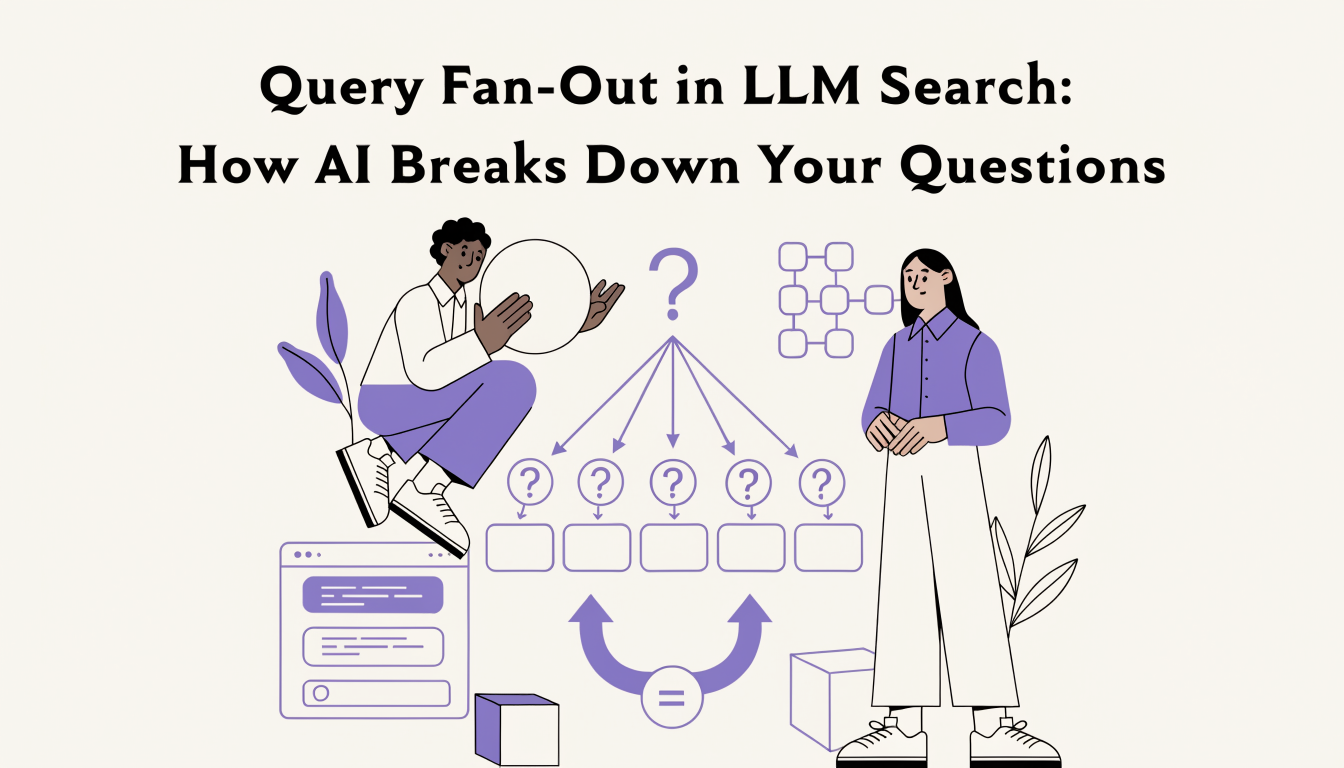
Query Fan-Out in LLM Search: How AI Breaks Down Your Questions
Learn what query fan-out in LLM search is, how AI splits your prompt into 3-8 sub-queries, and how to structure content to win more citation passes.
Reference Rate vs Click-Through Rate: What AI Search Actually Measures
Learn how reference rate vs click-through rate in AI search differ, why CTR can fall while citations rise, and which content formats earn the most AI citat
Writing Answer Paragraphs That AI Systems Will Quote
Learn how to write self-contained answer paragraphs for AI with a four-part structure that improves extraction probability and gets your content quoted by