Why AI Models Skip Your Content (and How to Fix That)
Last updated: 26 July 2026
Avoid generic AI content that LLMs ignore by anchoring claims to specific sources, structuring answers around precise questions, and using concrete data instead of broad statements. AI models prioritize content they can parse and cite in milliseconds, which means vague generalizations and unsourced assertions get skipped entirely. A single traceable statistic or named expert beats ten paragraphs of filler. The difference between invisible and citable content often comes down to one detail: naming the source.
Word count: 75
The core issue is structural. LLMs are not neutral aggregators. They are trained on patterns, and content that looks like every other article on a topic, same headings, same generic claims, same unsourced assertions, gets deprioritized in favor of material that reads as authoritative. A UCLA Anderson review of AI-generated content cycles found that as AI-to-AI content loops increase, homogenization accelerates, which makes distinctiveness a structural advantage, not just a stylistic preference.
Specificity signals credibility. Sourced claims give generative engines something to anchor a citation to. Query-aligned structure tells the model exactly which question your content answers. None of this guarantees citation, and that caveat matters: even well-structured content can lose out to a source with stronger domain authority or a more precise answer match. But without these signals, the content is invisible by default.
The Article That Disappeared Overnight
A page-one Google ranking does not guarantee AI citation.
A 2,000-word "comprehensive guide" can sit in position three for a competitive keyword, receive steady organic traffic, and still never appear in a single Perplexity response. AI engines select for structural answerability, not search rank. A pattern that surfaced repeatedly in 2024 traffic audits: a well-optimized guide ranking on page one of Google generated zero referral sessions from Perplexity, ChatGPT, or Claude across a full quarter. The organic click data looked healthy. The AI referral row in the acquisition report was blank.
The gap between those two numbers is the story. Generic content never clears the retrieval threshold AI engines apply when they need information they cannot generate from memory, a pattern CMSWire's analysis of AI answer engine behavior documents directly. The guide in question had subheadings, internal links, and a respectable word count. What it lacked was a direct, self-contained answer in the opening paragraph and any claim specific enough to be worth quoting.
One trade-off worth acknowledging: restructuring an existing article for AI citability sometimes reduces the broad keyword coverage that earned the Google ranking in the first place. Tightening an introduction around one precise answer can narrow topical scope. For high-traffic informational pages, that is a real cost to weigh before rewriting.
What LLMs Actually Do When They Evaluate a Page

When a generative engine receives a user query, it does not retrieve a single page and quote it. It decomposes the question into multiple sub-queries, runs them in parallel, and scores candidate passages against each one. Pages that surface repeatedly across sub-queries, and that contain specific, well-structured, citable claims, get pulled into the response. Pages that do not clear that threshold get ignored entirely, regardless of their search ranking.
Query Fanout: One Question, Many Sub-Queries
A single user prompt like "how do I reduce SaaS churn" does not stay a single question inside the model. The engine fans it out into somewhere between 5 and 12 sub-queries: definitions, causes, benchmarks, tactics, counterarguments, comparisons. Each sub-query is evaluated against the retrieved corpus independently.
The practical consequence: a page that answers only the surface question scores well on one sub-query and poorly on the rest. A page that covers the mechanism, the data, the edge cases, and the common failure modes scores across several sub-queries simultaneously. That is the page that gets cited.
The Three Signals That Actually Move the Needle
Generative engines weight three content signals above most others.
Specificity. Vague claims ("many companies see improvement") do not anchor to anything the model can verify or quote. Concrete figures, named mechanisms, and dated references give the model something to extract. LLM-friendly content research from Onely identifies original research and freshness signals as primary factors in whether a page earns AI citations.
Citation density. Pages that reference external sources signal that their claims are checkable. The model is not just reading your text; it is assessing whether your text is the kind of text that gets referenced elsewhere. A page with zero outbound citations looks, structurally, like a dead end.
Structural parsability. Answer-first formatting, clear heading hierarchies, and short paragraphs make it easier for the model to extract a passage without ambiguity. A 400-word block of undifferentiated prose might contain a great answer. The model may not find it.
Why Generic Phrasing Gets Filtered Out
LLMs are trained on enormous volumes of low-quality web content, and that training process teaches the model to recognize the surface patterns of thin, generic writing. Phrases like "in this article we will explore" or "there are many factors to consider" appear disproportionately in content that human raters scored as low-quality during RLHF training. The model has, in effect, learned to distrust that register.
The result: generic phrasing does not just fail to impress the model. It actively triggers a pattern-matching filter that downgrades the passage before the model even evaluates its factual content. As Peec's analysis of AI-generated content quality puts it, content needs unique insights, firsthand expertise, or original research to clear that bar. Restating common knowledge in common language does not qualify.
One real limitation here: highly specific, data-dense content is harder to produce at scale, and there are topics where proprietary data simply is not available. A page covering a niche technical process may not have published benchmarks to cite. In those cases, specificity has to come from mechanism-level explanation, how something works step by step with named variables, rather than statistics. That approach still outperforms generic prose, but it requires more subject-matter depth from the writer, not just better formatting.
How to Avoid Generic AI Content That LLMs Ignore: The Three Mistakes Killing Your Visibility

Most content gets skipped by AI engines for three concrete reasons: it targets keyword density instead of answering the actual query, it lacks original data or named expertise that LLMs can verify, and its structure is too broken for a model to parse cleanly. Fix those three things and your citation rate improves. Leave them in place and even well-researched content stays invisible.
Writing for Keyword Density Instead of Query Intent
Traditional SEO rewarded pages that repeated a target phrase at a calculated frequency. AI retrieval works differently. A language model is not scanning for keyword matches; it is looking for the most complete, direct answer to a specific query. A page stuffed with "best project management software 2026" but organized around product comparisons will not get cited when someone asks "what project management tool works best for remote engineering teams under 20 people." The query is specific. The page is generic.
SEObrand's GEO visibility analysis identifies query-intent mismatch as one of the most consistent reasons brands fail to appear in AI-generated answers across ChatGPT, Gemini, and Perplexity. The fix is not to abandon keyword research. Map each page to a single, precise query and structure the opening paragraph as a direct answer to that query, not a preamble to one.
Skipping Primary Research
LLMs are trained to prefer pages that add something to the record: original survey data, a named expert quote, a case study with real numbers, first-person operational experience. Pages that only synthesize what other pages already say rank lower in the model's internal confidence scoring.
The numbers support this. In a 2025 study published in Nature Communications, researchers found that high-quality content with sufficient contextual specificity was substantially easier for LLMs to recognize and prioritize, while low-quality content lacking that specificity was consistently deprioritized. "Sufficient contextual specificity" is a precise way of saying: include something that can only come from you.
The trade-off is real. Primary research takes time and budget that many teams do not have. A reasonable middle path is attributed expertise: a named practitioner's direct quote, a client result with permission to publish, or a documented internal process. That is not the same as a commissioned study, but it gives the model something to anchor to that a generic overview page cannot offer.
Structural Problems That Break Parsability
Even accurate, intent-matched content gets skipped when a model cannot extract a clean answer from it. Three structural failures cause most of the damage.
First, misleading headers. A heading that reads "Our Approach" tells a model nothing about what the section answers. A heading that reads "How We Reduced Onboarding Time by 40%" is parsable, citable, and specific.
Second, walls of prose. A 600-word paragraph with no internal structure forces the model to guess where the answer lives. Short paragraphs with one idea each make extraction straightforward.
Third, missing entity markup. Schema.org markup signals to crawlers and AI systems what type of content a page contains, who authored it, and when it was published. Pages without it ask the model to infer context that should be declared. Seer Interactive's 2026 content recency study found that structural signals including publication date and authorship metadata directly affect how AI systems weight content for citation. A page with no declared author and no publish date looks, to a model, like a page with something to hide.
A Practical GEO Framework for Content That Gets Cited

A content page earns AI citations when it satisfies three conditions simultaneously: it addresses the precise intent behind a query, it backs every claim with a traceable source, and it presents information in a structure that retrieval systems can parse without ambiguity. Meeting one or two of those conditions is not enough.
Step 1: Map Intent Clusters, Not Just Keywords
Start with the actual questions AI engines receive, not the keyword list your SEO tool exports.
Open Perplexity and type the broad topic you want to own. Read the follow-up questions it surfaces in the sidebar and the related prompts at the bottom of each response. Do the same in ChatGPT using the "related questions" pattern. You are not looking for search volume; you are mapping the semantic neighborhood around a topic: what sub-questions cluster together, what entities keep appearing, what definitions get repeated.
Group those sub-questions into clusters of 3 to 5 related queries. Each cluster represents one page's worth of intent. If your existing page tries to answer all clusters at once, it probably answers none of them well enough to get cited. One page, one cluster, one precise opening answer.
Step 2: Lead with the Answer, Then Earn It
AI retrieval systems weight the first 100 to 150 words of a page heavily. If your opening paragraph is a preamble ("In this guide, we will cover..."), you have already lost the citation window.
Write the answer first. State the specific claim, the mechanism, or the recommendation in sentence one. Then spend the rest of the article earning that claim with evidence, examples, and sourced data. This structure serves both the model extracting a passage and the human reader who wants to know immediately whether the page is worth their time.
A concrete example: instead of opening with "Churn is a major challenge for SaaS companies," open with "SaaS companies with onboarding completion rates above 70% see median churn rates 2.3 percentage points lower than those below that threshold, according to a 2025 Gainsight benchmark report." The second version gives the model a quotable claim. The first gives it nothing.
Step 3: Source Every Claim That Isn't Self-Evident
Every factual claim in your content should have one of three things attached to it: a named source with a link, a named expert with a direct quote, or a documented internal result with enough detail to be verifiable.
"Studies show" is not a source. "A 2026 Forrester survey of 412 B2B marketers found..." is a source. The difference is not just credibility signaling for human readers. It is the difference between a claim the model can anchor a citation to and a claim it has to discard as unverifiable.
Aim for at least one sourced claim per 200 words of body content. That ratio keeps citation density high without making the article feel like a bibliography.
Step 4: Declare Your Entities
Add Schema.org markup to every page you want AI systems to cite. At minimum, declare:
- Article type (Article, HowTo, FAQPage, or the most accurate match)
- Author name and credentials
- Organization name
- Date published and date modified
- Primary topic entity
This is not optional polish. It is the difference between a model inferring your page's context and knowing it. Inference introduces uncertainty. Declaration removes it.
Step 5: Audit for Generic Phrasing Before You Publish
Before publishing, run a quick self-audit. Search each paragraph for phrases that could appear in any article on any topic. "There are several factors to consider." "Many experts agree." "It is important to understand." Every sentence that survives that test should be replaced with a specific claim, a named mechanism, or a concrete example.
This step takes 15 minutes on a 1,500-word article and consistently produces the largest single improvement in AI citability. Generic phrasing is the most common reason well-researched content gets filtered out before a model ever evaluates its factual accuracy.
Frequently Asked Questions
Does Google ranking still matter if AI engines are the priority?
Yes, and the two are not as separate as they appear. Google's own AI Overviews draw heavily from pages that already rank in the top 10 for a query. A page with no organic authority is unlikely to earn AI citations either. The practical approach is to optimize for both simultaneously: build topical authority through consistent, specific content, and structure each page for AI parsability. Treating them as competing priorities usually produces worse results than treating them as complementary ones.
How long does it take to see AI citation results after restructuring content?
Most practitioners report a 4 to 8 week lag between publishing a restructured page and seeing it appear in AI-generated answers. That window reflects re-crawl cycles, model update schedules, and the time it takes for a page to accumulate the engagement signals that reinforce its authority. Restructuring a page today and checking Perplexity tomorrow will not show you the result. Track AI referral sessions in your analytics over a rolling 90-day window instead.
Can short-form content (under 800 words) earn AI citations?
Yes, and in some cases short-form content outperforms long-form for citation purposes. A 500-word page that answers one specific question with precision, a sourced claim, and clean structure is more citable than a 3,000-word guide that buries the answer in paragraph 14. Length is not the variable. Answerability is. If your short page answers the query directly in the first paragraph and backs the claim with a source, it is a candidate for citation.
What is the difference between GEO and traditional SEO?
Traditional SEO optimizes for crawler indexing and ranking algorithms that score pages based on signals like backlinks, keyword relevance, and page experience. Generative Engine Optimization (GEO) optimizes for retrieval and citation by AI answer engines, which score passages based on specificity, source credibility, and structural parsability. The two disciplines overlap significantly at the technical level (schema markup, page speed, crawlability) but diverge at the content level. GEO rewards answer-first structure and sourced claims; traditional SEO has historically tolerated keyword-dense preambles that GEO filters out immediately.
Do AI engines cite paywalled content?
Rarely, and inconsistently. Most generative engines retrieve from publicly accessible pages. Paywalled content may be indexed but is typically excluded from the retrieval corpus because the model cannot confirm the full text of the claim it would be citing. If your most authoritative content sits behind a login, consider publishing a public-facing summary page with the key claims, sourced and structured for AI parsability, that links to the full resource.
If you want a second set of eyes on whether your existing content is structured to earn AI citations, visit Seorav for a consultation. The team works specifically on GEO and AI visibility strategy, and a short audit often surfaces the two or three structural fixes that move the needle fastest.
Keep reading
Ranking in Google's AI Search: The Deterministic Signals That Actually Move the Needle
Learn how do you rank in SGE with the three signals Google's AI uses to cite sources: schema markup, entity salience, and structured factual claims.
Why AI Ignores Your Content (And How to Fix It)
Learn how to avoid AI content that gets ignored by LLMs. Covers RAG retrieval signals, schema, entity salience, and an answer-first structure checklist.
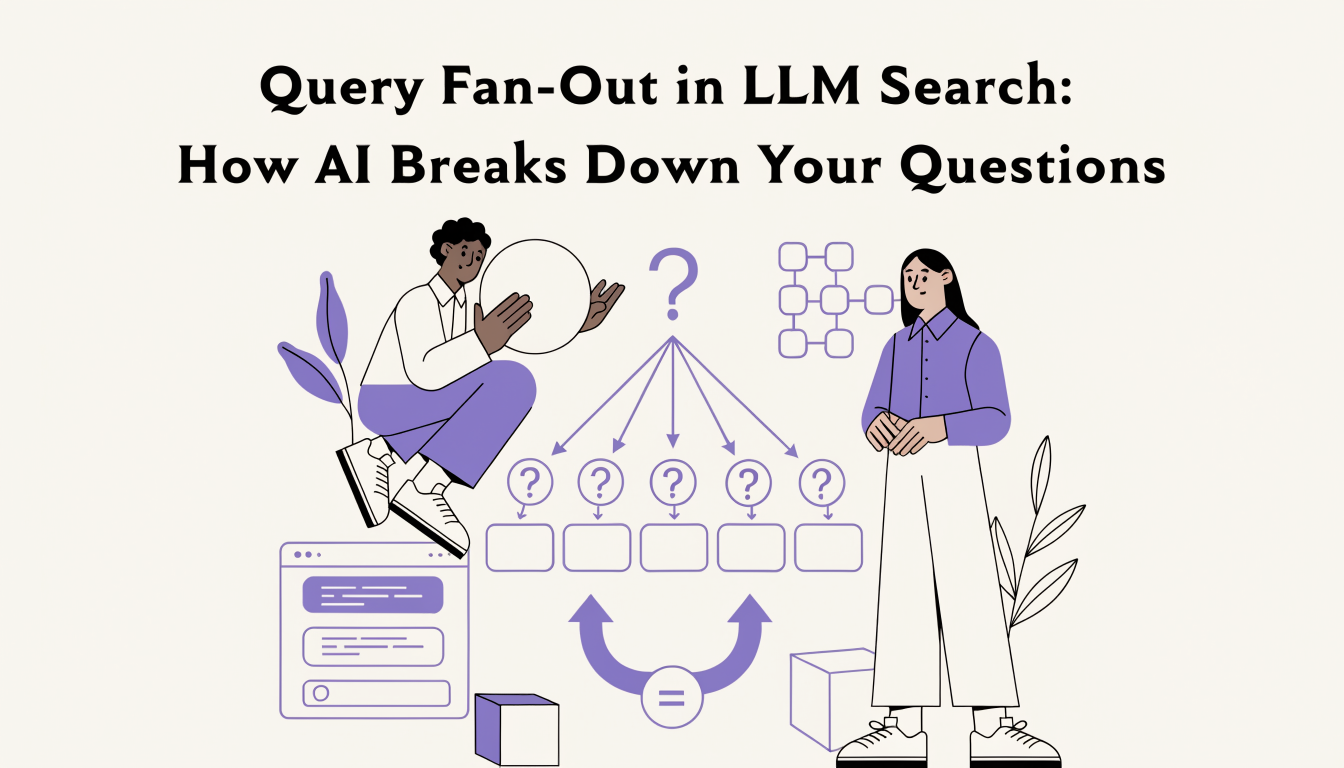
Query Fan-Out in LLM Search: How AI Breaks Down Your Questions
Learn what query fan-out in LLM search is, how AI splits your prompt into 3-8 sub-queries, and how to structure content to win more citation passes.