What Is Answer Engine Optimization (AEO) and How It Differs from Regular SEO
Last updated: 18 August 2026
Answer Engine Optimization (AEO) is the practice of structuring content so AI systems can extract, understand, and directly cite your answers. Unlike SEO, which aims to rank your page in a list of links, AEO targets the answer itself: the single response an AI engine displays without requiring a click. This shift matters because AI assistants now answer questions directly, bypassing traditional search results. Your content must be formatted and written so machines can pull accurate information from it reliably.
Word count: 79
Quick Answer: AEO Definition in Plain Terms
Answer Engine Optimization (AEO) is the practice of structuring content so AI-driven systems can extract, understand, and cite direct answers. Where SEO targets a ranked list of links, AEO targets the answer itself: the single response an AI engine surfaces without asking you to click anywhere.
The aeo definition has sharpened considerably since 2022. Three years ago, most search traffic still ran through a ten-blue-links model, and optimizing for featured snippets was close enough to AEO that teams rarely drew a distinction. By 2025, Content Science's AEO research puts the shift plainly: AI-driven systems now summarize and present content directly, bypassing the ranked list entirely. That changes the optimization target from "rank high enough to get the click" to "be structured well enough to be quoted."
One honest caveat: AEO does not replace SEO. Pages still need authority signals and crawlability to be trusted by AI engines in the first place. The two practices overlap more than they compete.
TL;DR
Answer Engine Optimization (AEO) is the practice of structuring content so AI platforms like ChatGPT, Perplexity, and Gemini select it as a cited source when generating answers. Unlike traditional SEO, which targets ranked positions on a results page, AEO targets the answer itself.
What AEO stands for: Answer Engine Optimization, the discipline of earning citations inside AI-generated responses rather than blue-link rankings.
How it differs from SEO: SEO optimizes for crawlability and keyword relevance so search engines surface your page. AEO optimizes for answer-readiness so AI engines quote your content directly.
What AI engines reward: Clear, structured, factually specific content with authoritative sourcing. Omnibound's AEO benchmark data shows AI platforms consistently favor content that answers a question completely within a single, self-contained passage.
The one first step: Audit your highest-traffic pages for answer-first structure. If the core answer to the implied question isn't in the first 40 to 60 words, rewrite the opening before touching anything else.
The trade-off worth naming: AEO is less effective for transactional or navigational queries, where users want a specific product page or login screen, not a synthesized answer. Optimizing those pages for AI citation can dilute the conversion focus that makes them work. Apply AEO selectively, to informational and comparison content first.
Answer Engine Optimization Defined: What AEO Actually Means

Answer Engine Optimization (AEO) is the practice of structuring content so AI systems can extract, synthesize, and cite it inside a generated response. The goal is not a ranked link. The goal is inclusion in the answer itself. In 2025, the platforms that qualify as answer engines include ChatGPT, Perplexity, Google's AI Overviews, Microsoft Copilot, and voice assistants like Siri and Alexa.
The term has been in circulation long enough to accumulate a working consensus. CXL's comprehensive AEO guide frames it precisely: AEO is about getting your content into the answer, which means making the useful part of a page easy for an AI system to locate and extract without requiring a click. That framing holds across every platform on the list above, whether the output is a spoken Siri response or a multi-paragraph Perplexity synthesis.
Where AEO sits in the broader stack matters. SEO targets ranked positions in a link list. GEO (Generative Engine Optimization) focuses on brand visibility and sentiment inside AI-generated prose. AEO sits between them, concerned specifically with whether your content gets cited as a source. Writer's breakdown of GEO and AEO draws this line clearly: AEO covers the structural and factual practices that make AI systems choose your page as a reference, while GEO covers the broader question of how your brand appears in generated narratives.
The trade-off is real. AEO optimizes for citation, not for clicks. A page that gets cited in a ChatGPT response may see zero referral traffic from that citation, because the user got their answer without visiting the source. For businesses where revenue depends on on-site conversion, that is a meaningful limitation. AEO and traditional SEO are not in conflict, but they serve different measurable outcomes, and treating them as interchangeable will produce a strategy that does neither well.
Yotpo's AEO vs. SEO breakdown puts the distinction plainly: AEO optimizes for synthesis, not necessarily for a click, but for a citation within an AI-generated answer. That shift in success metric is the clearest signal that AEO is a distinct discipline, not a renamed version of something that already existed.
How AEO Differs from Traditional SEO and GEO

AEO targets citation signals inside AI-generated responses, not ranked positions in a results list. Traditional SEO earns a URL a slot in a numbered list based on backlinks, keyword relevance, and technical authority. GEO is a narrower practice, focused specifically on how generative AI models synthesize and attribute content in conversational outputs. All three reward authoritative, well-structured content, but what "winning" looks like is different in each.
SEO vs. AEO: Ranking Signals vs. Citation Signals
In traditional SEO, success is a position number. You track rank 1 through 10, click-through rate, and organic sessions. The signals that move that number are well-documented: domain authority, backlink profile, on-page keyword density, Core Web Vitals.
AEO operates on a different set of levers. AI engines do not return a ranked list. They return a synthesized answer, and they pull from sources they judge to be structurally clear, factually specific, and directly responsive to the query. The signals that earn a citation include answer-first paragraph structure, FAQ schema markup, and concise definitions under 60 words. A page can rank on page one of Google and never get cited by ChatGPT, and vice versa.
The numbers reflect this split. Scube Marketing's 2024 analysis of AI search behavior found that AEO and GEO both require optimization for chatbots like Claude and Perplexity, but the structural requirements differ from standard SEO signals in ways that most existing content does not satisfy.
GEO vs. AEO: Overlap and Divergence
GEO and AEO share a foundation. Both reward content that is factually grounded, clearly attributed, and structured for extraction rather than browsing. If you are doing GEO well, you are doing a meaningful portion of AEO well.
The split happens at scope. AEO covers any answer-surfacing system: Google's featured snippets, People Also Ask boxes, voice assistants, and generative AI models. GEO is specifically about the last category. This maps to the distinction Magneto IT Solutions draws between the two strategies: GEO focuses on increasing visibility in AI-generated summaries, while AEO ensures content is structured to become the direct answer across a broader set of surfaces.
In practice, a GEO-only strategy leaves featured snippets and PAA boxes on the table. An AEO strategy, built correctly, covers both.
When AEO Can Hurt Your Click-Through Rate
This is the trade-off most coverage skips. When an AI engine or a featured snippet surfaces a complete, self-contained answer, a meaningful share of users never click through to the source. The query is resolved on the results page itself.
For informational queries, "what is X" or "how does Y work," this is a real cost. A page optimized for AEO may earn a citation in ChatGPT's response and see zero referral traffic from it. Bol Agency's breakdown of AEO in B2B contexts notes that AEO is the practice of optimizing content to appear directly in AI-generated responses, which by design reduces the need for a click.
The approach breaks down when your business model depends on page-level engagement: ad revenue, gated content, or conversion flows that require a visit. For those cases, AEO is still worth pursuing for brand visibility and authority signals, but it should not be treated as a direct traffic driver. The teams that get the most out of AEO are typically those optimizing for top-of-funnel awareness, where being cited builds credibility even without a click.
Core Principles of AEO: What Makes Content AI-Friendly

AI-friendly content shares three structural traits: it delivers a complete, self-contained answer in the first paragraph; it uses schema markup and clear entity labeling so retrieval systems can parse what the content is about; and it mirrors the phrasing patterns people actually use when querying AI assistants. Pages that meet all three get extracted and cited. Pages that meet only one or two tend to rank but not get quoted.
Structured, Self-Contained Answers
AI engines don't read pages the way humans do. They scan for atomic content blocks: passages that answer a specific question without requiring surrounding context to make sense. A paragraph that opens with "As we discussed above..." is useless to a retrieval system. A paragraph that opens with a direct, complete answer is extractable.
The practical implication: each major section of your content should be able to stand alone as a citable unit. Lead with the answer, not toward it. Avoid pronoun-heavy sentences that rely on earlier paragraphs for meaning. Keep answer blocks tight, typically under 60 words for definitions and under 120 words for process explanations.
The numbers support this structure. AEO citation data from Riseatseven shows that AI-generated answers disproportionately pull from pages where the target answer appears within the first 100 words of a section, not buried in the fifth paragraph.
Schema Markup and Entity Clarity
Schema markup is the technical layer that tells answer engines what type of content they're reading. FAQ schema signals that a block is a question-answer pair. HowTo schema signals a process. Article schema with dateModified tells the engine how fresh the content is.
Entity clarity matters just as much. An AI engine parsing a page about "Python" needs signals to determine whether you mean the programming language or the snake. Clear entity labeling, through consistent terminology, internal linking to definitional pages, and structured data, removes that ambiguity. Pages with ambiguous entities get skipped in favor of pages where the subject is unambiguous.
There is a real maintenance cost here. Heavy schema implementation means every time you restructure a page, the schema needs to match the new content, or it becomes a liability. Stale or mismatched schema can actively suppress citation likelihood because answer engines treat schema-content mismatches as a trust signal in the wrong direction.
Conversational Query Matching
Search behavior shifted materially between 2023 and 2025. Voice queries and AI assistant prompts trend longer and more syntactically complete than traditional keyword searches. Someone typing into Google might write "AEO vs SEO." The same person asking Perplexity will write something closer to "What is the difference between answer engine optimization and traditional SEO, and which one should I focus on first?"
Your content needs to match both registers. That means including the short-form keyword variant for traditional search, and also writing full-sentence headers and FAQ entries that mirror the longer, conversational phrasing AI users actually type. Pages that do only one of these two things capture only part of the available surface area.
One practical check: read your H2s and H3s aloud as if you were asking a question. If they sound like keyword strings rather than natural questions, rewrite them. AI engines weight headers heavily when deciding whether a section is relevant to a query.
Frequently Asked Questions About AEO
What does AEO stand for?
AEO stands for Answer Engine Optimization. It refers to the practice of structuring and formatting content so that AI-powered platforms, such as ChatGPT, Perplexity, and Google's AI Overviews, can extract and cite it directly inside a generated answer. The term distinguishes this discipline from traditional SEO, which targets ranked link positions rather than direct citation.
How is AEO different from SEO?
SEO earns your page a position in a ranked list of links based on signals like backlinks, keyword relevance, and technical performance. AEO earns your content a citation inside an AI-generated answer based on structural clarity, factual specificity, and answer-first formatting. A page can perform well in one system and poorly in the other, so the two require separate optimization strategies.
Does AEO replace SEO?
No. AEO and SEO serve different measurable outcomes and work best when treated as complementary rather than competing. AI engines still rely on crawlability, domain authority, and other traditional SEO signals to decide which pages are trustworthy enough to cite. Skipping SEO fundamentals while chasing AEO citation will typically produce neither result.
What types of content benefit most from AEO?
Informational and comparison content benefits most, specifically pages that answer "what is," "how does," or "which is better" queries. Transactional pages, such as product listings or checkout flows, are poor candidates because users querying those topics want a destination, not a synthesized answer. Applying AEO to transactional pages can dilute the conversion focus those pages depend on.
What is the aeo definition in the context of voice search?
In voice search, the aeo definition extends to any system that reads a single answer aloud rather than displaying a list of links. Siri, Alexa, and Google Assistant all operate this way. For voice, the structural requirements are even stricter: answers need to be under 30 words to be read naturally, and the content must make sense without any visual context. Optimizing for voice is effectively the most demanding subset of AEO.
How do you measure AEO success?
You track citation frequency across AI platforms, brand mention volume in AI-generated responses, and share of voice in tools like Perplexity's citation reports or third-party AI visibility trackers. Traditional metrics like organic sessions and click-through rate are incomplete measures of AEO performance because a successful citation may generate zero referral clicks. Teams that apply only session-based measurement will systematically undercount AEO's contribution to awareness and authority.
Is schema markup required for AEO?
Schema markup is not strictly required, but it meaningfully improves citation likelihood. FAQ schema, HowTo schema, and Article schema with dateModified give AI engines explicit signals about content type and freshness. Pages without schema can still get cited if the prose structure is clear enough, but pages with accurate, maintained schema have a measurable structural advantage, particularly for competitive queries where multiple sources are available.
Putting the AEO Definition to Work

The aeo definition is straightforward: structure your content so AI systems can extract and cite it directly. The execution is where most teams stall. Start with your ten highest-traffic informational pages. Check whether the core answer appears in the first 60 words of each section. Add FAQ schema to any page that already has a question-and-answer structure. Rewrite headers as full questions where they currently read as keyword strings.
None of that is fast work, but it is sequenced work. You don't need to overhaul your entire content library to see early citation gains. A focused audit of your best-performing informational content, combined with schema implementation on those same pages, is enough to establish a baseline and measure whether AI platforms are beginning to pull from your site.
The limitation to keep in mind: citation volume is not the same as revenue. Track both, and be honest about which pages are candidates for AEO and which ones need to stay conversion-focused.
If you want a structured review of where your content stands against current AEO and SEO benchmarks, talk to Seorav to get a consultation grounded in your actual traffic data.
Keep reading
Ranking in Google's AI Search: The Deterministic Signals That Actually Move the Needle
Learn how do you rank in SGE with the three signals Google's AI uses to cite sources: schema markup, entity salience, and structured factual claims.
Why AI Ignores Your Content (And How to Fix It)
Learn how to avoid AI content that gets ignored by LLMs. Covers RAG retrieval signals, schema, entity salience, and an answer-first structure checklist.
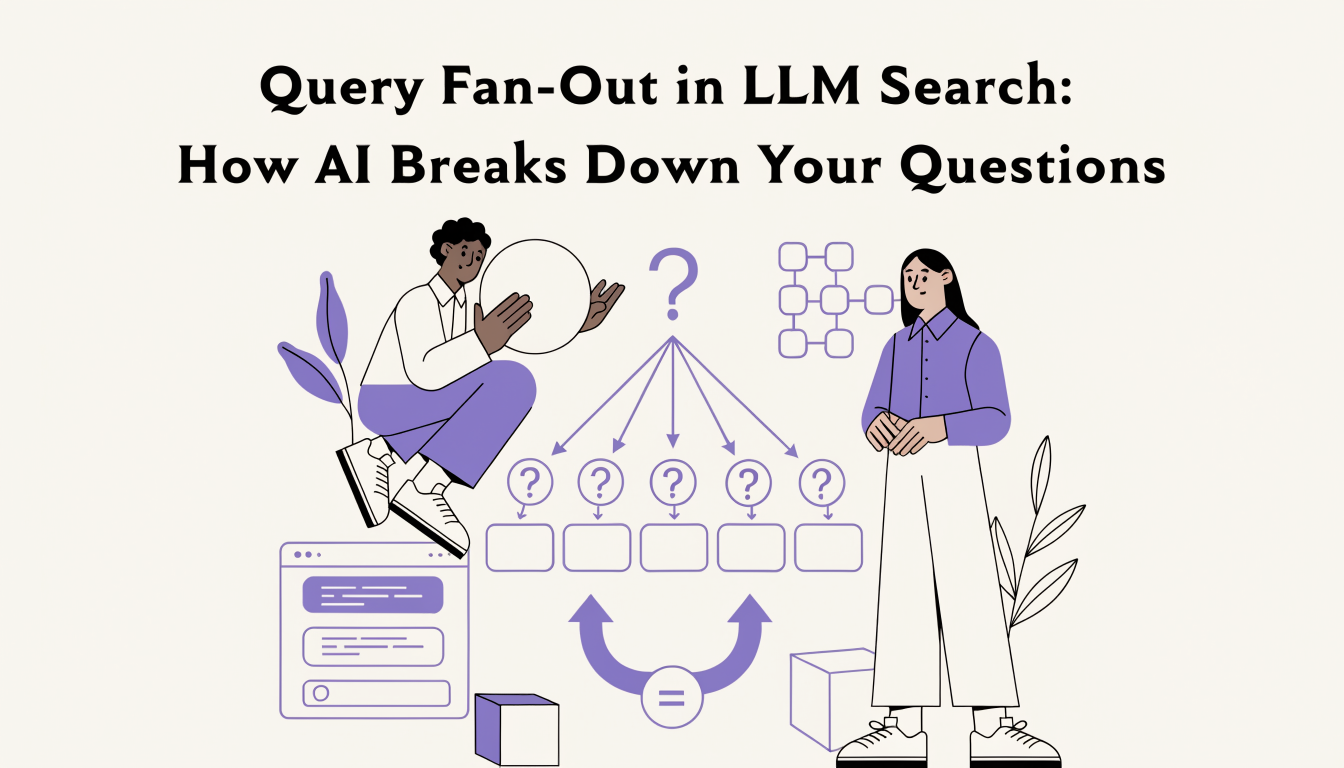
Query Fan-Out in LLM Search: How AI Breaks Down Your Questions
Learn what query fan-out in LLM search is, how AI splits your prompt into 3-8 sub-queries, and how to structure content to win more citation passes.