What is a brand voice? Plus 7 tips to develop
Last updated: 23 July 2026
What is a brand voice? Plus 7 tips to develop one that actually sticks: brand voice is the consistent personality and communication style a company uses across every channel. Think of it as the verbal equivalent of a logo — it should be recognizable whether it appears in a tweet, a legal disclaimer, or a job posting.
Why Brand Voice Matters More Than Most Teams Realize
Most companies have a tone of voice by accident. They hired writers with different instincts, approved copy under deadline pressure, and ended up with a brand that sounds like three different people sharing one email account. Research from Lucidpress found that consistent brand presentation across platforms can increase revenue by up to 23%. That figure covers visual identity too, but voice is a large part of it — customers who recognize how a brand sounds are faster to trust it.
Brand voice also sits at the center of several related concepts that teams often confuse. Before the tips, it helps to separate them clearly.
Brand Voice vs. Brand Tone vs. Brand Personality
These three terms are not interchangeable, and mixing them up causes real problems in briefing documents and style guides.
| Concept | Definition | Changes per context? | Example |
|---|---|---|---|
| Brand voice | The consistent verbal identity — the what you always sound like | No | Slack always sounds helpful and a little informal |
| Brand tone | The emotional register applied in a specific moment | Yes | Slack sounds warmer in onboarding, more direct in error messages |
| Brand personality | The human character traits the brand embodies | No | Slack's personality: approachable, clever, efficient |
| Brand messaging | The specific claims and value propositions you make | Rarely | "Where work happens" |
Voice is the constant. Tone is the variable. Personality is the underlying character that makes both feel coherent. A brand voice chart — a simple grid listing traits, what they mean in practice, and what they explicitly don't mean — is the most useful single document for keeping all three aligned.
Brand Voice vs. Brand Personality: A Closer Look
Brand personality describes who the brand is. Brand voice describes how that person talks. Apple's personality is innovative and premium; its voice is minimal, confident, and declarative ("Think different," not "We encourage you to consider alternative approaches"). The personality informs the voice, but they are separate levers.
This distinction matters when you build a brand voice template for a content team. Writers can internalize a personality description but still produce wildly inconsistent copy without concrete voice guidelines — specific word choices to use, sentence length targets, words and phrases to avoid.
What is a Brand Voice? Plus 7 Tips to Develop One That Works
Here are seven specific, actionable steps — not abstract principles.
1. Audit what you already sound like
Pull 20 pieces of existing content: homepage copy, three emails, five social posts, a press release, a customer support reply. Read them aloud. List three adjectives that describe each. Where the adjectives cluster, that is your accidental voice. Where they scatter, that is your problem.
2. Anchor voice to company values, not trends
A voice built on what feels current in 2024 will feel dated by 2027. Patagonia's voice — blunt, environmentally urgent, anti-consumerist even in product descriptions — works because it reflects a genuine company position, not a marketing trend. Ask: what does this company actually believe? The answer shapes the voice.
3. Build a brand voice chart with three to five traits
For each trait, write three columns: the trait name, what it looks like in practice, and what it does not mean. "Direct" does not mean "rude." "Warm" does not mean "unprofessional." This prevents misinterpretation better than a paragraph of explanation. Asana's brand voice resource illustrates how a company's values should directly inform these trait definitions.
4. Write before-and-after examples
Abstract guidelines fail in production. For each trait, rewrite one real piece of company copy in the old voice and then in the new voice. A single concrete before-and-after example teaches a writer faster than 500 words of explanation.
5. Separate voice from tone in your guidelines
Create a tone matrix: list common communication contexts (error message, promotional email, customer complaint reply, job listing) and note which emotional register fits each. Voice stays constant; the matrix tells writers how to modulate tone without breaking character.
6. Test against edge cases, not just ideal scenarios
A brand voice that sounds great in a product launch email often falls apart in a data-breach notification or a price-increase announcement. Draft those difficult messages during the guidelines-building phase. If the voice feels wrong in a crisis, the guidelines need revision before they go live — not after.
7. Assign ownership and set a review cadence
Brand voice guidelines are not a one-time deliverable. Assign one person or team to own the document, schedule a review every 12 months, and create a lightweight approval process for significant copy decisions. Without ownership, even excellent guidelines drift into irrelevance within 18 months.
Using a Brand Voice Generator: Helpful Starting Point, Not a Finished Product
Several AI-powered tools — including brand voice generators built into content optimization platforms — can analyze a sample of your existing copy and output a voice profile. These tools are genuinely useful for the audit step (Tip 1 above): they process large volumes of text faster than a human reviewer and can surface patterns you missed.
The limit is real, though. A generator produces a statistical description of what you already sound like. It cannot tell you whether that voice is right for your strategy, and it cannot make the judgment calls that edge-case testing (Tip 6) requires. Treat AI-generated voice profiles as a first draft, not a finished brand voice template.
Which Approach Should You Choose?
The right path depends on where your brand actually is.
If you have no existing guidelines: Start with the audit (Tip 1), build a three-trait brand voice chart (Tip 3), and write before-and-after examples immediately. A one-page document with real examples outperforms a 40-page style guide that nobody reads.
If you have guidelines that aren't being followed: The problem is usually that the guidelines are too abstract. Go back and add concrete examples and a tone matrix. Run a half-day workshop where writers apply the guidelines to real briefs and surface the gaps.
If you're scaling a content team quickly: Invest in the tone matrix and the edge-case testing before you hire. New writers default to their own instincts; the only way to override that is with specific, example-rich documentation.
If you're rebranding: Treat the voice as a separate workstream from visual identity. They inform each other, but collapsing them into one project usually means voice gets less attention. A repositioned brand that looks new but sounds old confuses customers.
For brands that want expert help building guidelines that hold up under real production pressure, see how seorav.com can help — from voice audits to full content strategy frameworks built around your specific market position.
Frequently Asked Questions
What is the difference between brand voice and brand tone?
Brand voice is the consistent verbal personality a company always has — it doesn't change. Brand tone is the emotional register applied in a specific context, like being warmer in a welcome email than in an error message. Think of voice as who you are and tone as how you feel in a given moment. Both need to be defined in your brand guidelines to avoid inconsistency.
What should a brand voice chart include?
A brand voice chart typically lists three to five core voice traits in one column, describes what each trait looks like in real copy in a second column, and clarifies what each trait does NOT mean in a third column. For example, 'Direct' does not mean 'blunt to the point of rudeness.' Adding a before-and-after copy example for each trait makes the chart significantly more useful for writers.
How long does it take to develop a brand voice?
A working first draft — an audit, a three-trait voice chart, and five before-and-after examples — can be completed in one to two focused working days. A full brand voice guidelines document with a tone matrix, edge-case examples, and an approval process typically takes two to four weeks when done properly. Rushing the edge-case testing phase is the most common reason guidelines fail in practice.
Can a brand voice generator replace a human-led process?
No, but it can accelerate the audit stage. AI brand voice generators analyze existing copy and surface patterns quickly, which is useful when you have large volumes of content to review. They cannot evaluate whether your current voice is strategically correct, nor can they handle the judgment calls required for difficult communications like crisis messages or price increases. Use them as a starting point, not a final output.
What are some well-known brand voice examples?
Patagonia uses a blunt, environmentally urgent voice that reflects its actual company values. Slack sounds informal and helpful across nearly every touchpoint. Apple defaults to short, declarative sentences with minimal adjectives. Each of these voices works because it is anchored to something real about the company — not borrowed from a competitor or chosen because it felt trendy at launch.
Keep reading
Ranking in Google's AI Search: The Deterministic Signals That Actually Move the Needle
Learn how do you rank in SGE with the three signals Google's AI uses to cite sources: schema markup, entity salience, and structured factual claims.
Why AI Ignores Your Content (And How to Fix It)
Learn how to avoid AI content that gets ignored by LLMs. Covers RAG retrieval signals, schema, entity salience, and an answer-first structure checklist.
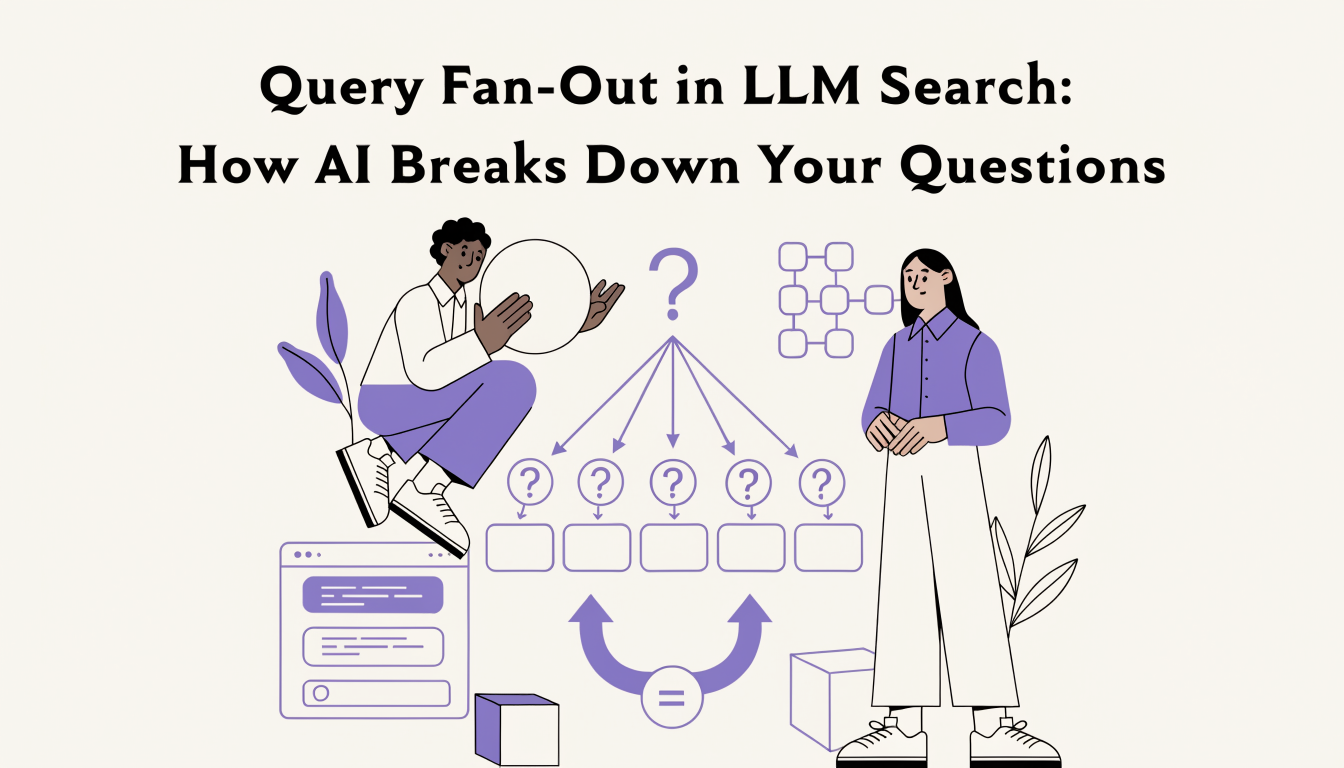
Query Fan-Out in LLM Search: How AI Breaks Down Your Questions
Learn what query fan-out in LLM search is, how AI splits your prompt into 3-8 sub-queries, and how to structure content to win more citation passes.