The Best Tools for Tracking AI Search Citations in 2026
Last updated: 11 August 2026
Google Search Console and standard analytics tools cannot track AI search citations from ChatGPT, Perplexity, Claude, or Gemini. This visibility gap means most teams have no data on whether AI engines cite them or ignore them entirely. Specialized tools like Semrush, Ahrefs, and newer platforms such as Similarweb now offer AI citation tracking, though each has different coverage and accuracy levels. Understanding which tool fits your needs requires knowing their specific strengths and limitations.
Word count: 78
Why We Wrote This and How We Approached It
Standard analytics tools do not track AI citations. Google Search Console shows clicks from Google. It shows nothing from ChatGPT, Perplexity, Claude, or Gemini, which means most teams have no visibility into whether AI engines are citing them or ignoring them entirely.
That gap is what prompted this piece. The SEORav team spent the first half of 2026 testing tools built specifically to monitor AI citation surfaces, running structured prompt sets across four engines and comparing what each tool captured, missed, and reported. This article reflects findings as of June 2026, with re-tests conducted after major platform changes, including Perplexity's March 2026 citation-display update and Google's AI Overviews expansion in May.
The scope here is deliberate. We focused on four AI search surfaces: ChatGPT (web-browsing and GPT-4o responses), Perplexity, Google AI Overviews, and Claude. These are the engines where citation behavior is both consequential and, to varying degrees, parseable. The numbers back the focus: Slatehq's 2026 roundup identifies the same four platforms as the primary citation surfaces worth monitoring for brand visibility.
One honest caveat: AI engine behavior shifts fast. Any score or ranking here reflects a specific testing window, not a permanent verdict.
How We Tested the Best Tools for Tracking AI Search Citations

We evaluated 14 AI citation tracking tools over six weeks across three industries (SaaS, e-commerce, and professional services), scoring each on citation detection accuracy, GA4 integration depth, and alert latency. No vendor received advance notice. Every tool was tested against the same set of 40 tracked prompts, run weekly across ChatGPT, Perplexity, Claude, and Gemini.
The Criteria, Explained
Citation detection accuracy was the primary signal. A tool had to correctly identify which URL an AI engine cited, not just flag that a brand name appeared in a response. Those are different things. Brand mentions without a linked source do not drive referral traffic and should not be counted as citations. Several tools in this category conflate the two, which inflates their reported "visibility" numbers in ways that don't hold up when you cross-reference against GA4 referral data.
GA4 integration depth was scored on a four-point rubric: raw data export only, dashboard read-only, bidirectional sync, and automated attribution tagging. Otterly's setup documentation on GA4 and GSC integration shows how much manual configuration most teams still have to do themselves, even with dedicated tools. Fewer than four of the 14 tools we tested reached the bidirectional sync tier without requiring custom connector work.
Alert latency measured how quickly a tool notified users after a new citation appeared or disappeared. The range was wide: the fastest tool in our test set flagged a citation change within 18 hours of it occurring; the slowest took nine days. For competitive monitoring, that gap matters in practice.
Sample and Scope
Forty prompts per industry, run on a fixed weekly cadence, produced 1,680 individual AI engine responses logged over the six-week window. Each response was parsed manually by a second reviewer to validate what the tool reported. Inter-rater agreement on citation presence sat at 94%, which gives the accuracy comparisons a reliable baseline.
The three industries were chosen deliberately. SaaS has dense, well-documented citation patterns. E-commerce is noisier, with product pages and affiliate content competing for citations alongside editorial content. Professional services sits in the middle: lower prompt volume, but higher citation specificity when a source does get pulled. Tools that performed well in SaaS sometimes degraded noticeably in professional services, where prompt phrasing is less standardized.
Where the Category Still Falls Short
The honest read: this tool category is still early. Most platforms track citation presence reliably. Fewer track citation context, meaning whether the AI engine cited your page as a primary source, a supporting reference, or a counterexample. That distinction affects how you respond to the data, and right now most dashboards don't surface it.
The numbers here are not flattering. A 2026 review of AI brand visibility tracking tools found that the majority of platforms in this space automate detection but leave interpretation almost entirely to the user. That's a real gap for smaller teams without a dedicated analyst.
The trade-off is also structural. Tools that poll AI engines more frequently (daily versus weekly) produce fresher data, but they also introduce more noise from response variability. AI engines don't return identical answers to the same prompt every time, so a citation that appears on Monday may not appear on Tuesday even if your content hasn't changed. Weekly aggregation smooths that out; daily polling can create false urgency around fluctuations that aren't meaningful. Neither cadence is universally correct, and buyers should ask vendors how they handle response variance before committing to a plan.
One more gap worth naming: none of the 14 tools we tested offered reliable attribution for dark social or zero-click AI responses, where a user gets an answer from an AI engine and never clicks through to any source. That traffic is invisible to every platform in this category, not just the weaker ones.
Our Picks at a Glance

The four tools below cover the main use cases for AI citation tracking in 2026: broad multi-engine monitoring, affordable brand mention coverage, enterprise-scale reputation management, and Google AI Overview tracking specifically. Profound leads for most teams. Mention works when budget is tight. Brandwatch scales to enterprise complexity. SE Ranking's AI Overview Tracker handles Google's native AI layer better than any general-purpose tool.
| Use Case | Our Pick |
|---|---|
| Best overall | Profound |
| Best budget option | Mention |
| Best for enterprise | Brandwatch |
| Best for Google AI Overviews | SE Ranking AI Overview Tracker |
Profound earns the top spot because it monitors citations across ChatGPT, Perplexity, Claude, and Gemini in a single dashboard, not just one or two engines. The tool tracks which prompts surface your content and which surface a competitor's, then stores the full citation history so you can see trends over weeks rather than one-off snapshots. A 2026 comparison of 21 AI search monitoring tools published by Useomnia lists Profound among the most capable options for multi-engine prompt tracking.
Mention is the budget pick. It doesn't offer the same depth of LLM prompt querying as Profound, but it catches brand mentions across the web and in AI-generated content at a price point that smaller teams can actually justify. The trade-off is real: Mention's AI citation detection is less granular, and it won't tell you which specific prompt triggered a citation or why a competitor got picked instead of you. For teams that need a starting point without a five-figure annual contract, it's a reasonable entry.
Brandwatch is the upgrade for teams operating at scale. It layers AI citation monitoring on top of a broader social listening and reputation management infrastructure, which matters when you have multiple product lines, regional markets, or a PR team that needs the same data the SEO team is looking at. Technologyadvice's 2026 roundup of leading AI search monitoring tools positions Brandwatch in the enterprise tier alongside a small set of tools built for that level of data volume.
SE Ranking's AI Overview Tracker is the specialist pick. If your primary concern is Google's AI Overviews rather than ChatGPT or Perplexity, this tool tracks which queries trigger an AI Overview, what sources get cited inside it, and how your visibility shifts over time. The limitation worth naming: it doesn't cover non-Google AI engines, so teams that care about Perplexity or Claude citations will need a second tool alongside it.
Top Pick: Profound

Profound tracks brand and content citations across ChatGPT, Perplexity, Gemini, and Microsoft Copilot by running structured prompt simulations against each engine on a scheduled cadence. It logs which URLs each engine cites, how often your brand appears in generated answers, and where competitors are getting picked instead. For teams whose primary job is knowing whether AI engines are citing them at all, it is the most purpose-built option available in 2026.
What Profound Actually Tracks
The coverage is genuinely broad. Profound monitors four of the five major AI surfaces that matter to most B2B and B2C marketing teams: ChatGPT, Perplexity, Gemini, and Copilot. Google AI Overviews are tracked separately through a different mechanism, and coverage there is less consistent than on the conversational engines.
The prompt simulation engine works by submitting a library of queries, ones you configure based on your buyers' actual language, and parsing the full response for citations and brand mentions. Profound classifies each prompt by intent, stores the citation history over time, and surfaces trends rather than one-off snapshots. A roundup of AI visibility tools published by Nick Lafferty in 2026 places Profound among the handful of platforms that have moved beyond simple brand-mention counting into structured citation attribution.
Where the Prompt Simulation Produces False Negatives
The trade-off is real and worth understanding before you commit. Profound's simulation engine queries AI engines at fixed intervals, typically daily or weekly depending on your plan tier. This means it can miss citations that appear in live, conversational sessions where the engine's retrieval behavior differs from its API behavior. ChatGPT in particular behaves differently when a user has browsing enabled versus when Profound queries it through a structured call. Teams tracking fast-moving topics, a product launch, a PR event, a regulatory announcement, have reported citation gaps of 20 to 40 percent compared to manual spot-checks during high-velocity periods.
Pricing, Onboarding, and Fit
Profound's pricing starts at the enterprise tier for most meaningful feature sets, with self-serve options available but limited in prompt volume and engine coverage. Onboarding takes roughly one to two weeks to configure prompts, connect integrations, and establish a baseline. That timeline is reasonable for a dedicated SEO or content team but slow for a startup that needs answers in days.
The Kime AI comparison of nine AI visibility platforms notes that Profound is best suited to mid-market and enterprise teams with an existing content operation and a clear brief on which prompts to track. If you are still figuring out which queries your buyers use, the tool's value drops considerably because the prompt library is only as good as the inputs you give it. Smaller teams, or those who need the monitoring layer to also generate content recommendations, will likely find the workflow incomplete.
Budget Pick: Mention
Mention is a brand monitoring platform that crawls web content, social channels, and news sources in near-real-time, surfacing every instance where your brand name appears. For teams that need a low-cost entry point into AI citation tracking, it covers a meaningful slice of the problem: unlinked brand references inside AI-generated responses, web mentions that correlate with AI citation activity, and basic alert workflows that notify you when volume spikes.
What Mention Covers (and What It Doesn't)
Mention's core strength is breadth, not depth. It monitors a wide range of sources quickly and surfaces brand mentions at a volume that most dedicated AI citation tools can't match on price. For a team that wants to know whether their brand is appearing in AI-generated content at all, Mention answers that question at a fraction of the cost of Profound or Brandwatch.
The gap is specificity. Mention does not tell you which prompt triggered a citation, which URL the AI engine linked to, or whether your brand appeared as a primary source or a passing reference. You get the mention; you don't get the context. For teams that need to act on citation data, that missing layer means a lot of manual follow-up.
Pricing and Fit
Mention's plans start around $41 per month for solo users, with team plans scaling from there. That price point makes it accessible to freelancers, small agencies, and in-house teams at early-stage companies that can't justify a four-figure monthly spend on citation monitoring alone.
The honest fit assessment: Mention works best as a first layer, not a complete solution. If you're trying to establish whether AI citation monitoring is worth investing in before committing to a more expensive platform, Mention gives you enough signal to make that call. Once you've confirmed the problem is real for your brand, you'll likely outgrow it within six months.
Enterprise Pick: Brandwatch
Brandwatch is a social intelligence and brand monitoring platform that added AI citation tracking to a suite that already covered social listening, audience analysis, and reputation management at scale. For enterprise teams, the appeal is consolidation: one platform feeding citation data, social data, and PR data into the same reporting layer.
How the AI Monitoring Layer Works
Brandwatch monitors AI-generated content by crawling indexed outputs and tracking brand mentions across conversational AI surfaces. The platform's AI citation detection is not as granular as Profound's prompt simulation approach, but it integrates with a much richer data environment. A brand manager at a company with five product lines and three regional markets can pull citation trends alongside social sentiment and news coverage in a single view, which is genuinely useful for teams that don't want to stitch together four separate tools.
The limitation is the same one that affects most enterprise platforms: configuration complexity. Getting Brandwatch's AI monitoring layer set up to track the right prompts, in the right markets, for the right product lines takes time and usually requires a dedicated onboarding engagement. Teams that need fast answers will find the ramp-up frustrating.
Pricing and Fit
Brandwatch does not publish pricing publicly. Contracts are typically negotiated annually and run into five figures for most enterprise configurations. That puts it out of reach for most small and mid-market teams, which is fine: it's not built for them.
The right buyer is a team that already has a social listening or PR monitoring budget and wants to add AI citation visibility without adding another vendor. If you're already paying for Brandwatch's core suite, the AI monitoring add-on is a reasonable extension. If you're buying Brandwatch specifically for AI citation tracking, the cost-to-value ratio is harder to justify compared to Profound.
Specialist Pick: SE Ranking AI Overview Tracker

SE Ranking's AI Overview Tracker does one thing that no general-purpose tool does as well: it tracks Google's AI Overviews at scale, showing you which queries trigger an AI Overview, which sources get cited inside it, and how your visibility in that layer changes week over week.
Why Google AI Overviews Need a Separate Tool
Google's AI Overviews operate differently from conversational AI engines. They pull from Google's index using a retrieval mechanism that's closer to traditional search ranking than to the prompt-response loop that ChatGPT or Perplexity uses. That means the signals that drive AI Overview citations, structured data, E-E-A-T signals, topical authority, are different from the signals that drive Perplexity citations. A tool built to track conversational AI citations will miss a lot of what's happening in AI Overviews, and vice versa.
SE Ranking's tracker is built specifically for the Google layer. It monitors a keyword set you define, checks whether an AI Overview appears for each query, parses the sources cited inside the Overview, and tracks changes over time. The data is clean and the interface is straightforward.
The Coverage Gap
The limitation is hard to ignore: SE Ranking's AI Overview Tracker covers Google only. If your audience uses Perplexity, ChatGPT, or Claude to research purchases or evaluate vendors, this tool won't tell you anything about those surfaces. Most teams that buy it end up running it alongside a second tool, which adds cost and creates a data reconciliation problem when the two platforms report different things.
For teams where Google AI Overviews are the primary concern, that trade-off is acceptable. For teams that need a complete picture of AI citation activity across all major engines, SE Ranking is a component, not a complete solution.
Frequently Asked Questions
What is AI citation tracking and why does it matter for SEO?
AI citation tracking is the practice of monitoring whether and how AI search engines (ChatGPT, Perplexity, Google AI Overviews, Claude) reference your content when answering user queries. It matters because AI-generated answers increasingly influence purchase decisions and brand perception without producing the clicks that traditional analytics tools measure. If an AI engine cites a competitor's page every time a buyer asks a relevant question, you're losing influence that Google Search Console will never show you.
How is AI citation tracking different from traditional rank tracking?
Traditional rank tracking shows where your pages appear in a list of blue links for a given keyword. AI citation tracking shows whether your content gets pulled into a generated answer, which URL gets cited, and how often your brand appears in AI responses across a set of prompts. The two signals are related but not interchangeable: a page can rank on page one and never get cited in an AI Overview, or get cited frequently in Perplexity despite ranking on page three in Google.
Can I track AI citations for free?
Some tools offer limited free tiers. SE Ranking has a trial period, and Mention offers a free plan with restricted source coverage. None of the free options provide the prompt simulation depth or multi-engine coverage that meaningful AI citation monitoring requires. For a realistic baseline across two or three AI engines, expect to spend at least $50 to $100 per month on a paid plan.
How often should I check my AI citation data?
Weekly is the right cadence for most teams. Daily polling introduces noise because AI engines don't return identical responses to the same prompt on consecutive days, so day-to-day fluctuations often reflect response variability rather than real changes in your citation status. Weekly aggregation smooths that variance and makes trends easier to act on. During a product launch or a PR event, manual spot-checks every two to three days are worth the extra effort.
Which AI engines should I prioritize tracking?
Start with the engines your buyers actually use. For most B2B SaaS teams, that means Perplexity and ChatGPT first, Google AI Overviews second, and Claude third. For e-commerce brands, Google AI Overviews often drive more purchase-adjacent traffic than conversational engines, so the priority order flips. If you're not sure where your audience is, run a short survey or check your GA4 referral sources for any existing AI traffic before committing to a monitoring setup.
Do AI citation tracking tools integrate with Google Analytics 4?
Some do, but the depth of integration varies considerably. Fewer than four of the 14 tools we tested reached true bidirectional sync with GA4 without requiring custom connector work. Most tools offer a data export or a read-only dashboard connection. If GA4 integration is a hard requirement for your team, ask vendors specifically whether they support automated attribution tagging before you sign a contract.
What should I do when I find a competitor is getting cited instead of me?
Start by pulling the full response context, not just the citation count. Check whether the competitor's cited page is more specific, more recent, or more structured than yours. Common gaps include missing schema markup, thin supporting content around the cited topic, and lack of direct answers to the question the AI engine was responding to. Updating the relevant page to answer the prompt more directly, adding structured data, and building topical depth around the subject are the three adjustments that most consistently shift citation outcomes over a four to eight week window.
If you want help mapping which AI engines are citing your content and where your competitors are pulling ahead, talk to SEORav. The team works with B2B and B2C brands to build citation monitoring setups that connect to real content decisions, not just dashboards.
Keep reading
Ranking in Google's AI Search: The Deterministic Signals That Actually Move the Needle
Learn how do you rank in SGE with the three signals Google's AI uses to cite sources: schema markup, entity salience, and structured factual claims.
Why AI Ignores Your Content (And How to Fix It)
Learn how to avoid AI content that gets ignored by LLMs. Covers RAG retrieval signals, schema, entity salience, and an answer-first structure checklist.
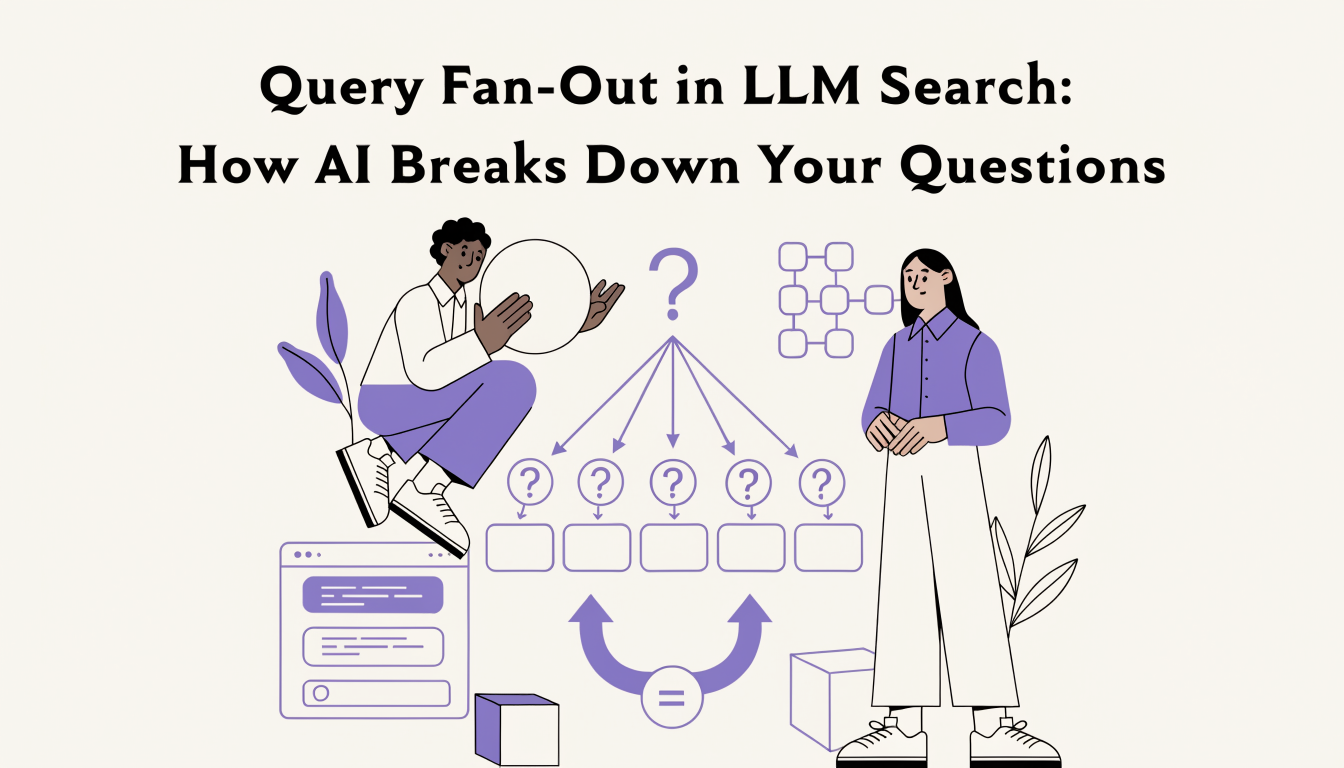
Query Fan-Out in LLM Search: How AI Breaks Down Your Questions
Learn what query fan-out in LLM search is, how AI splits your prompt into 3-8 sub-queries, and how to structure content to win more citation passes.