Schema Markup JSON-LD Generator for Your Website

Last updated: 23 July 2026
A schema markup JSON-LD generator for your website is a tool that converts information about your pages — a product, an article, an FAQ, a local business — into structured code that search engines can read directly. The output follows the Schema.org vocabulary, encoded in JSON-LD format, and sits inside a <script> tag on your page.
How a Schema Markup JSON-LD Generator for Your Website Works
Most generators follow a fill-in-the-blank model. You pick a schema type — say, Product — then fill in fields like name, price, currency, and review rating. The tool assembles valid JSON-LD and outputs something like this:
<script type="application/ld+json">
{
  "@context": "https://schema.org",
  "@type": "Product",
  "name": "Wireless Noise-Cancelling Headphones",
  "offers": {
    "@type": "Offer",
    "price": "149.99",
    "priceCurrency": "USD"
  }
}
</script>
You copy that block and paste it into the <head> or <body> of your HTML. Google's crawlers read it independently of your visible page content, which is why JSON-LD is Google's recommended format — it doesn't require you to annotate your existing HTML at all.
Free web-based generators like TechnicalSEO.com's schema generator cover common types including Article, FAQ, Product, Local Business, and Event. Some, like jsonld.com, support 17 schema types with a form-based interface.
Why Structured Data Matters for Search Visibility
Search engines use structured data to power rich results — the star ratings, price ranges, FAQ dropdowns, and event dates you see directly in Google Search. According to Google's own documentation, eligible rich results can increase click-through rates significantly, though the exact lift varies by industry and query type.
Without structured data, Google has to infer what your page is about from text alone. With it, you explicitly tell the search engine: this page is a recipe, the cook time is 30 minutes, the rating is 4.6 out of 5. That precision reduces ambiguity and makes your page eligible for enhanced SERP features your competitors may be missing.
Where JSON-LD Schema Generators Are Used
JSON-LD generators appear in several different workflows:
- Manual one-off pages — a developer or SEO specialist generates markup for a landing page, event, or product and pastes it directly into the template.
- CMS plugins — WordPress plugins like Yoast and RankMath include built-in schema generators that automate markup based on post type.
- Programmatic generation — developers use Python libraries (such as
schema-orgon PyPI) or Java/Node.js scripts to generate JSON-LD at scale from a database, useful for e-commerce sites with thousands of product pages. - GitHub-hosted tools — open-source schema generators on GitHub let teams customize output to match their exact data model and integrate into CI/CD pipelines.
- AI-assisted drafting — newer tools can generate a first-pass JSON-LD block from a plain-text description of the page, which an SEO then reviews and corrects.
How to Validate Your Output
Generating the markup is only half the job. Before deploying, run the code through Google's Rich Results Test (search "rich results test" to find it) or the Schema Markup Validator at validator.schema.org. These tools flag missing required properties — for example, Product schema requires at least one of offers, review, or aggregateRating to qualify for a rich result. A generator that omits those fields produces technically valid JSON-LD that still won't earn enhanced SERP features.
Limits of Automated Generators
No generator eliminates the need for human judgment. A few real trade-offs:
- Accuracy over completeness. A form-based tool only knows what you type in. If your product page shows a sale price but you enter the list price, Google may flag a mismatch between the structured data and the visible page content — a policy violation that can suppress rich results.
- Schema type coverage. Free generators typically cover 10–20 schema types. Schema.org defines over 800 types. Specialized types like
MedicalCondition,ChemicalSubstance, orEducationalOccupationalProgramusually require manual authoring. - Dynamic content. If prices, availability, or event dates change frequently, a static paste-in solution breaks quickly. Programmatic generation (Python, Java, or a CMS integration) is the right approach for pages with data that updates daily.
- Nested entities. Complex markup — a
Coursewith multipleCourseInstanceobjects, each with its ownSchedule— is hard to build correctly in a simple form. Errors in nesting are common and can silently invalidate the whole block.
Common Misconceptions About JSON-LD Schema
"Adding schema markup will immediately boost my rankings." Structured data is not a direct ranking factor. It makes pages eligible for rich results, which can improve click-through rates, but it does not cause Google to rank a page higher in the organic list.
"Any valid JSON-LD qualifies for rich results." Google supports only a subset of Schema.org types for rich results — currently around 30, including FAQ, HowTo, Product, and Review. Valid markup for an unsupported type like Book may be read by Google but will not generate a visual enhancement in search.
"Free generators produce production-ready code." They produce a starting point. You still need to check that every property value matches the live page and validate the output before deploying.
What to Do With This Understanding
Start by auditing one high-value page type on your site — a product, a service page, or a FAQ section. Run it through a free generator to see what the markup looks like, then validate it with Google's Rich Results Test. If the page qualifies, deploy the markup and monitor Search Console's "Enhancements" report over the following four to six weeks for indexing and eligibility signals. For sites with hundreds of pages, plan for programmatic generation early; retrofitting a manual approach at scale is expensive.
See how seorav.com can help you build and implement a structured data strategy that fits your site's actual architecture — not just a one-size-fits-all template.
Frequently Asked Questions
What is the difference between JSON-LD and Microdata for schema markup?
JSON-LD is a separate script block added to your HTML, while Microdata requires you to annotate your existing HTML elements with attributes. Google recommends JSON-LD because it is easier to maintain — you can update the structured data without touching the visible page layout. JSON-LD also works cleanly with dynamically injected content, making it the more practical choice for most websites.
Do I need a schema markup generator, or can I write JSON-LD by hand?
You can write JSON-LD by hand — it is plain JSON and the Schema.org documentation lists every property. Generators save time and reduce syntax errors, especially for beginners. For complex or nested types, or when generating markup at scale from a database, hand-coding or a programmatic approach (Python, Java, or a CMS plugin) is more reliable than a form-based tool.
How do I know if my schema markup is working correctly?
Use Google's Rich Results Test to check whether your markup is valid and eligible for rich result features. Google Search Console's Enhancements report shows errors and warnings across your whole site once Google has crawled the pages. The Schema Markup Validator at validator.schema.org checks conformance to the Schema.org specification independently of Google's specific rich result requirements.
Which schema types are most useful for a small business website?
LocalBusiness (or a subtype like Restaurant or MedicalClinic) is the highest priority for businesses with a physical location. FAQPage markup is valuable for service pages with common questions. If you publish articles or blog posts, Article or BlogPosting schema helps Google understand authorship and publication date. Product schema matters most for e-commerce pages that display pricing and availability.
Can I use a Python or Java script to generate schema markup automatically?
Yes. Python libraries like schema-org on PyPI let you construct Schema.org objects programmatically and serialize them to JSON-LD. Java developers can use libraries such as schema-org-java or build custom serializers with a JSON library like Jackson. Programmatic generation is the right approach for sites with many pages or frequently changing data, where manual copy-paste would be impractical and error-prone.
Keep reading
Ranking in Google's AI Search: The Deterministic Signals That Actually Move the Needle
Learn how do you rank in SGE with the three signals Google's AI uses to cite sources: schema markup, entity salience, and structured factual claims.

Why AI Ignores Your Content (And How to Fix It)
Learn how to avoid AI content that gets ignored by LLMs. Covers RAG retrieval signals, schema, entity salience, and an answer-first structure checklist.
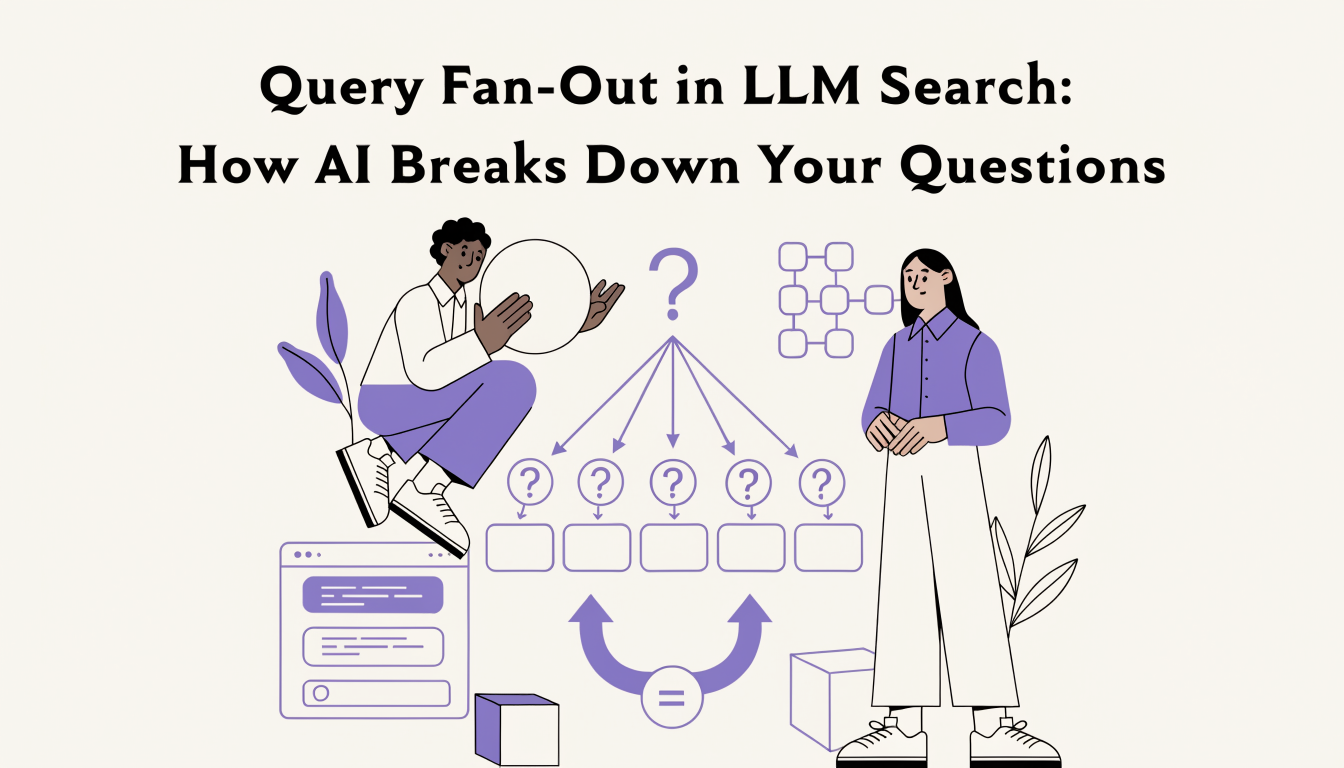
Query Fan-Out in LLM Search: How AI Breaks Down Your Questions
Learn what query fan-out in LLM search is, how AI splits your prompt into 3-8 sub-queries, and how to structure content to win more citation passes.