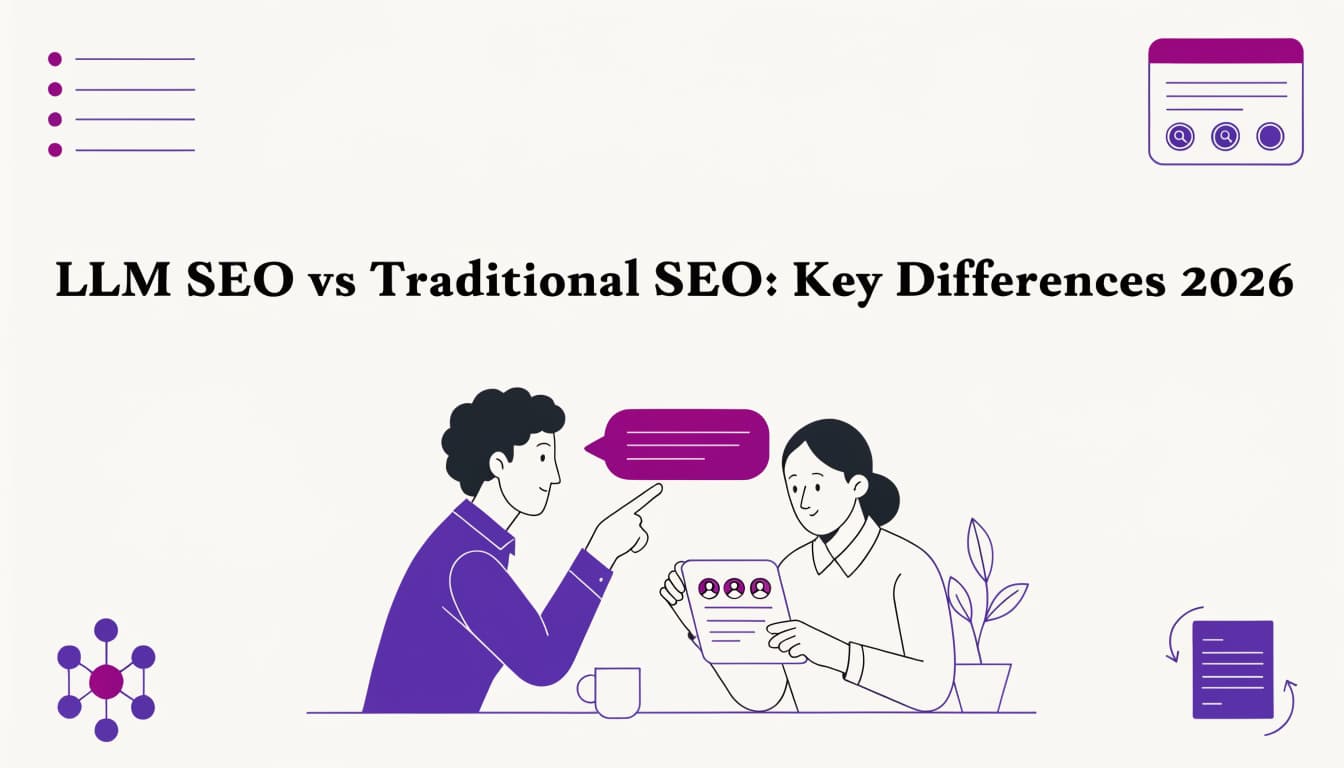
LLM SEO vs Traditional SEO: Key Differences 2026
Last updated: 23 July 2026
LLM SEO vs Traditional SEO: Key Differences 2026 comes down to this: traditional SEO is built to rank pages in search engine results pages (SERPs), while LLM SEO is built to get your content cited inside AI-generated answers. If your audience still searches Google directly, traditional SEO remains essential. If they're asking ChatGPT, Perplexity, or Google's AI Overviews, LLM SEO is where visibility now lives.
Why This Decision Matters More Than It Did 12 Months Ago
By early 2025, Google's AI Overviews appeared on roughly 15% of all U.S. searches, according to industry tracking data — and that share is rising. Perplexity was processing tens of millions of queries per month. For the first time, a page can rank on page one of Google and still never be mentioned in the AI answer that sits above the organic results. That gap is new, and it changes how you allocate content effort.
The two approaches are not opposites. They share a foundation — accurate, well-structured content matters for both. But the signals each system rewards are meaningfully different, and optimizing for one without understanding the other leaves real traffic on the table.
The Criteria That Actually Separate Them
Before choosing a strategy, you need to understand what each system actually measures. Traditional SEO is evaluated by crawlers that score pages on backlinks, keyword placement, page speed, Core Web Vitals, and structured data markup. LLMs, by contrast, are trained on large text corpora and then retrieve content at inference time using semantic similarity, entity recognition, and source authority signals that are less transparent.
Five criteria matter most for a practical comparison:
- Ranking signal — what the system rewards
- Content format — how information should be structured
- Link authority — the role of backlinks vs. citations
- Measurement — how you track success
- Time to impact — how quickly changes show results
LLM SEO vs Traditional SEO: Feature Comparison
| Criterion | Traditional SEO | LLM SEO |
|---|---|---|
| Primary goal | Rank high in SERPs | Appear in AI-generated answers |
| Core ranking signal | Backlinks, keyword density, technical health | Entity authority, semantic clarity, citation trustworthiness |
| Ideal content format | Keyword-targeted pages, meta tags, structured data | Concise factual passages, clear definitions, Q&A structure |
| Link authority | High-DA backlinks drive rankings | Being cited by authoritative sources trains model trust |
| Measurement tool | Google Search Console, rank trackers | AI answer monitoring tools, brand mention tracking |
| Time to impact | 3–6 months typical for new content | Varies; model re-training cycles can be months apart |
| Penalty risk | Algorithm updates (e.g., Google Helpful Content) | Hallucination displacement; no formal penalty system yet |
| Schema markup | Strongly beneficial (FAQ, HowTo, Article) | Helpful but not a direct ranking lever |
Traditional SEO: Strengths and Real Limits
Traditional SEO has a 25-year track record. Google's PageRank algorithm, first described in a 1998 Stanford paper, established that links between pages are a proxy for trust — and that logic still holds in 2026. A well-executed traditional SEO campaign can drive compounding organic traffic for years. The measurement infrastructure is mature: Google Search Console gives you impression data, click-through rates, and average position for every indexed page.
The format rewards are also clear. A page targeting "best project management software" needs the keyword in the title tag, H1, and at least two H2s, supported by internal links and a handful of referring domains with domain authority above 40. That formula is learnable and repeatable.
The limits are real, though. Traditional SEO does not help you appear inside AI Overviews or Perplexity answers — those systems pull from a different set of signals. A page can hold a top-three Google ranking and still be invisible to a user who gets their answer from an AI summary. For informational queries especially, AI Overviews are now absorbing a measurable share of clicks that used to go to organic results.
LLM SEO: Strengths and Real Limits
LLM SEO focuses on making your content the source an AI model reaches for when constructing an answer. The practical tactics look different from traditional SEO. You write shorter, self-contained factual passages that can be extracted cleanly. You define entities explicitly — naming people, products, and concepts with enough context that a language model can identify them without ambiguity. You pursue citations in well-known publications, because those publications are heavily weighted in training data.
One specific tactic that consistently works: structure your content around the exact phrasing of questions users ask, then answer in two to three sentences before elaborating. That mirrors how retrieval-augmented generation (RAG) systems pull and present information.
The limits are significant and honest. LLM SEO has no equivalent of Google Search Console — you cannot see exactly when or how often an AI model cites your content. Measurement relies on manual spot-checks or third-party monitoring tools that are still maturing. Model re-training schedules are opaque; a content update you make today may not influence a model's outputs for months. And there is no formal audit trail when a model stops citing you.
Which Should You Choose
The honest answer for most businesses in 2026 is: both, weighted by your audience's search behavior.
Choose traditional SEO as your primary focus if: - Your audience uses Google for product or service discovery (e-commerce, local services, B2B software comparisons) - You need measurable traffic data tied to revenue - Your content is transactional — people are ready to buy, not just research
Prioritize LLM SEO if: - Your brand competes on thought leadership or complex informational topics - You've noticed your organic click-through rates dropping even as impressions hold steady — a sign AI Overviews are absorbing clicks - Your target queries are definitional or explanatory ("what is X", "how does Y work")
Run both in parallel if: - You publish content across the full funnel — awareness through conversion - Your competitors are already appearing in AI answers on your core topics - You have enough content bandwidth to maintain technical SEO hygiene while also restructuring existing pages for entity clarity
A practical starting point: audit your top 20 traffic-driving pages. For each one, run the query in Perplexity and Google's AI Overview. If a competitor appears in the AI answer but not your page, that page needs LLM SEO work — even if it ranks well organically.
See how seorav.com can help you build a content strategy that performs in both traditional search and AI-generated answers — without having to choose between them.
Frequently Asked Questions
Can I do LLM SEO and traditional SEO at the same time?
Yes, and for most businesses that's the right move. The two approaches share a foundation — accurate, well-structured content helps both. The differences are in emphasis: traditional SEO prioritizes keyword placement, backlinks, and technical health, while LLM SEO prioritizes entity clarity, concise factual passages, and citation authority. Auditing existing pages for both sets of criteria is more efficient than running separate content programs.
How do I know if AI models are citing my content?
There is no direct equivalent of Google Search Console for LLM visibility. The practical approach is to manually query your target topics in Perplexity, ChatGPT, and Google's AI Overviews, then note which sources appear. Some third-party tools now offer automated brand-mention tracking across AI platforms, but this space is still maturing. Spot-checking monthly against your top 10 priority topics gives a reasonable baseline.
Does traditional SEO still matter in 2026?
Yes. Google still processes billions of searches daily, and organic rankings drive measurable, attributable traffic. AI Overviews appear on roughly 15% of U.S. searches, which means the majority of queries still resolve through traditional SERP clicks. Transactional queries — where users are ready to buy — are particularly unlikely to be absorbed by AI summaries, making traditional SEO essential for e-commerce and local businesses.
What content format works best for LLM SEO?
Short, self-contained factual passages work best. Structure content around specific questions and answer them in two to three sentences before elaborating. Define named entities — people, products, concepts — explicitly rather than assuming context. Q&A formats, clear definitions, and numbered steps are all easy for retrieval-augmented generation systems to extract and present. Avoid burying key facts deep in long paragraphs.
Is LLM SEO the same as AI SEO?
Not exactly. AI SEO is a broader term that often includes using AI tools to assist with keyword research, content generation, and technical audits. LLM SEO specifically refers to optimizing content so that large language models — like those powering ChatGPT, Perplexity, or Google's AI Overviews — cite or surface your content in their generated answers. The distinction matters when allocating effort between tool-assisted production and audience-visibility strategy.
Keep reading
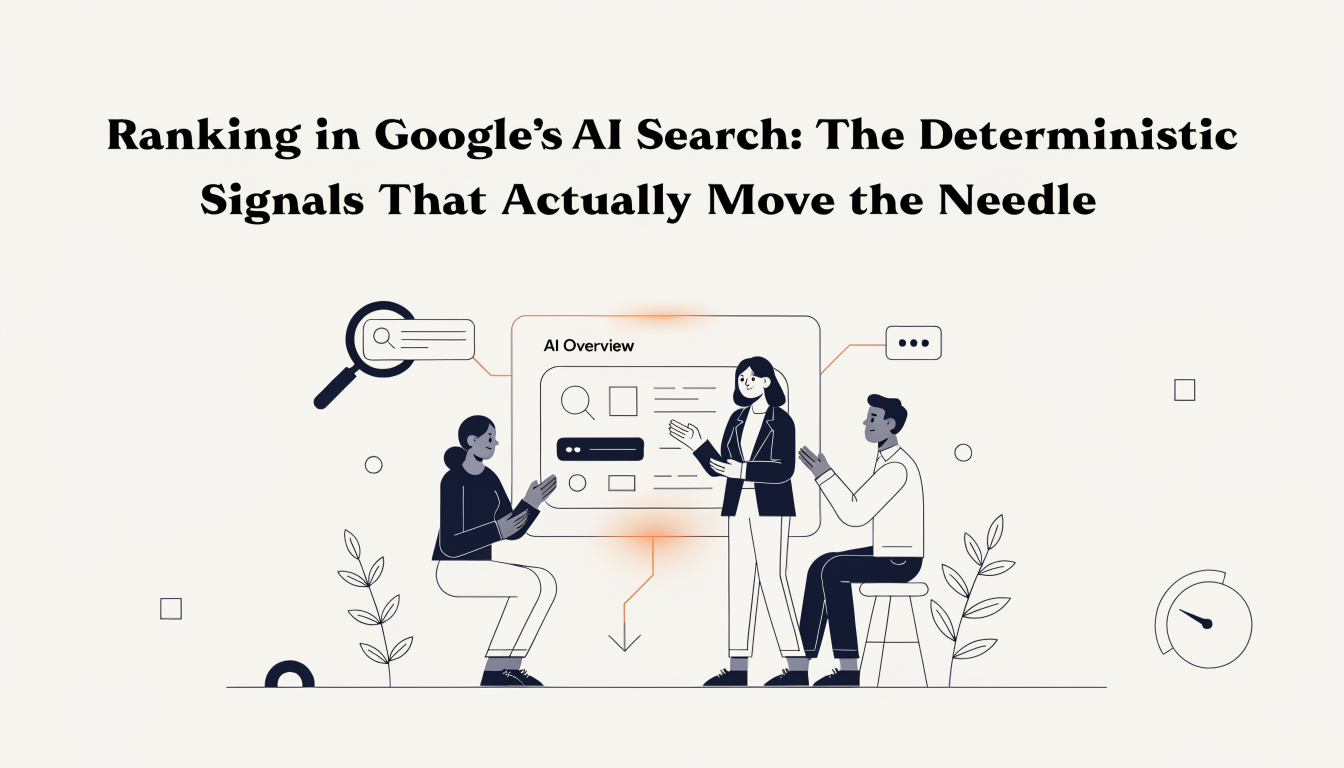
Ranking in Google's AI Search: The Deterministic Signals That Actually Move the Needle
Learn how do you rank in SGE with the three signals Google's AI uses to cite sources: schema markup, entity salience, and structured factual claims.
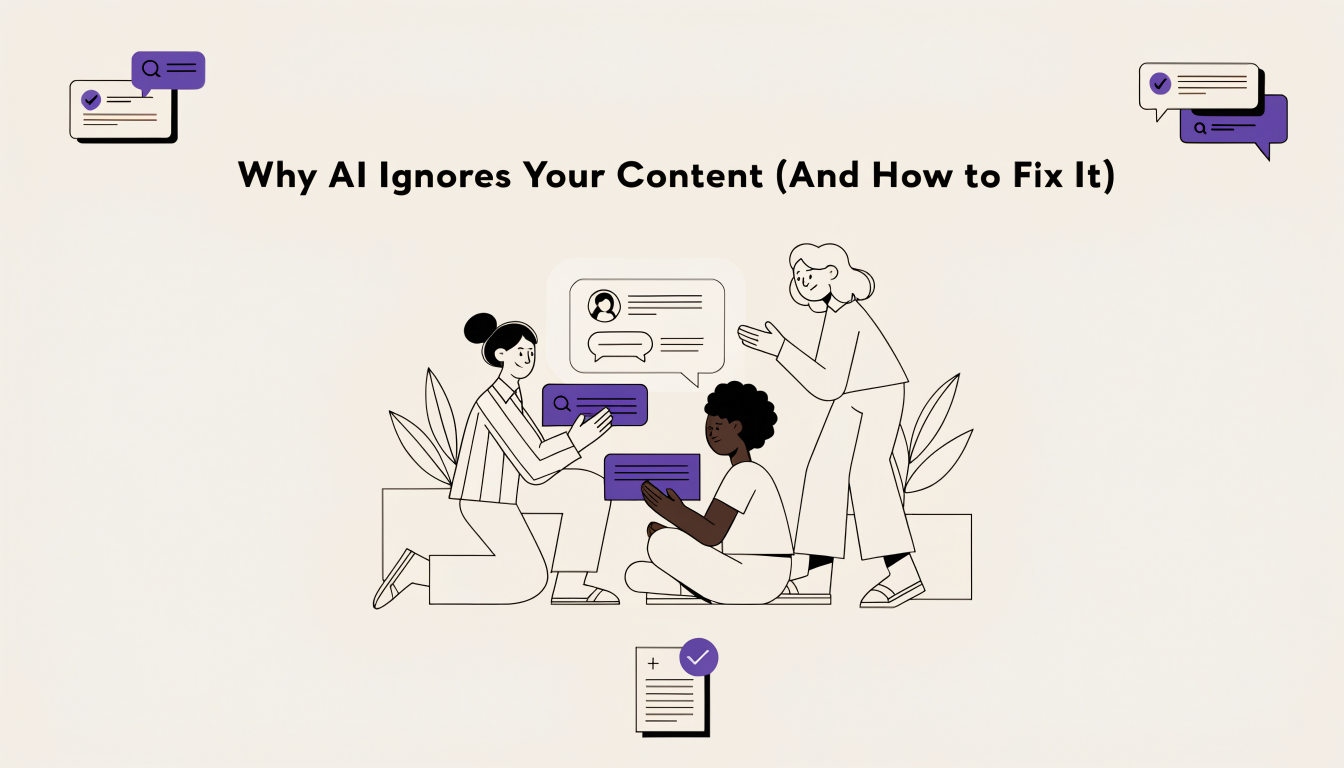
Why AI Ignores Your Content (And How to Fix It)
Learn how to avoid AI content that gets ignored by LLMs. Covers RAG retrieval signals, schema, entity salience, and an answer-first structure checklist.
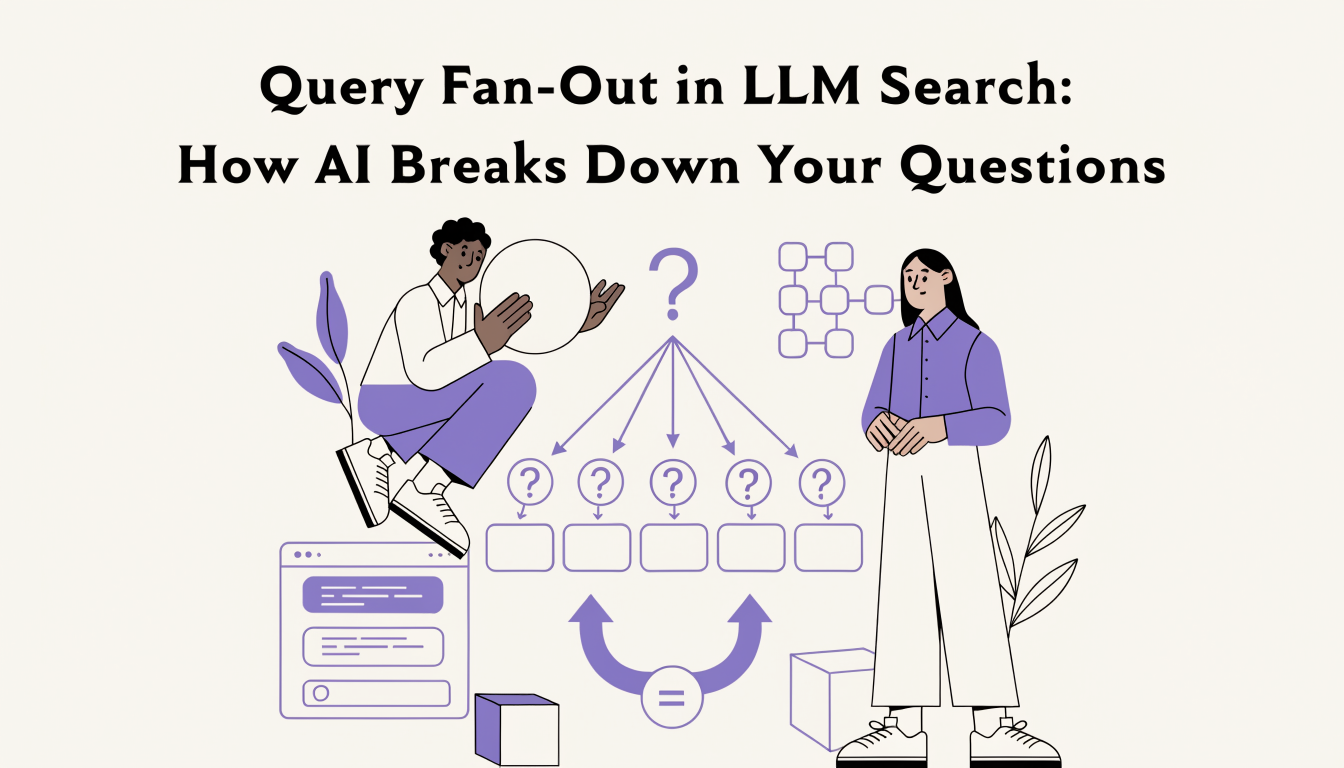
Query Fan-Out in LLM Search: How AI Breaks Down Your Questions
Learn what query fan-out in LLM search is, how AI splits your prompt into 3-8 sub-queries, and how to structure content to win more citation passes.