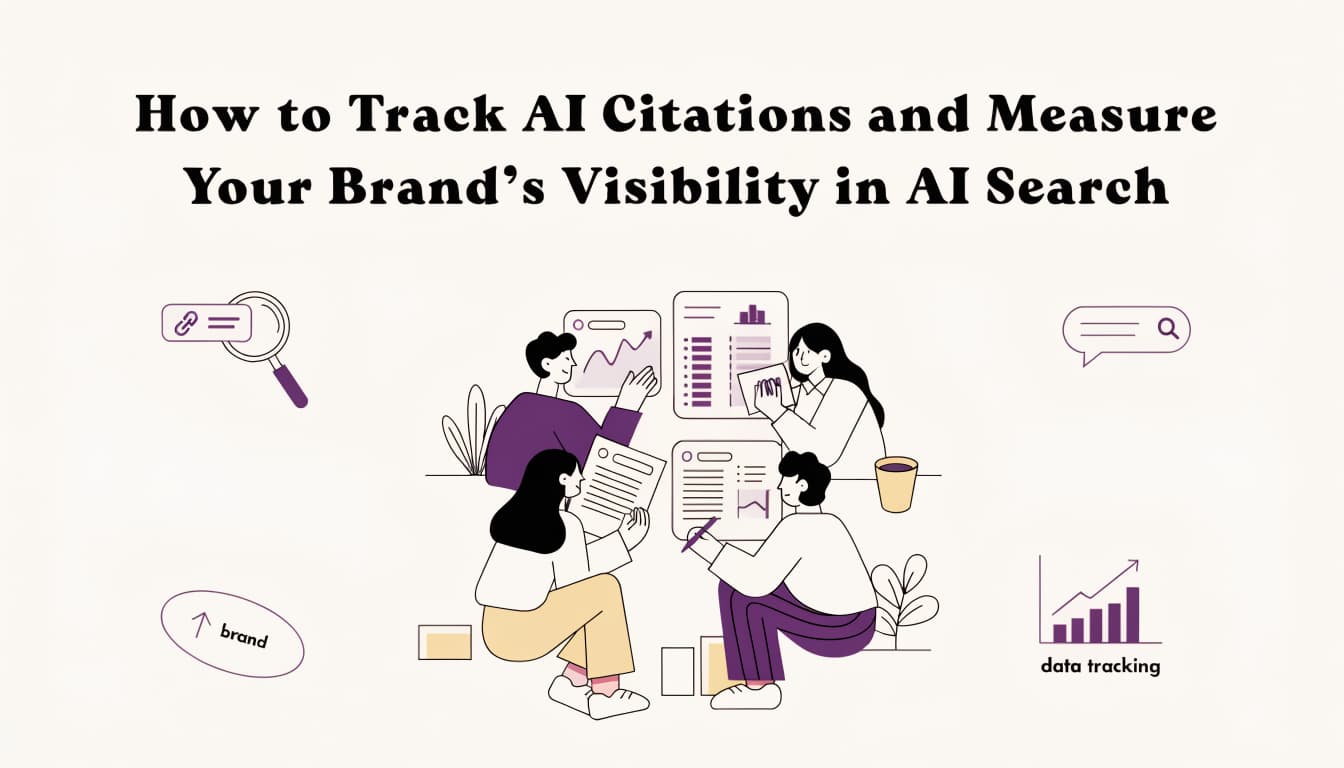
How to Track AI Citations and Measure Your Brand's Visibility in AI Search
Last updated: 5 August 2026
AI citation tracking monitors when search engines and AI assistants pull your content directly into their responses and attribute it to your brand. Unlike traditional rankings that measure page position in link lists, citations represent actual inclusion of your information in AI-generated answers. Tracking requires monitoring which prompts trigger citations, identifying which engines cited you, and comparing your visibility against competitors. This visibility matters because AI-driven search is reshaping how audiences discover information.
Word count: 75
What AI Citation Tracking Actually Measures
AI citation tracking records which URLs and brand references an AI engine surfaces when answering a specific prompt. Unlike a web ranking, which measures where your page appears in a list of links, a citation is a direct inclusion: the AI pulls your content into its answer and attributes it. Tracking that process means monitoring which prompts trigger a citation, which engine cited you, and whether a competitor got the slot instead.
A Web Ranking and an AI Citation Are Not the Same Signal
A Google ranking tells you your page is eligible to be clicked. An AI citation tells you your content was selected as evidence. A page can rank in position one on Google and never appear in a ChatGPT response, and a page buried on page two can be cited repeatedly by Perplexity if it answers a question cleanly and carries the right authority signals.
Otterly's framework for tracking AI search citations separates citation rate from mention rate for exactly this reason. Being mentioned in an AI response (a brand name dropped in passing) is different from being cited (a URL attributed as a source). Both matter, but they measure different things and require different fixes.
How AI Engines Decide What to Cite
The selection process varies by engine, but three inputs consistently show up: training data, real-time retrieval, and authority signals.
Training data shapes the baseline. If your brand was well-represented in the text GPT-4 trained on, you have a head start. But training data is static, and most AI engines now layer retrieval on top of it. Perplexity fetches live URLs before generating its answer. ChatGPT's browsing mode does the same. Freshness and crawlability matter alongside whatever historical footprint you built.
Authority signals are where the overlap with traditional SEO stays real. Backlinks remain a factor in ChatGPT citation selection because the model's training data included the web's link graph, and retrieval-augmented systems often use domain authority as a proxy for trustworthiness when ranking candidate sources. Atomicagi's complete guide to AI citation tracking identifies domain authority and inbound link volume as two of the primary structural signals that predict citation likelihood across ChatGPT and Perplexity.
One honest caveat: none of the major AI engines publish their citation-selection criteria. What practitioners observe is correlation, not a confirmed algorithm. A page with strong backlinks and clear, answer-first structure gets cited more often. Whether that is because of the links, the structure, or both is still an open question.
Why This Is Hard to Measure Without Dedicated Tooling
Search Console logs clicks from Google. It does not log a Perplexity session where your article was cited but the user never clicked through. Standard analytics is blind to the same gap. A visitor who read your brand name in a ChatGPT answer and then searched directly for your site shows up as organic or direct traffic, with no trace of the AI touchpoint.
Ekamoira's implementation guide on AI citation tracking frames this as a measurement infrastructure problem: the data exists inside AI engine responses, but collecting it requires systematically querying those engines with your target prompts and parsing the outputs. That is the core of what AI citation tracking does. Tools like SEORav automate that polling across ChatGPT, Perplexity, Claude, and Gemini, logging every cited URL so you can see trends over time rather than one-shot snapshots.
Why AI Citation Tracking Matters for Content and SEO Teams

AI citation tracking tells content and SEO teams something a SERP impression report cannot: whether your brand is being used as a source inside a generated answer, not just ranked on a results page. A page can sit at position one in Google and never appear in a ChatGPT or Perplexity response. Conversely, a page with modest organic traffic can get cited repeatedly in AI answers, driving brand exposure that never registers in Search Console.
Brand Mentions in ChatGPT vs. Traditional SERP Impressions
A SERP impression signals that Google found your page relevant to a query. An AI citation signals that a language model treated your content as authoritative enough to quote or paraphrase inside a synthesized answer. Those are different endorsements, and they respond to different inputs.
The numbers make the gap concrete. Zero-click search behavior rose from 56% of queries in 2024 to 69% by May 2025, and 5W PR's 2026 state of AI citations research found that only an estimated 11% of domains are cited by both ChatGPT and Perplexity. Most brands are visible in one environment or the other, rarely both. Tracking only traditional impressions leaves the AI half of that picture completely dark.
How AI-Driven Referral Traffic Differs from Organic Click-Through
When a user clicks a citation link inside a ChatGPT or Perplexity response, the session typically arrives in GA4 tagged as direct traffic or with a referral source that doesn't map cleanly to a campaign. Standard UTM setups don't cover it. Teams that haven't configured a custom channel grouping for AI referral sources (perplexity.ai, chatgpt.com, gemini.google.com, and their API variants) will misattribute that traffic and undercount AI-driven visits by a significant margin.
The practical fix is a dedicated GA4 channel group that captures these domains explicitly, combined with weekly manual spot-checks against your citation tracker data. Even a well-configured GA4 setup only captures users who clicked through. AI answers that mention your brand without generating a click, which is common in zero-click environments, produce brand exposure with no session data attached. You are measuring a fraction of the actual impact.
When Digital PR Creates Citation Opportunities Standard Link Building Misses
Traditional link building targets PageRank flow: get a link on a high-authority domain, pass equity to your page. AI citation selection works differently. Language models weight content that appears in editorially independent, frequently referenced sources, particularly news coverage, research publications, and expert commentary that other sources cite in turn.
Digital PR for SEO targets exactly that layer. A brand quoted in a Reuters piece or cited in an industry report becomes part of the training and retrieval corpus that AI engines draw from. This maps to what CrawlVision's 2026 analysis of AI citations in SEO describes as the shift from link equity to "citation equity," where the editorial context around a mention carries as much weight as the domain authority of the linking site.
Standard link building, focused on anchor text and domain rating, rarely targets that editorial layer. A sponsored post on a DR 70 site may do nothing for AI citation frequency. A genuine product mention in a trade publication that three other outlets then reference can move the needle considerably. The limitation is that this kind of coverage is slower to earn and harder to attribute cleanly, so teams under short-term traffic pressure often deprioritize it in favor of tactics with faster feedback loops.
A Step-by-Step Process for Monitoring AI Search Citations

Monitoring AI search citations requires three parallel tracks: capturing referral traffic in GA4, querying AI engines directly with structured brand prompts, and logging citation frequency in a consistent format over time. No single method covers all three. GA4 shows you traffic behavior after a visit; direct querying shows you whether your brand appears in AI responses at all. Both data streams together give you a picture worth acting on.
Step 1: Set Up GA4 to Capture AI Referral Traffic
GA4 doesn't label ChatGPT or Perplexity traffic automatically. You need to build the filter yourself.
Start in GA4's Exploration reports. Create a custom segment using source/medium conditions that catch the referral strings these engines generate: chatgpt.com / referral, perplexity.ai / referral, and claude.ai / referral. Add a secondary dimension for landing page so you can see which specific articles are pulling AI-referred visitors.
The trade-off is real: GA4 only captures users who clicked a cited link and landed on your site. If an AI engine mentions your brand without linking, or if a user reads the response and moves on, that impression is invisible to GA4 entirely. For brands in informational categories where AI engines summarize without linking, this gap can be significant.
Set up a monthly comparison view. Track sessions, bounce rate, and pages-per-session for AI referral segments separately from organic. A drop in AI-referred sessions while organic holds steady is an early signal that citation frequency has declined.
Step 2: Use Dedicated Tools to Track AI Engine Mentions
GA4 tells you a visit happened. It doesn't tell you which prompt triggered the citation, how often your brand appeared across all AI responses that week, or which competitor got cited instead of you.
Dedicated citation tracking tools close that gap by actively polling AI engines with predefined prompts and logging every response. A 2024 comparison of 12 citation analysis platforms found meaningful variation in which engines each tool covers, how frequently they poll, and whether they store historical citation data or only show current snapshots. Historical storage matters: a single week's data tells you almost nothing; a 12-week trend tells you whether your content changes are working.
When evaluating tools, prioritize coverage across ChatGPT, Perplexity, Claude, and Gemini. A tool that only monitors one engine will miss citation patterns that differ substantially across platforms. Some brands rank consistently in Perplexity responses but rarely appear in ChatGPT, often because the two engines weight source authority differently.
Step 3: Run Structured Brand-Mention Queries and Log Citation Frequency
Manual querying is slower than automated tools, but it gives you qualitative context that automated logs miss. You can see exactly how your brand is described, what surrounding claims appear, and whether the citation is positive, neutral, or hedged.
Build a fixed set of 15 to 20 high-intent prompts relevant to your category. Run them in incognito mode weekly, rotating across AI engines. Discoveredlabs' citation tracking methodology recommends logging results in a structured spreadsheet: prompt text, engine, date, whether your brand appeared, the URL cited if any, and the surrounding sentence. That structure lets you calculate citation rate per prompt over time rather than relying on impressions.
The limitation: this approach doesn't scale past a small prompt set without significant manual effort. Teams tracking more than 30 prompts across four engines weekly will find the spreadsheet method breaks down fast. That's the point where automated polling becomes a practical necessity rather than a convenience.
Combine all three steps into a single weekly rhythm: pull GA4 referral data, check your tool's citation log, and run your manual query set. Thirty minutes of structured review per week is enough to catch meaningful shifts before they compound.
Frequently Asked Questions
What is AI citation tracking?
AI citation tracking is the practice of monitoring when and how AI engines like ChatGPT, Perplexity, Claude, and Gemini include your brand or URLs in their generated responses. You query those engines with relevant prompts, log which sources they cite, and track how that changes over time. The goal is to understand your brand's presence inside AI-generated answers, not just on traditional search results pages.
How is an AI citation different from a Google ranking?
A Google ranking means your page is eligible to appear in a list of results. An AI citation means a language model actively selected your content as a source and incorporated it into a synthesized answer. A page can rank well in Google and never appear in an AI response, and a page with modest organic traffic can be cited frequently by Perplexity or ChatGPT if it answers questions clearly and comes from a trusted source.
Can I track AI citations in Google Analytics 4?
You can capture a portion of AI-driven traffic in GA4 by building a custom channel group that filters for referral sessions from chatgpt.com, perplexity.ai, claude.ai, and gemini.google.com. The significant limitation is that GA4 only records users who clicked through to your site. Brand mentions that don't generate a click, which is common in zero-click AI responses, produce no session data at all, so GA4 alone will undercount your actual AI visibility.
Which AI engines should I monitor for citations?
At minimum, monitor ChatGPT, Perplexity, Claude, and Gemini. These four account for the majority of AI-assisted search sessions as of mid-2026. Citation patterns differ across them: Perplexity fetches live URLs and tends to cite more sources per response, while ChatGPT's citation behavior depends heavily on whether browsing mode is active. Tracking only one engine gives you an incomplete picture of where your brand actually stands.
How often should I run citation tracking queries?
Weekly is the practical minimum for most teams. AI engine behavior can shift after model updates or changes to retrieval systems, and a monthly cadence may leave you several weeks behind a meaningful drop in citation frequency. If you're running a content experiment (publishing new articles or updating existing ones to improve citation signals), weekly tracking lets you see whether the changes are having an effect within a reasonable timeframe.
What content signals improve AI citation likelihood?
Pages that answer a specific question directly in the first paragraph, carry strong inbound links from editorially independent sources, and are crawlable without JavaScript barriers tend to get cited more often. Editorial coverage in news outlets and industry publications also contributes, because those sources appear in both training data and live retrieval corpora. There is no published algorithm, so these are observed correlations rather than confirmed ranking factors.
If you want to move from manual spot-checks to a consistent, automated view of your brand's AI citation footprint, visit SEORav to see how the platform tracks citation frequency across ChatGPT, Perplexity, Claude, and Gemini in one place.
Keep reading
Ranking in Google's AI Search: The Deterministic Signals That Actually Move the Needle
Learn how do you rank in SGE with the three signals Google's AI uses to cite sources: schema markup, entity salience, and structured factual claims.
Why AI Ignores Your Content (And How to Fix It)
Learn how to avoid AI content that gets ignored by LLMs. Covers RAG retrieval signals, schema, entity salience, and an answer-first structure checklist.
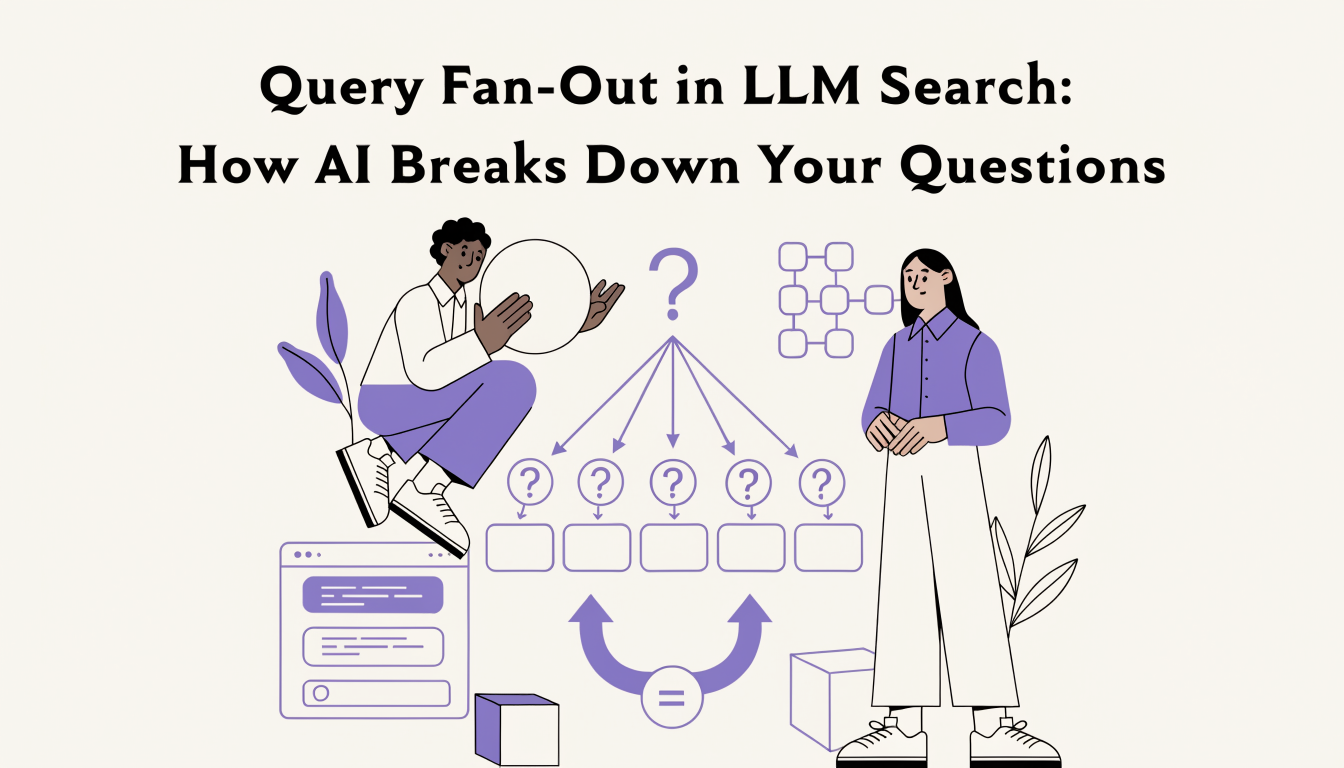
Query Fan-Out in LLM Search: How AI Breaks Down Your Questions
Learn what query fan-out in LLM search is, how AI splits your prompt into 3-8 sub-queries, and how to structure content to win more citation passes.