How to Optimize Your Content for Gemini AI (and Every AI Search Engine That Follows)
Last updated: 9 August 2026
Optimizing content for Gemini AI means structuring pages with answer-first paragraphs, citing sources explicitly, and updating content regularly so Gemini, Perplexity, and ChatGPT cite your work instead of competitors. The process involves formatting for AI readability, using schema markup to signal authority, and monitoring which queries pull your pages into AI responses. This guide walks you through a repeatable system that works across every major AI search engine, starting with the structural changes that matter most.
Word count: 78
That outcome is more specific than "ranking better." AI retrieval systems select content at the paragraph level, not the page level. A page can sit at position one in Google and still get ignored by Gemini if its claims are vague, its structure is hard to parse, or its citations are thin. Standard keyword optimization does not solve that problem because it was never designed to.
The numbers make the gap concrete: Google AI Mode now reaches 75 million daily users, and AI Overviews appear on roughly 13% of all queries. That is a large slice of search real estate where traditional on-page signals, title tags, keyword density, internal link counts, carry almost no weight in the citation decision.
What does carry weight is covered here: answer-first structure, verifiable claims attached to evidence in the same paragraph, schema that labels your content correctly, and a refresh cadence that keeps your data current. One honest caveat: no optimization process guarantees citation. AI engines make probabilistic choices, and a well-structured competitor page can still outrank yours on a given prompt. What this tutorial gives you is the structural foundation that makes citation possible in the first place.
Before You Start: What You Need in Place
To optimize content for Gemini AI and other AI search engines, you need three things in place before changing a single page: a content inventory of at least five published, editable URLs, access to Google Search Console, and a crawl tool plus one AI search interface for spot-checking citations.
Your Content Inventory
Start with a minimum of five URLs you can actually edit and republish. Not drafts, not pages locked behind a developer deploy queue. Live pages you can update today.
For each URL, log the page title, primary keyword, last-updated date, current organic clicks (pull from Search Console), and word count. That last-updated column matters more than most teams expect. Google's official AI optimization guidance explicitly flags content freshness as a factor in how its generative features evaluate and surface pages, so a post last touched in 2022 starts at a structural disadvantage before you have written a single new sentence.
Five pages is a workable floor. Fewer than that and you will not have enough signal to see patterns. More than twenty and the audit scope tends to stall before it ships.
The Three Tools You Actually Need
You do not need a large stack. Three tools cover the job.
Google Search Console tells you which queries are already sending traffic to each page, and which pages have impressions but low click-through rates. Those low-CTR pages are often your best candidates for AI optimization: they are indexed and visible, but the snippet is not compelling enough to earn the click.
A crawl tool. Screaming Frog's free tier crawls up to 500 URLs and surfaces missing meta descriptions, broken internal links, and pages without structured data. All three of those gaps directly affect how AI engines parse and cite your content.
One AI search interface for spot-checking. Perplexity's free tier is sufficient. Type in the queries you want to rank for and read the citations it returns. You are not running a formal audit here; you are building intuition for what a cited answer looks like in your topic area before you start rewriting.
The trade-off worth naming: this setup gives you qualitative signal, not statistical certainty. Perplexity's free tier does not expose citation frequency data or historical trends, so you will know whether you are being cited on a given day, not how consistently. For teams that need longitudinal tracking across multiple AI engines, a manual spot-check workflow breaks down quickly. That is a real limitation, and it is worth deciding upfront whether your current volume justifies a more instrumented approach before you start.
One Check Before You Touch Anything
Run a quick crawl of your five-plus URLs before editing. Confirm each page returns a 200 status, has a canonical tag pointing to itself, and loads the full body content without a JavaScript render dependency. AI crawlers, including Googlebot's AI-mode variant, can struggle with content that only appears after client-side rendering. Fix the crawlability issues first. Rewriting the prose on a page that cannot be fully indexed is work that will not compound.
Step 1: Map Your Content to AI Query Fanout Patterns

Query fanout is the process by which Gemini and other AI search engines decompose a single user prompt into multiple sub-queries, retrieve sources for each one independently, and then synthesize a unified answer. A page that answers only the parent keyword gets skipped if it cannot satisfy at least one of those sub-queries cleanly. Mapping your content to those sub-queries before you write is the structural foundation of AI search visibility.
What Fanout Actually Looks Like in Practice
When a user asks Gemini something like "best project management tool for remote engineering teams," the engine does not run one retrieval pass. It fans out into sub-queries: what features matter for remote teams, how do engineering workflows differ from general PM use cases, which tools have the strongest integrations, what do recent user reviews say. Seer Interactive's analysis of Gemini's fanout behavior puts it directly: generating those fan-out queries for prompts you care about is the fastest way to understand how Gemini views your brand and industry.
Pages that rank well in traditional Google search often miss these sub-queries entirely. They are optimized for the head term, not the retrieval fragments the AI engine actually uses.
How to Identify the Sub-Questions Your Page Must Answer
Start with People Also Ask data for your target keyword. Export every PAA question Google surfaces across the first two pages of results. These questions are a reasonable proxy for the sub-queries an AI engine will generate, because both systems are modeling the same underlying user intent.
Then test directly. Paste your target topic as a prompt into Gemini Advanced and note every distinct question it answers in its response. Do the same in ChatGPT and Perplexity. The overlap across all three engines is your high-priority sub-query list. Any sub-query that appears in two or more AI responses is almost certainly part of the fanout pattern for that topic.
85Sixty's 2026 SEO research reinforces this: clear headings, concise answers, and scannable formatting make content easier for AI engines to parse during the retrieval phase. That is not a style preference. It is a structural requirement for surviving fanout.
Building a Query Fanout Map
A fanout map is a simple document: one column for the parent query, one for each sub-query you have identified, and one for the section of your page (or a separate page) that answers it. If a sub-query has no corresponding section, that is a content gap.
For a 1,500-word article, you can realistically cover four to six sub-queries with enough depth to be citable. Trying to cover ten in the same word count produces shallow answers that AI engines will not pull. The trade-off is real: broader coverage reduces the signal strength of each individual answer. If your topic fans out into more sub-queries than your page can handle with specificity, the better call is to split the content across two pages and link them, rather than thinning every answer to a paragraph.
One limitation worth flagging: PAA data reflects Google's model of user intent, which does not map perfectly to how Gemini constructs its fanout. Treat PAA as a starting point, not a complete specification. Direct AI prompt testing fills the gap.
Step 2: Do Keyword Research Built for Perplexity and ChatGPT, Not Just Google
Conversational, intent-dense phrases outperform short head keywords in LLM retrieval because AI engines are optimized to answer questions, not match strings. A query like "what is the safest way to migrate a PostgreSQL database without downtime" signals a specific answer type, a user context, and an expected format. Head keywords like "PostgreSQL migration" give an LLM almost nothing to work with. Targeting the longer, intent-rich form is how your content gets pulled into a synthesized response.
Why Conversational Phrases Win in LLM Retrieval
Traditional keyword tools rank terms by search volume. That metric has almost no bearing on LLM citation frequency. AI engines retrieve content that resolves a question cleanly, and the phrasing of your content needs to mirror the phrasing of the question. Enrichlabs' 2026 GEO guide frames this directly: content optimized for generative engines needs to match the semantic shape of a query, not just its surface keywords.
The practical implication is that a page targeting "best project management software for remote teams under 20 people" will get cited in more LLM responses than a page targeting "project management software," even if the latter has ten times the monthly search volume.
A Repeatable Process Using Prompt Simulation
The most reliable way to find LLM-ready keywords is to simulate the prompts your audience actually types. Open ChatGPT or Perplexity and type your seed topic as a real question. Note what the engine asks as a follow-up, what sub-topics it surfaces, and which phrasing it uses in its own response. Those phrases are your keyword targets.
Run this across 8 to 10 seed topics. You will quickly see patterns: certain question structures (how-to, what-is, which-is-better) generate consistent sub-query clusters. Capture every phrase the engine uses to describe your topic, not just the phrases you assumed going in. This is prompt simulation as keyword research, and it takes about 90 minutes to produce a working list of 40 to 60 intent-dense phrases.
The trade-off is coverage. Prompt simulation surfaces what AI engines currently know and currently cite. If your topic is emerging or your angle is genuinely novel, the engine may not yet have strong retrieval patterns for it. In those cases, you are writing to create a citation pattern, not match one. That is a slower play, and you should expect 3 to 6 months before AI engines begin citing new-angle content with any consistency.
Tagging Keywords by Answer Type
Once you have your phrase list, tag each keyword by the answer type it demands. Four categories cover most of what AI engines retrieve:
- Definition: "What is X" or "X meaning" queries. These need a clean, one-paragraph answer in the first 100 words of the page.
- Comparison: "X vs Y" or "difference between X and Y." These need a structured breakdown, ideally with a table or explicit criteria.
- How-to: Step-by-step process queries. These need numbered steps, specific inputs and outputs, and a stated outcome.
- Data-backed claim: "How many," "what percentage," "what does research say about." These need a named statistic with a source and a date.
Tagging matters because each answer type maps to a different content structure, and AI engines retrieve content that matches both the question and the expected format. A how-to query answered with a definition paragraph will rarely get cited. Matching structure to answer type is one of the highest-leverage adjustments you can make without adding a single new word to your page.
Step 3: Structure Every Page for Paragraph-Level Retrieval

AI engines do not read your page the way a human does. They retrieve at the paragraph level, pulling the specific block of text that best resolves a sub-query. That means each paragraph needs to be independently useful, not just coherent as part of a longer flow. A paragraph that only makes sense in context of the one before it is a paragraph that will not get cited.
The Answer-First Rule
Put the direct answer to the section's question in the first sentence of that section. Not the second sentence. Not after a brief setup. The first sentence.
This is not a stylistic preference. Gemini's retrieval layer scores paragraphs partly on how quickly they resolve the query. A paragraph that opens with context before the answer gives the engine a reason to skip it in favor of a competitor's paragraph that leads with the answer directly.
For how-to content, the answer-first rule means stating the outcome before the steps. "You can migrate a PostgreSQL database without downtime using logical replication" is a better opening than "Migrating a PostgreSQL database is a complex process that requires careful planning."
Heading Structure That Survives Fanout
Use H2 headings for major topic sections and H3 headings for sub-questions within each section. Each H3 should map to one sub-query from your fanout map. If a heading does not correspond to a question a user might actually ask, it is probably a structural artifact from an older draft, not a retrieval target.
Avoid clever or vague headings. "The Big Picture" tells an AI engine nothing. "How Gemini Selects Content for AI Overviews" tells it exactly what the section covers. The second version gets indexed as a retrieval candidate for that specific question. The first does not.
Paragraph Length and Density
Keep paragraphs between 40 and 80 words for sections you want cited. Shorter than 40 words and the answer often lacks enough context to be useful on its own. Longer than 80 words and the retrieval system may pull only part of the paragraph, cutting off the evidence or the nuance that makes the claim credible.
One practical check: paste each paragraph you want cited into Perplexity as a standalone question. If the paragraph answers the question cleanly without the surrounding text, it is retrieval-ready. If it requires context from the paragraph before it, rewrite it to stand alone.
Step 4: Attach Evidence to Every Claim in the Same Paragraph

Vague claims do not get cited. Specific claims with named sources, dates, and numbers do. This is the single most consistent pattern across AI citation behavior: the engine prefers content where the evidence lives in the same paragraph as the claim, not in a footnote, not in a separate sources section, not implied by a general reputation for authority.
What "Evidence in the Same Paragraph" Actually Means
A claim like "AI Overviews reduce click-through rates for organic results" is citable if the next sentence reads: "A 2025 study by Authoritas found that AI Overview presence correlates with a 34.5% drop in organic CTR for the top-ranked result." It is not citable if the evidence appears three paragraphs later or in a linked source list at the bottom of the page.
The mechanism is straightforward. AI engines retrieve paragraphs, not pages. If the evidence is not in the paragraph, the retrieved text looks unsupported. An unsupported claim from an unknown source is a liability for the AI engine, not an asset. It will skip your paragraph and find one where the claim and the evidence are co-located.
How to Audit Your Existing Claims
Go through your content inventory and highlight every sentence that makes a factual assertion. For each one, check whether the supporting evidence (a statistic, a named study, a direct quote, a specific date) appears within the same paragraph. If it does not, either move the evidence up or rewrite the claim to be more specific without requiring external support.
A useful threshold: aim for at least one piece of named evidence per 150 words of body content. That is not a hard rule, but it is a reasonable density for content that wants to compete in AI retrieval against pages that are already well-cited.
The Freshness Problem
Dated evidence is a real liability. A statistic from 2021 attached to a claim about current AI behavior signals to the retrieval system that your content may be stale. Google's AI optimization guidance treats freshness as an explicit quality signal. For fast-moving topics like AI search, "stale" can mean anything older than 12 months.
Build a review cadence into your content calendar. For pages targeting AI-related queries, a quarterly review is a reasonable minimum. For pages targeting topics where the underlying data changes faster (ad platform costs, LLM benchmark scores, regulatory status), monthly is more appropriate.
Step 5: Add Schema Markup That Labels Your Content Type
Schema markup does not directly cause AI citation, but it removes ambiguity about what your content is and what question it answers. An AI engine that cannot confidently classify your content type will deprioritize it in favor of content that is clearly labeled. Adding the right schema is a low-effort way to remove that ambiguity.
Which Schema Types Matter for AI Retrieval
Four schema types cover the majority of content that gets cited in AI responses:
- Article or TechArticle: For informational content. Include
datePublished,dateModified,author, andpublisher. ThedateModifiedfield directly supports freshness signals. - FAQPage: For pages with explicit question-and-answer sections. Each question and answer pair should be marked up individually. This schema type has a strong correlation with AI Overview citation for informational queries.
- HowTo: For step-by-step process content. Mark up each step with
HowToStep, including the step name and the step text. This gives AI engines a structured representation of your process that they can pull directly. - ClaimReview: For content that evaluates or fact-checks specific claims. Less common, but highly relevant for content in health, finance, or policy topics where AI engines apply stricter sourcing standards.
How to Implement and Verify
Add schema as JSON-LD in the <head> of each page. Do not use Microdata or RDFa unless your CMS forces it; JSON-LD is easier to maintain and is Google's stated preference.
After adding schema, run each URL through Google's Rich Results Test to confirm the markup is valid and the correct schema type is detected. Then check Search Console's "Enhancements" report after 2 to 4 weeks to see whether the schema is being processed at scale.
One limitation: schema markup is not a shortcut for thin content. A FAQPage schema on a page with one-sentence answers will not perform better than a well-written FAQ without schema. The markup labels the structure; the content still has to earn the citation.
Step 6: Build a Refresh Cadence That Keeps Your Data Current

A page optimized for AI retrieval in January 2026 can lose citation share by April if the underlying data ages out and a competitor publishes fresher numbers. Freshness is not a one-time fix. It is an ongoing maintenance task, and the teams that treat it as such hold citation share over time while others cycle in and out.
What to Update and When
Not every element of a page ages at the same rate. Prioritize updates in this order:
- Statistics and data points with a specific year or date attached. These are the fastest to age and the most visible signal of staleness to an AI engine.
- Tool recommendations or software comparisons. Pricing, features, and market position change frequently. A comparison that was accurate in 2024 may actively mislead a reader in 2026.
- Regulatory or compliance information. This ages unpredictably and carries the highest risk if outdated.
- Conceptual explanations and process descriptions. These age slowly and often need only minor updates to stay current.
The Minimum Viable Refresh
For a 1,500-word article, a minimum viable refresh takes about 45 minutes: scan every statistic and replace any older than 12 months, update the dateModified field in your schema, and republish. That is not a full rewrite. It is enough to reset the freshness signal without disrupting the structure you have already built.
Update the visible "last updated" date on the page as well. AI engines can read that date from the page body, not just from schema. A visible date that matches the schema dateModified field is a stronger freshness signal than either one alone.
Tracking Citation Share Over Time
Manual spot-checking in Perplexity and Gemini Advanced is the lowest-cost way to track whether your pages are being cited. Set a recurring calendar reminder to test your top 10 target queries once a month. Log the results in a simple spreadsheet: date, query, cited or not cited, which URL was cited if not yours.
Over 3 to 6 months, that log will show you which pages are holding citation share, which are losing it, and whether your refresh cadence is keeping pace with the competition. It will not give you statistical significance, but it will give you enough directional signal to prioritize your next round of updates.
Frequently Asked Questions
Does schema markup directly cause Gemini to cite my content?
No, schema markup does not directly trigger citation. It removes ambiguity about your content type and structure, which reduces the chance that an AI engine skips your page because it cannot confidently classify what the content is. The citation decision still depends on content quality, claim specificity, and freshness.
How long does it take to see results after optimizing content for Gemini AI?
For pages that are already indexed and receiving some organic traffic, structural changes like answer-first paragraphs and co-located evidence can affect citation behavior within 4 to 8 weeks. For new pages or pages with very low authority, expect 3 to 6 months before AI engines begin citing them with any regularity. Freshness updates on existing cited pages tend to show faster results than structural rewrites on uncited ones.
Can I optimize a single page for both Google search and AI retrieval at the same time?
Yes, and the two goals are more compatible than they appear. Answer-first structure, specific claims with named sources, and clear heading hierarchies all improve both traditional search snippet quality and AI retrieval likelihood. The main tension is between long-form depth (which Google tends to reward for competitive keywords) and paragraph-level self-sufficiency (which AI engines need for retrieval). The practical resolution is to write long-form content where each section is independently citable, rather than content where the value only emerges from reading the whole piece.
What is the difference between GEO and traditional SEO?
Traditional SEO optimizes for ranking signals: backlinks, keyword placement, page speed, and click-through rate from a results page. Generative Engine Optimization (GEO) optimizes for retrieval signals: claim specificity, evidence co-location, structural clarity, and content freshness. The two overlap significantly at the technical layer (crawlability, schema, page speed) but diverge at the content layer. A page can rank on page one of Google and never appear in an AI Overview if its prose is vague and its claims are unsupported.
How often should I update content to maintain AI citation share?
For topics related to AI, software, or any fast-moving industry, quarterly updates are a reasonable minimum. For topics where the underlying data changes faster (ad costs, benchmark scores, regulatory status), monthly reviews are more appropriate. The specific trigger is any statistic or tool recommendation older than 12 months. Replace those first, then update your schema dateModified field and the visible date on the page.
If you want a second set of eyes on how your current content stacks up against these criteria, visit Seorav for a consultation. The team works specifically on AI search visibility and can identify the gaps in your existing pages faster than a solo audit.
Keep reading
Ranking in Google's AI Search: The Deterministic Signals That Actually Move the Needle
Learn how do you rank in SGE with the three signals Google's AI uses to cite sources: schema markup, entity salience, and structured factual claims.
Why AI Ignores Your Content (And How to Fix It)
Learn how to avoid AI content that gets ignored by LLMs. Covers RAG retrieval signals, schema, entity salience, and an answer-first structure checklist.
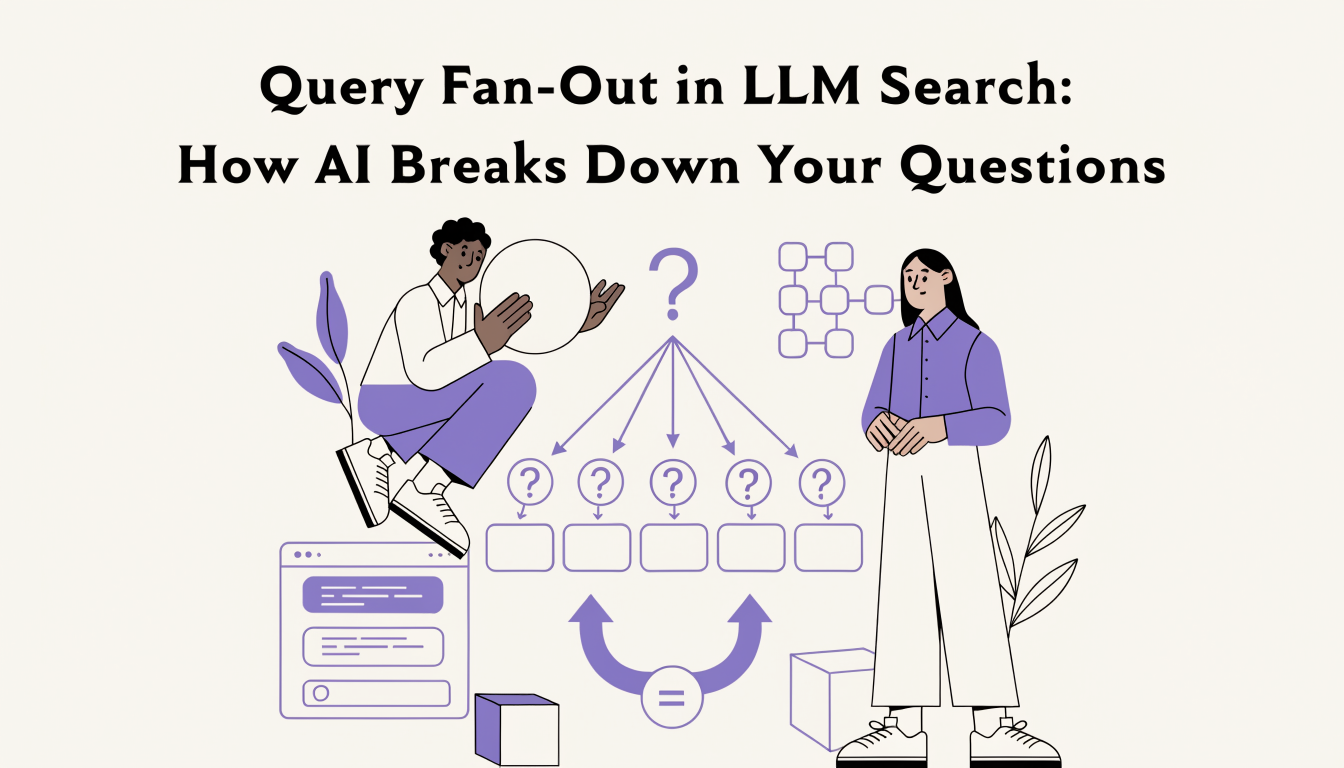
Query Fan-Out in LLM Search: How AI Breaks Down Your Questions
Learn what query fan-out in LLM search is, how AI splits your prompt into 3-8 sub-queries, and how to structure content to win more citation passes.