How AI Search Actually Works (And How to Show Up in It)
Last updated: 13 August 2026
AI search optimization means structuring your content so that language models like ChatGPT, Perplexity, and Gemini can extract a direct, citable answer from your pages and surface it in their generated responses instead of just listing your URL. Unlike traditional search, AI systems pull quoted passages and synthesize them into answers, which means your content competes not for ranking position but for extraction. Understanding how these models read and cite your work changes what you write and how you organize it.
Word count: 82
AI Search Optimization Explained in Plain Terms
AI search optimization is the practice of structuring your content so that AI engines like ChatGPT, Perplexity, and Gemini can extract a confident, citable answer from your pages and surface it in a generated response, rather than just ranking your URL in a list.
The scale of the shift makes this worth taking seriously. AI-assisted search queries grew 1,757% year-over-year by early 2026, according to data tracked by Optimizegeo, and zero-click searches now account for 69% of all queries. Your content either gets pulled into the answer, or it gets skipped entirely.
This article covers the full picture: what generative engine optimization (GEO) actually means in practice, how query fanout changes the way AI engines interpret intent, and what structural changes to your pages move the needle on citations. One honest caveat upfront: the field is moving fast, and some tactics that work today may be weighted differently as model behavior evolves. The principles here are durable; the specific thresholds are not.
TL;DR
AI search engines retrieve candidate passages from across the web, score them for credibility and answer confidence, then synthesize a response using those passages as source material. Pages that get cited are structurally clear, entity-rich, and answer a specific question without making the model guess.
- AI search traffic grew 527% in a single year, per Semrush's 2025 data, and Google AI Overviews now reach 2 billion monthly users. Visibility in these surfaces is a separate problem from ranking on page one.
- AI engines use retrieval-augmented generation (RAG): they pull passages before generating an answer. If your page isn't retrievable at the passage level, it won't be cited, regardless of domain authority.
- Structure drives citation. Headers, concise direct answers, and schema markup let models extract a clean answer. Pages that bury the answer in narrative prose get skipped.
- The trade-off worth knowing: optimizing for AI citation and optimizing for traditional organic rankings sometimes pull in different directions. A tightly structured answer page can underperform on click-through while outperforming on AI citation share. Know which metric you're actually chasing.
How AI Search Engines Actually Process Your Content

When you type a question into Perplexity or ChatGPT, the engine doesn't search for a matching page. It decomposes the question into multiple sub-queries, retrieves candidate passages from an external index, scores each passage for relevance and credibility, then synthesizes a response using the highest-confidence sources. Pages that get cited aren't just well-ranked; they're structurally readable at the passage level, carry clear entity signals, and answer a specific sub-question without making the model guess.
Query Fanout: One Question, Dozens of Sub-Queries
A single user prompt like "what's the best CRM for a 10-person sales team" doesn't trigger one retrieval call. The engine fans it out: pricing comparisons, integration requirements, onboarding complexity, user reviews by company size. Each sub-query pulls its own candidate passages. Your content gets considered for whichever sub-queries it can answer cleanly.
The practical implication: a single long-form page that covers one topic thoroughly has more surface area across that fanout than five thin pages targeting five separate keywords. Depth per topic beats breadth across topics.
GEO: The Mechanism Behind Citations
Generative Engine Optimization (GEO) is the set of content signals that determine whether a source gets cited in a generated response. The signals overlap with traditional SEO but weight differently. Semantic relevance, entity clarity, passage-level extractability, and citation authority all factor in. Pilot Digital's content structure analysis found that structured headers, concise answer paragraphs, and schema markup directly increased the rate at which AI engines extracted and cited content from a page.
The numbers reinforce the stakes: McKinsey projects that more than 75% of Google searches will carry AI summaries by 2028, up from roughly 50% today. If your content isn't structured for extraction, it gets retrieved but not cited.
Why Perplexity, ChatGPT, and Gemini Pull from Different Signals
The three engines don't share an index or a ranking model. Perplexity runs its own web crawler and weights recency and source authority heavily. ChatGPT with browsing enabled leans on Bing's index and tends to favor pages with strong structured data and clear authorship signals. Gemini draws on Google's index and applies its own entity graph, so topical authority and internal linking patterns matter more there than on the other two.
The trade-off is real: optimizing hard for one engine's signals can create friction with another's. A page built around Perplexity's recency preference (frequent updates, timestamped content) may not carry the depth signals Gemini's entity graph rewards. Most teams find it more practical to optimize for the shared signals first (clear structure, specific claims, citable passages) and treat engine-specific tuning as a secondary layer once baseline citation rates are established.
When AI Search Optimization Matters Most for Your Site

AI search optimization has the clearest return when your site publishes definitional content, step-by-step guides, or data-backed comparisons. These are the formats ChatGPT, Perplexity, and Gemini pull from most reliably when constructing direct answers. If your domain operates in finance, health, SaaS, or any field where users ask "what is" and "how to" questions at scale, the case for prioritizing AI citation visibility is strong right now.
The Traffic Shift Happening in 2025 and 2026
The numbers tell a direct story: GoodFirms' analysis of zero-click trends puts 58.5% of searches at zero-click, with 83% of AI-generated query responses ending on the SERP itself. Users are getting answers without ever visiting a source page. Ranking on page one still matters, but being the source an AI engine quotes in its answer carries a different kind of weight: brand recall and authority signal, even when the click never happens.
Conductor's analysis of 21.9 million searches found 25.11% triggered an AI Overview, and that figure is climbing. For high-volume informational queries, AI answer boxes are no longer edge cases. They are the primary interface.
Content Types That Get Cited Consistently
Definitions get pulled because they resolve ambiguity fast. How-to content gets cited because it maps directly to task-oriented queries. Data-backed claims get quoted because AI engines need something verifiable to anchor their answers. If your content does none of these things, it tends to get skipped, regardless of domain authority.
Perplexity in particular favors pages that cite external sources within the body of the article itself. ChatGPT leans toward content with clear structure: short paragraphs, explicit subheadings, and answers that appear early rather than buried after three paragraphs of context-setting.
There is a real limit to this approach, though. For transactional queries ("buy X", "pricing for Y") and branded navigational searches, AI engines largely defer to traditional results or the brand's own site. Optimizing for AI citation on those query types produces almost no measurable lift. The approach also breaks down for content that is inherently visual, interactive, or requires a user to engage with a tool rather than read an answer. AI engines cannot quote a calculator or a configurator.
Why This Is Infrastructure, Not a Trend
Electricity is a useful frame here. When businesses first electrified their operations, some treated it as optional. The ones that waited did not opt out of electricity; they just fell behind the ones who built around it earlier. AI search is following the same pattern. The AI search engine market reached USD 15.23 billion in 2024 and is projected to hit USD 21 billion by 2026. That is not a niche channel growing at the margins. It is a structural shift in how people retrieve information.
The sites that will hold citation visibility two years from now are the ones building for it today, not the ones planning to adapt once the behavior is fully mainstream.
A Step-by-Step Process to Optimize Content for AI Search

Optimizing content for AI citation means structuring each page so an AI engine can extract a clean, self-contained answer to a specific question without reading the whole article. The practical process has three steps: build your keyword list around question-intent clusters, restructure existing pages so each section resolves one sub-question completely, and apply formatting signals that help LLMs parse and quote your content accurately.
Step 1: Find the Questions AI Engines Actually Answer
Standard keyword research targets head terms. AI search research targets question clusters. Open ChatGPT or Perplexity and type the topic you want to rank for. Note the exact phrasing of the follow-up questions the engine generates, the clarifying prompts it suggests, and the sub-questions embedded in its own answer. Those are the queries your content needs to resolve, not the head term itself.
The GEO framework Otterly documented using data from the Princeton GEO study found that pages optimized around question-intent clusters saw measurably higher citation rates than pages built around keyword density alone. The mechanism is straightforward: AI engines are retrieval systems trained to answer questions, so pages that mirror question structure get pulled more often than pages that describe topics broadly.
One practical method: export 20 to 30 "People Also Ask" results for your target topic, group them by sub-intent, and treat each group as a section brief. Each section should open with a direct answer to that sub-question in the first two sentences.
Step 2: Optimize Existing Content Without a Full Rewrite
A full rewrite is rarely necessary. Most pages already contain the right information; they just bury it.
The fastest intervention is a passage-extraction test. Open a page, pick any section, and ask: if an AI engine pulled one paragraph from this section, would it stand alone as a complete answer? If the answer requires context from three paragraphs up, the passage will not get cited. Fix it by moving the direct answer to the top of each section, then letting the explanation follow.
After that, check three structural signals:
- Does each H2 or H3 heading read as a question or a clear statement of the answer? Headings like "Overview" give an LLM nothing to work with. "How AI engines select citations" gives it a retrieval hook.
- Are there any unsupported claims that a model might flag as unverifiable? Adding a specific figure or a named source per section increases the probability of citation.
- Does the page have FAQ schema attached? Google's AI optimization guide for developers lists structured data as one of the clearest signals for generative AI features.
Step 3: Apply Formatting Signals That LLMs Can Parse
Formatting is not cosmetic at this layer. It is functional. AI engines parse your HTML before they read your prose, so the structure of your markup shapes what gets extracted.
Use one H1 per page, descriptive H2s and H3s that could stand alone as search queries, and keep paragraphs to three sentences or fewer. Place your direct answer within the first 100 words of each section. If a claim is specific and verifiable, link to the source inline rather than in a footnote. Models weight inline citations more heavily than reference lists at the bottom of a page.
Schema markup matters here too. FAQ schema, HowTo schema, and Article schema all give AI engines explicit signals about content type and structure. A page with FAQ schema attached is easier for a model to parse than an identical page without it, all else being equal.
One limit to flag: schema markup helps with extraction but does not guarantee citation. A page with perfect schema and thin content will still lose to a page with strong prose and no schema. The markup amplifies good content; it does not substitute for it.
Frequently Asked Questions
What is AI search optimization?
AI search optimization is the process of structuring your content so that AI-powered search engines like ChatGPT, Perplexity, and Gemini can extract and cite your pages in their generated answers. It differs from traditional SEO in that the goal is passage-level extractability, not just page-level ranking. A page can rank on page one and still never appear in an AI-generated response if its structure makes extraction difficult.
How is AI search optimization different from traditional SEO?
Traditional SEO focuses on ranking a URL in a list of results. AI search optimization focuses on getting a specific passage from your page quoted inside a generated answer. The signals overlap (authority, relevance, clear structure) but the weights differ. AI engines care more about passage clarity, entity specificity, and inline citations than about exact-match keyword density or backlink volume alone.
Which AI search engines should I optimize for first?
Start with the shared signals that all three major engines (ChatGPT, Perplexity, Gemini) respond to: clear headings, direct answers early in each section, specific verifiable claims, and schema markup. Once your baseline citation rate is measurable, layer in engine-specific adjustments. Perplexity rewards recency and inline source citations. Gemini rewards topical depth and internal linking. ChatGPT with browsing rewards strong structured data and clear authorship signals.
Does domain authority still matter for AI citation?
Yes, but it is not sufficient on its own. High domain authority increases the probability that your pages get retrieved in the first place, but retrieval and citation are two separate steps. A high-authority page with poor passage structure can get retrieved and then skipped at the citation stage. A mid-authority page with clean, extractable answers can outperform it on citation share. Authority gets you into the pool; structure determines whether you get selected.
How long does it take to see results from AI search optimization?
There is no reliable universal timeline, and anyone who gives you a precise number is guessing. Structural changes (heading rewrites, passage restructuring, schema markup) can be indexed and reflected in AI outputs within days to a few weeks. Building the topical authority and citation history that sustains long-term visibility takes months. Treat the structural work as the floor and the authority-building as the ongoing investment.
Can I measure AI citation performance?
Directly, no, not yet at scale. Tools like Otterly, Profound, and AthenaHQ track brand mentions in AI-generated responses, but the coverage is partial and the methodology varies by tool. The more practical approach for most teams is to monitor referral traffic from AI engines (Perplexity sends referral traffic with identifiable source tags), track branded search volume as a proxy for AI-driven awareness, and run periodic manual checks by querying your target topics in ChatGPT and Perplexity directly.
If you want a structured review of how your current content performs against AI citation signals, visit Seorav to see how the team approaches AI search optimization audits and content restructuring. Getting a second set of eyes on your pages before the next round of model updates is a practical first step.
Keep reading
Ranking in Google's AI Search: The Deterministic Signals That Actually Move the Needle
Learn how do you rank in SGE with the three signals Google's AI uses to cite sources: schema markup, entity salience, and structured factual claims.
Why AI Ignores Your Content (And How to Fix It)
Learn how to avoid AI content that gets ignored by LLMs. Covers RAG retrieval signals, schema, entity salience, and an answer-first structure checklist.
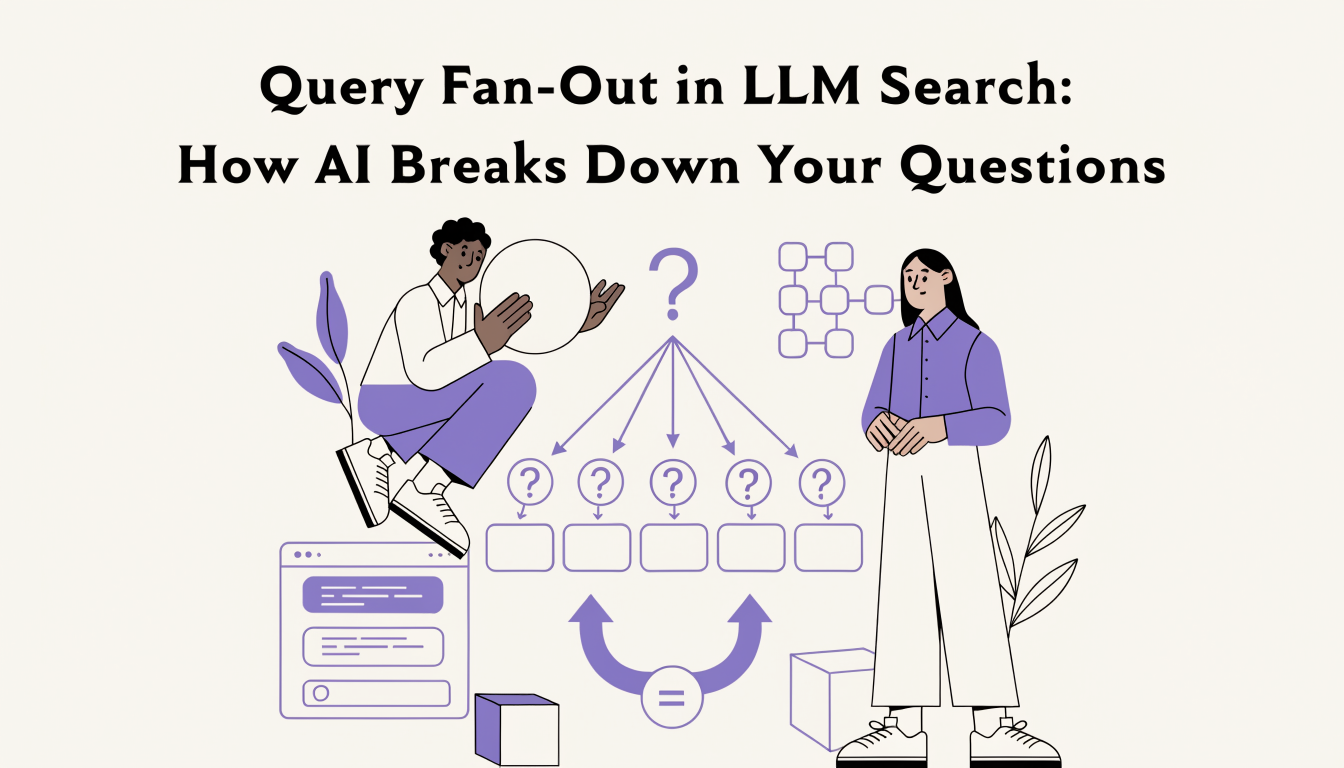
Query Fan-Out in LLM Search: How AI Breaks Down Your Questions
Learn what query fan-out in LLM search is, how AI splits your prompt into 3-8 sub-queries, and how to structure content to win more citation passes.