GEO Strategy: Build Authority in Generative AI Search
Last updated: 23 July 2026
A GEO strategy: build authority in generative AI means structuring your content, citations, and entity signals so that large language models treat your brand as a trusted source worth quoting — not just a URL worth ranking. Done well, it shifts your visibility from a blue link to an embedded answer.
Why Generative Engine Optimization Matters Right Now
Google's AI Overviews, ChatGPT search, Perplexity, and similar tools now answer millions of queries without the user ever scrolling to a results page. A study cited by Lumar found that AI-generated answers frequently pull from a narrow pool of high-authority, well-structured sources — meaning the gap between brands that appear in these answers and those that don't is widening fast.
Traditional SEO rewarded volume: more pages, more backlinks, more keywords. GEO rewards precision: clear claims, verifiable facts, and a coherent entity identity that models can confidently cite. The two disciplines overlap but are not the same. A site that ranks #3 for a keyword may never appear in an AI-generated answer if its content is vague, poorly structured, or lacks third-party corroboration.
For most brands, the window to establish authority before the landscape solidifies is roughly 12-18 months. Acting now is a structural advantage, not a trend to observe.
Define Your Entity Before You Optimize Anything
LLMs think in entities, not pages. Before writing a single piece of content, you need to establish what your brand is in a way that models can recognize and repeat.
That means:
- A consistent brand name, description, and category across your website, Google Business Profile, Wikipedia (if eligible), Wikidata, and major directories.
- A clear "about" statement that includes your industry, founding context, and what makes your offering distinct — written in plain declarative sentences, not marketing copy.
- Schema markup on every key page:
Organization,Person(for founders or key authors),Product, andFAQPagewhere relevant.
A concrete example: a B2B SaaS company that sells contract analytics software should have its Wikidata entry, LinkedIn company page, Crunchbase profile, and homepage "About" section all use the same category label — "contract analytics software" — rather than four different variations like "legal tech platform," "CLM tool," "AI contract review," and "document intelligence." Inconsistency fragments the entity signal that models rely on.
Build a Citation Network, Not Just a Backlink Profile
Backlinks still matter for traditional search. But for GEO, the more powerful signal is citations in text — other authoritative sources mentioning your brand name in context, the way a journalist or analyst would.
The practical target: earn mentions in at least 10-15 high-authority domains that LLMs demonstrably draw from. These include major trade publications in your vertical, university research blogs, government data portals, and established news outlets. A mention in Harvard Business Review, a regional newspaper of record, or a respected industry association newsletter carries far more weight in model training data than 50 mentions in low-authority blogs.
How to earn them:
- Original research — publish a study with a real sample size (even 200 survey respondents is enough to be citable). Name the methodology. Release it publicly.
- Expert commentary — respond to journalist queries via platforms like HARO (now Connectively) or Qwoted. A single placed quote in a Reuters or Bloomberg article can seed dozens of downstream citations.
- Contributed articles — bylined pieces in trade publications put your entity name in a credible context, with the publication's authority attached.
This is slower than buying links, but it's the only approach that holds up as models are retrained on new data.
Structure Content So Models Can Extract and Quote It
LLMs are pattern-matching engines. They prefer content that is already formatted like an answer. That means your pages need to do the structural work upfront.
Use Answer-First Paragraphs
Every article, guide, or product page should open with a direct, self-contained answer to the implied question — 40-60 words, no preamble. This mirrors how models construct responses and makes your text easy to lift verbatim.
Use Specific, Verifiable Claims
Vague statements like "our platform improves efficiency" are invisible to models. Specific claims like "reduces contract review time by 40% in teams of 10 or more" are citable. If you can't back a claim with data, replace it with one you can.
Apply Structured Markup Consistently
FAQPage schema, HowTo schema, and Speakable schema all signal to crawlers — and by extension to models trained on crawled data — that your content is organized for direct extraction. A page with proper FAQPage markup is more likely to surface in AI answers than an equivalent page without it, all else equal.
Optimize for the Queries Models Actually Answer
Not all queries trigger AI-generated answers. Navigational queries ("Facebook login") and highly transactional queries ("buy running shoes size 10") rarely produce LLM-written responses. The queries that do are definitional, comparative, and how-to in nature.
Map your content to three query types that LLMs consistently handle:
| Query Type | Example | Content Format That Works |
|---|---|---|
| Definitional | "What is contract analytics?" | Glossary entry, explainer article |
| Comparative | "Contract analytics vs. CLM software" | Side-by-side comparison with named criteria |
| How-to | "How to automate contract review" | Numbered process guide with specific steps |
For each of these, your content needs to be more specific, more accurate, and better sourced than what already ranks. Generic overviews do not get cited; precise, credible explanations do.
Measure GEO Performance — and Recognize What Can Fool You
Traditional metrics (organic sessions, keyword rankings) don't capture GEO performance. You need a separate measurement layer.
Metrics that matter:
- Brand mention frequency in AI outputs — manually query ChatGPT, Perplexity, and Google AI Overviews for your target topics weekly. Log whether your brand appears, and in what context.
- Citation source audit — track which domains are citing you in text. Growth in citations from high-authority domains correlates with improved LLM visibility.
- Direct and dark traffic — as AI answers grow, some users arrive at your site without a referral string. A rising share of direct traffic can indicate AI-driven discovery.
- Share of voice in AI answers — for your 10-20 most important queries, track which competitors appear alongside or instead of you.
Common failure modes:
The most frequent mistake is optimizing for AI visibility on topics where your brand has no real credibility. Models are trained to be accurate; they will not cite a software company as an authority on medical research no matter how well-structured the content is. Relevance and genuine expertise are prerequisites, not optional.
A second failure: treating GEO as a one-time content project. Model training data refreshes on cycles ranging from months to over a year. Authority built today may take 6-12 months to appear consistently in AI outputs. Brands that publish one optimized piece and stop see no lasting lift.
Your First 30 Days: A Realistic Action Plan
Week 1 is entirely audit and foundation. Run a full entity audit: check your brand name across 15-20 major platforms for consistency. Fix mismatches. Add or update Schema markup on your homepage, About page, and top 5 content pages.
Week 2: identify 5 definitional or comparative queries central to your business. Write or rewrite one piece of content per query using the answer-first format and at least two verifiable, specific claims per 300 words.
Week 3: launch one original research asset — even a short survey of 50-100 customers produces citable data. Draft a press release or pitch it to one trade publication.
Week 4: begin the citation-building process. Submit to three high-authority directories relevant to your industry. Respond to two journalist queries. Set up a weekly manual query log to track your brand's appearance in AI-generated answers.
This is not a complete GEO program — it's a foundation. But 30 days of focused work on entity clarity, content structure, and citation seeding puts you ahead of the majority of brands still treating GEO as a future concern.
See how seorav.com can help you build a structured GEO program tailored to your industry, from entity setup through citation strategy and ongoing measurement. The earlier you establish authority signals, the harder they are for competitors to displace.
Frequently Asked Questions
What is GEO and how is it different from traditional SEO?
GEO (Generative Engine Optimization) focuses on getting your brand cited inside AI-generated answers from tools like ChatGPT, Perplexity, and Google AI Overviews. Traditional SEO targets ranked positions in a list of links. GEO targets the answer itself. The tactics overlap — structured content, credible sources, entity clarity — but GEO places far more weight on verifiable claims, consistent entity signals, and third-party citations in text than on keyword density or link volume.
How long does it take to see results from a GEO strategy?
Realistically, 3-9 months before you see consistent brand appearances in AI-generated answers. LLMs are trained on data collected over months, so changes you make today may not be reflected until the next training cycle. Entity cleanup and schema markup can produce faster results in tools that crawl in near real-time, like Perplexity. Citation-building and original research take longer to compound but produce more durable authority.
Which AI tools should I monitor to track my GEO performance?
At minimum, monitor ChatGPT (with web search enabled), Perplexity, and Google AI Overviews weekly. Query your 10-15 most important topics and log whether your brand appears, in what context, and which competitors appear alongside you. Some platforms like Profound and Quattr offer automated AI mention tracking, though manual spot-checking remains valuable for catching nuance that automated tools miss.
Does Schema markup actually influence what AI models cite?
Schema markup helps in two ways. First, it signals to crawlers that your content is structured for direct extraction, which can influence how training data is indexed and weighted. Second, for tools that crawl in real time — like Perplexity — FAQPage and HowTo schema make your answers easier to parse and quote. It's not a guarantee, but pages with proper markup consistently outperform equivalent pages without it in AI answer inclusion.
Can a small brand compete with large brands in AI-generated answers?
Yes, on specific, narrow topics. LLMs favor the most credible and specific source for a given claim, not the largest brand overall. A small company with one rigorously researched study on a niche topic can appear in AI answers above a Fortune 500 company whose content on that topic is vague. The strategy is to dominate a defined topic cluster rather than compete broadly.
What type of content gets cited most often in AI answers?
Definitional content (explaining what something is), comparative content (comparing two approaches with named criteria), and step-by-step how-to guides consistently appear in AI-generated answers. Content with specific, verifiable numbers — percentages, timeframes, sample sizes — is cited more often than content with vague claims. Original research and content published on high-authority domains also appear at disproportionately high rates relative to their volume.
Keep reading
Ranking in Google's AI Search: The Deterministic Signals That Actually Move the Needle
Learn how do you rank in SGE with the three signals Google's AI uses to cite sources: schema markup, entity salience, and structured factual claims.
Why AI Ignores Your Content (And How to Fix It)
Learn how to avoid AI content that gets ignored by LLMs. Covers RAG retrieval signals, schema, entity salience, and an answer-first structure checklist.
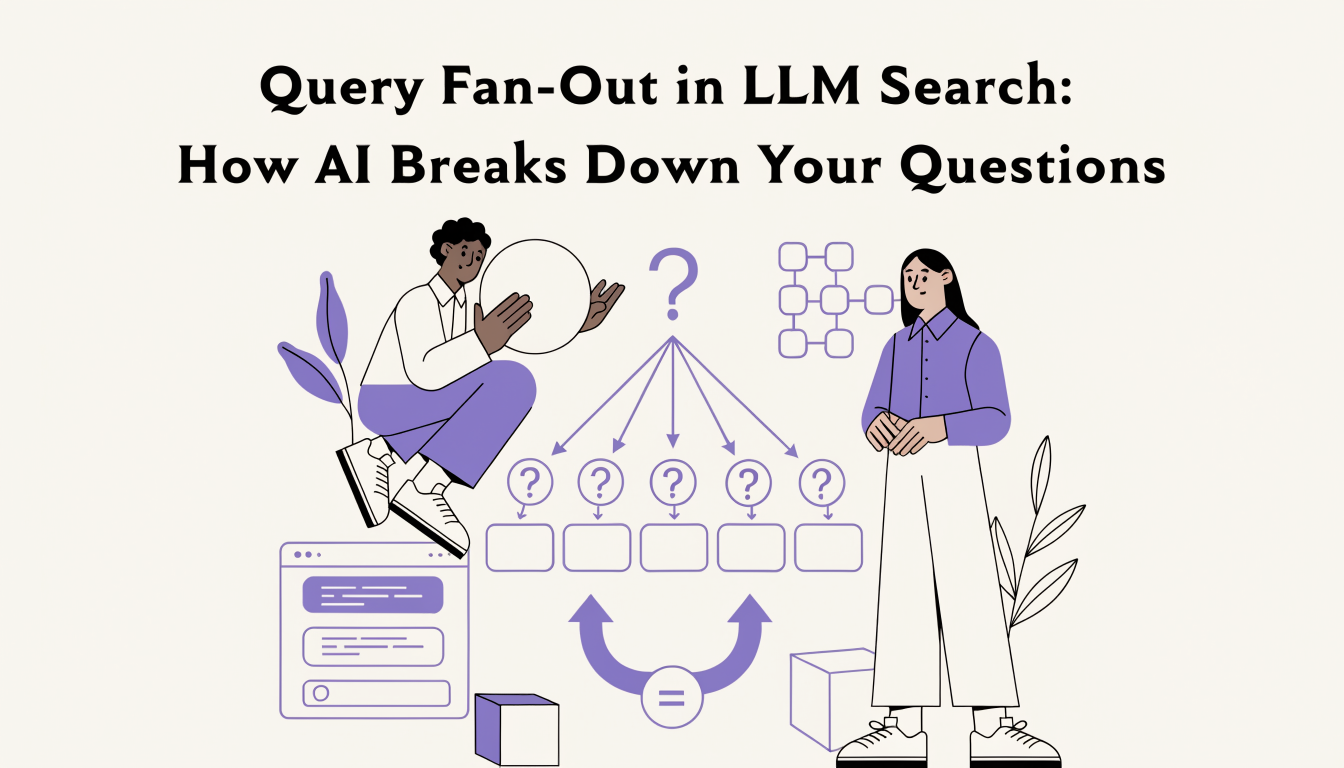
Query Fan-Out in LLM Search: How AI Breaks Down Your Questions
Learn what query fan-out in LLM search is, how AI splits your prompt into 3-8 sub-queries, and how to structure content to win more citation passes.