Generative Engine Optimization: A Practical Guide
Last updated: 25 July 2026
Generative Engine Optimization: A Practical Guide starts with one core idea: AI-powered answer engines — ChatGPT, Perplexity, Google AI Overviews, Gemini — pull content from the web to build their responses. GEO is the practice of structuring, signaling, and positioning your content so those engines choose your material as a source.
How Generative Engine Optimization Works
Traditional search returns a ranked list of links. A generative engine synthesizes an answer from multiple sources and may or may not credit them. Your goal shifts from earning a top-10 ranking to earning a citation slot inside the generated answer itself.
Here is a concrete worked example. Say a user asks Perplexity: "What is the average cost of a commercial roof replacement?" Perplexity's model scans indexed content, identifies passages that are specific, authoritative, and directly answer the question, then weaves them into a response. A roofing company whose site has a clearly labeled section — "Average Commercial Roof Replacement Cost" — with a specific figure (say, $8–$14 per square foot for TPO membrane as of 2023), a named source, and structured HTML is far more likely to appear than a page that buries the same data inside a 2,000-word narrative.
The mechanism has three layers:
- Retrieval — the AI indexes or fetches your page.
- Relevance scoring — the model judges how directly your passage answers the query.
- Authority signals — E-E-A-T cues (Experience, Expertise, Authoritativeness, Trustworthiness) influence whether the model trusts your content enough to cite it.
Why GEO Matters More Than Ever
Google's AI Overviews now appear on a significant share of search results pages, particularly for informational queries. When an AI Overview answers the question, click-through rates to organic results drop — sometimes by 30–40% for the top-ranked pages, based on early industry observations. That means a page that used to benefit from ranking #1 may now receive fewer visits even while holding that position.
GEO is not a replacement for SEO. Technical health, crawlability, backlinks, and Core Web Vitals still matter because generative engines rely on the same crawl infrastructure. GEO is a layer on top: it shapes how your content is read and quoted once a crawler has already found it.
Core GEO Strategies That Actually Move the Needle
Write Atomic Answer Blocks
An atomic answer block is a self-contained passage — typically 40–80 words — that answers one specific question completely without requiring context from surrounding paragraphs. Place it directly under a descriptive H2 or H3 heading that mirrors how someone would phrase the question. AI engines are pattern-matching for exactly this structure.
Use Structured Data (Schema Markup)
Schema markup communicates meaning to machines. For GEO purposes, FAQPage, HowTo, Article, and Product schemas are the highest-value types. Google's own documentation on optimizing for AI features confirms that structured data helps its systems understand page content — which feeds directly into how AI Overviews select passages.
Cite Verifiable Sources Within Your Content
A 2023 research paper from Princeton, Georgia Tech, and Allen AI ("GEO: Generative Engine Optimization") found that adding citations to source material increased AI citation frequency by roughly 30% in their test set. The mechanism is logical: a generative model trained to prefer trustworthy content recognizes that your page itself cites authoritative references, which raises its confidence score for your passage.
Prioritize Conversational Query Matching
Generative engines are optimized for natural-language questions, not keyword strings. Audit your H2 and H3 headings. If they read like keyword-stuffed fragments ("Commercial Roof Cost TPO Membrane"), rewrite them as questions or complete statements ("How Much Does a Commercial TPO Roof Replacement Cost?"). This single change improves both voice-search relevance and AI citation probability.
Build Topical Authority Clusters
A generative engine is more likely to cite a site that covers a topic comprehensively than one with a single strong page. If you publish one article on GEO and nothing else related, a model may trust a competitor's site that has 15 interconnected pieces on AI search. Plan content clusters, not isolated posts.
Where GEO Is Most Valuable
GEO delivers the strongest return in three scenarios:
- Informational queries — definitions, how-tos, comparisons, cost guides. These are the query types AI engines answer most often.
- Branded search — when someone asks an AI "What does [your company] do?", your own site should be the primary source the model draws on.
- High-consideration B2B and professional services — buyers increasingly use AI to shortlist vendors before visiting any site. Being cited in that pre-research phase is a form of top-of-funnel visibility that traditional SEO analytics cannot measure.
GEO is less effective for transactional queries ("buy running shoes size 10") where generative engines typically return product carousels or defer to e-commerce platforms.
Common Misconceptions About Generative Engine Optimization
Misconception 1: GEO means writing for AI, not humans. Wrong. The content that AI engines cite most reliably is also the content human readers find clearest and most useful. Atomic answer blocks, specific data, and cited sources are good writing practices regardless of the audience.
Misconception 2: You need a special tool to do GEO. Tools can audit your content against GEO criteria — checking schema coverage, heading structure, reading level, and citation density — but the core work is editorial. No tool writes a trustworthy atomic answer block for you.
Misconception 3: GEO replaces your backlink strategy. Authority signals, including external links pointing to your domain, still influence whether a generative engine trusts your content. GEO and link-building are complementary, not competing.
Misconception 4: One optimized page is enough. Generative engines pull from multiple sources to build a single answer. Being the only source cited is rare. The realistic goal is to appear among the cited sources consistently, which requires topical depth across multiple pages.
The Limits of GEO
GEO has real constraints worth acknowledging. First, citation attribution is inconsistent — many AI engines summarize without naming sources, so your traffic may not reflect your citation frequency. Second, generative engine algorithms change without notice; a structural approach that earns citations today may be deprioritized in a model update six months from now. Third, GEO is harder to measure than SEO. There is no direct equivalent of a rank-tracking dashboard for AI citations, though tools are emerging to monitor brand mentions inside AI responses.
For small sites with thin content libraries, the ROI of GEO-specific work is lower than simply building more high-quality content. Fix the fundamentals first.
What to Do With This Understanding
Start with an audit of your five most important pages. For each one, ask: Does it have an atomic answer block in the first 150 words? Are the H2 headings phrased as questions or complete statements? Is there at least one specific, verifiable claim with a cited source? Does the page use appropriate schema markup? Those four checks cover the majority of GEO gains available without a full site overhaul.
From there, build a content cluster around your core topic — at minimum five to eight interlinked pieces — and track brand mentions inside AI tools manually or with an emerging monitoring solution.
If you want expert help auditing your content for AI citation readiness and building a GEO strategy that fits your specific market, see how seorav.com can help. A focused consultation can identify the highest-leverage changes before you invest in a full content build-out.
Frequently Asked Questions
What is Generative Engine Optimization (GEO)?
GEO is the practice of structuring and positioning your content so AI-powered answer engines — such as ChatGPT, Perplexity, Google AI Overviews, and Gemini — select it as a cited source when generating responses. It focuses on atomic answer blocks, schema markup, verifiable claims, and topical authority rather than traditional keyword ranking alone.
How is GEO different from SEO?
Traditional SEO aims to rank a page in a list of blue links. GEO aims to earn a citation slot inside a synthesized AI answer. Both depend on crawlability, backlinks, and page quality, but GEO adds a layer of content structure — self-contained answer passages, conversational headings, and cited sources — that helps AI models extract and trust your content.
Which AI engines does GEO target?
The main targets are Google AI Overviews, Perplexity, ChatGPT (with Browse enabled), Microsoft Copilot, and Gemini. Each uses slightly different retrieval and ranking logic, but all reward specificity, structured content, and authority signals. Optimizing for one generally improves your standing across all of them.
How do I measure GEO success?
Direct measurement is harder than SEO. Practical approaches include manually querying AI engines for your target topics and recording whether your brand or content is cited, monitoring brand-mention tools that track AI responses, and watching for referral traffic from AI platforms in your analytics. Dedicated AI citation tracking tools are still maturing as of 2024.
Does GEO work for small websites?
Yes, but with caveats. A small site with a narrow, well-defined niche can earn AI citations if its content is specific, well-structured, and authoritative within that niche. However, sites with very thin content libraries should prioritize building quality pages before focusing on GEO-specific optimizations. Depth on a focused topic outperforms breadth of shallow coverage.
What content formats work best for GEO?
Atomic answer blocks (40–80-word self-contained passages), FAQ sections with schema markup, step-by-step how-to guides, comparison tables with specific data, and definition-first explainers all perform well. These formats match the way generative engines extract and synthesize information. Long narrative prose without clear structural signposts is the least likely format to earn citations.
Keep reading
Ranking in Google's AI Search: The Deterministic Signals That Actually Move the Needle
Learn how do you rank in SGE with the three signals Google's AI uses to cite sources: schema markup, entity salience, and structured factual claims.

Why AI Ignores Your Content (And How to Fix It)
Learn how to avoid AI content that gets ignored by LLMs. Covers RAG retrieval signals, schema, entity salience, and an answer-first structure checklist.
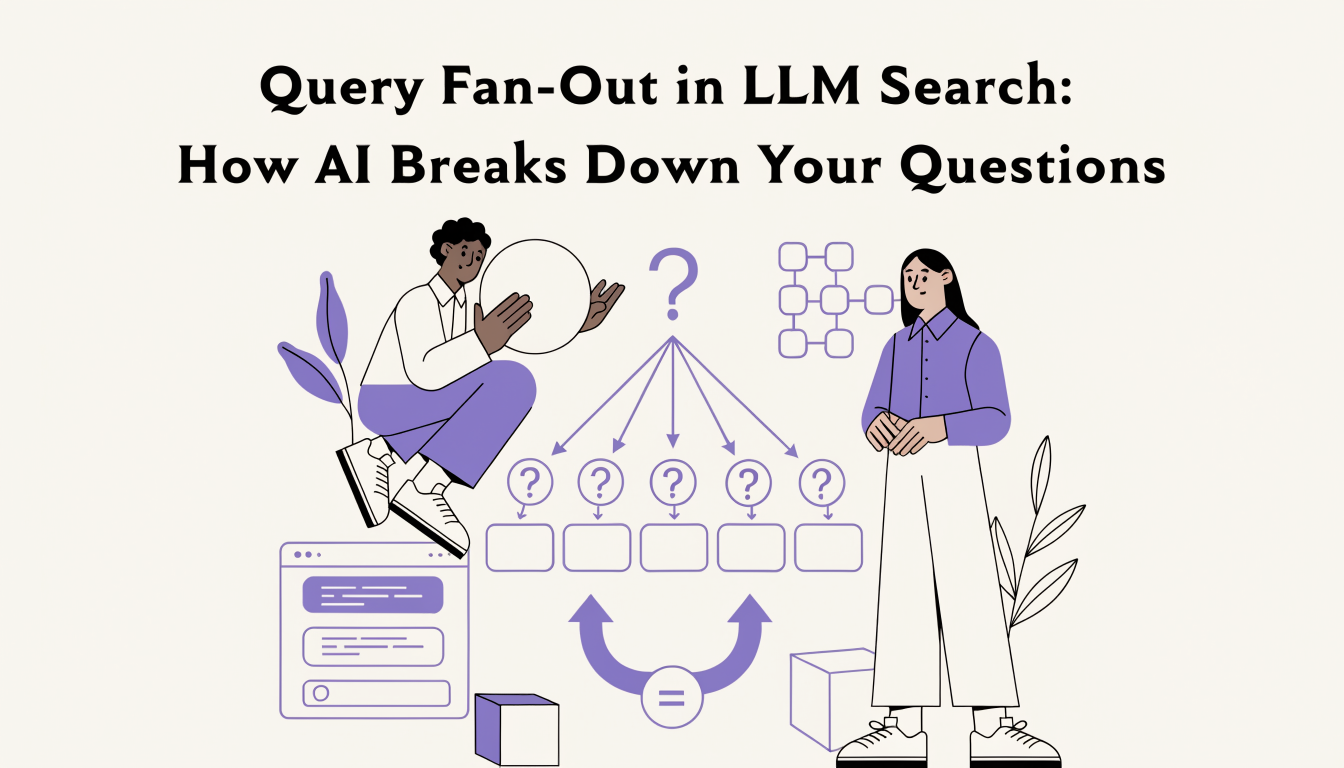
Query Fan-Out in LLM Search: How AI Breaks Down Your Questions
Learn what query fan-out in LLM search is, how AI splits your prompt into 3-8 sub-queries, and how to structure content to win more citation passes.