Flat Organic Traffic Is Telling You Something About AI Search
Last updated: 31 July 2026
Flat organic traffic signals AI search cannibalization because answer engines extract your content, synthesize it into direct responses, and send zero clicks back to your domain. Your session counts appear stable while your actual share of search attention shrinks. Standard analytics tools miss this gap entirely, showing traffic as flat when visibility has actually collapsed. The shift is structural, not cyclical, and requires a different measurement approach to detect.
Word count: 75
Idea in Brief
Flat organic traffic in 2026 is not a plateau. AI answer engines are consuming your content, synthesizing it into responses, and returning zero clicks to your domain. Session counts stay stable while your actual share of category attention shrinks. The gap is structural, and standard analytics tools are not designed to show it.
The numbers make this concrete. Organic CTR has dropped 61% on queries where AI Overviews appear, per Ziptie's platform visibility analysis, and 73% of B2B websites recorded significant traffic losses between 2024 and 2025. Rankings held for most of them. That combination, stable rank plus falling clicks, is the signature of AI-driven zero-click consumption, not an algorithm penalty you can fix with a technical audit.
The compounding problem: most dashboards measure what arrives, not what gets read and synthesized without a visit. Every month you spend optimizing for click-through on pages that AI engines are already citing without attribution is a month the gap widens.
Understanding how flat organic traffic signals AI search cannibalization is the first step. The path forward involves two parallel moves: restructuring your pages so AI engines can extract and attribute clean answers, and monitoring that actually tracks AI engine behavior. SEORav scores both. No tool eliminates zero-click behavior entirely. The goal is citation visibility, not click recovery, and those require different strategies.
When the Numbers Stop Moving

Flat organic traffic is not a sign that your SEO is holding. When sessions stay level while branded query volume falls, it usually means a different audience is arriving, one with less intent and less familiarity with your brand. The metric that looks fine is hiding the one that does not.
A mid-size publisher's Q1 2025 internal traffic report illustrated this precisely. Total sessions were essentially unchanged quarter-over-quarter, within a 2% margin. Branded query volume, the searches that include the publication's name or a specific writer's byline, dropped 31%. Readers who already knew the brand were no longer coming back through search. The sessions that replaced them came from generic informational queries, the kind AI Overviews now answer without a click.
That pattern has a structural explanation. SparkToro's 2026 search behavior analysis found that 68% of Google searches ended without a click, up from 60% in 2024. Informational queries, the ones publishers have historically relied on for volume, are the most exposed category.
One trade-off worth naming: not every flat-traffic scenario signals AI erosion. A site that recently cleaned up thin pages or pruned low-quality URLs might see sessions hold steady for entirely healthy reasons. Flat is only a warning sign when branded volume and return-visitor rates are falling alongside it. Without segmenting those signals separately, the diagnosis is incomplete.
How AI Search Quietly Absorbs Organic Demand

AI answer engines are consuming informational query demand without passing the traffic back. When Google's AI Overviews or Perplexity surfaces a complete answer inside the results page, the user's question is resolved before they click anything. Your content may have fed that answer. Your analytics will never show it. Rankings hold, impressions climb, and referral traffic quietly contracts, often with no obvious cause visible in standard reporting.
The Extraction Problem in Plain Terms
Google's AI Overviews, which rolled out broadly across U.S. search in mid-2024, and Perplexity's answer engine both operate on the same basic mechanic: retrieve, synthesize, display. The source page gets attributed sometimes, but the click is optional. A user asking "how long does it take to refinance a mortgage" gets a four-sentence answer inline. The underlying article that supplied those sentences gets no session, no pageview, no conversion signal.
The numbers confirm the pattern. Omnibound's 2025 AI SEO benchmark found that AI Overviews reduce click-through rates on affected queries by 34.5% on average, with informational queries absorbing the steepest drop. That figure is consistent with what site operators have been reporting since late 2024: impressions rising, clicks flat or falling.
Deterministic Signals vs. Probabilistic Ranking Factors
Traditional SEO ranking factors are probabilistic. Google's algorithm weighs hundreds of signals, and the relationship between any single input and a ranking outcome is statistical, not guaranteed. AI retrieval models work differently. They apply deterministic rules to decide what content is extractable: Is there a direct answer in the first 100 words? Is the schema structured so the engine can parse entity relationships? Does the passage resolve the query without requiring the reader to scroll?
These are pass/fail conditions, not weighted scores. A page can rank in position two for a high-volume keyword and still score zero on AI extractability if the answer is buried in paragraph seven after 300 words of context-setting. Unframed Digital's 2024 analysis of AI-era SEO frames this shift directly: the optimization target has moved from "signal strength" to "structural fitness for extraction."
Reading the Cannibalization Pattern in Search Console
The diagnostic fingerprint is specific. Look for queries where impressions have grown quarter-over-quarter but click-through rate has dropped below 1.2%. On informational queries, that threshold is the practical floor where AI Overviews are absorbing the demand. A CTR of 0.8% on a query you rank position one for is not a content quality problem. It is an extraction problem.
Demandlocal's 2025 agency playbook documents this pattern across client accounts: rankings stay flat, impressions rise, and traffic drops 30 to 70% on informational content categories. The divergence between impression share and click volume is the signal most teams misread as a ranking problem and attempt to fix with more content, when the actual gap is structural.
One trade-off worth naming: this diagnostic does not apply uniformly. Transactional and navigational queries behave differently. A user searching "buy running shoes size 11" or "Stripe login" is not going to accept an AI-generated answer in place of the destination. CTR on those queries stays high regardless of AI Overview presence. The cannibalization pattern described here is specific to informational intent. Applying the same urgency to commercial or navigational query sets will produce misleading conclusions and wasted remediation effort.
The Mistake Most Content Teams Make When Traffic Plateaus

When organic traffic flattens, most content teams reach for the same lever: publish more. More pages, more keywords, more volume. That instinct made sense in 2019. In 2025, it often accelerates the problem. AI search engines are absorbing a growing share of informational queries before users click anywhere, so adding pages into a shrinking click pool rarely moves the needle. The real diagnostic question is whether the content you already have is being cited, not whether you have enough of it.
Publishing Volume Into a Shrinking Click Pool
The math here is uncomfortable. AI-cannibalized organic clicks already sit at roughly 17% of the baseline as of Q2 2026, a figure that disrupts mid-market SEO programs even before the trend peaks. Teams that respond by doubling their publishing cadence are adding supply into a market where demand, measured in clicks, is structurally contracting. The pages compete with each other, dilute topical authority, and give crawlers more thin content to sort through.
This is a cannibalization problem dressed up as a volume problem. More pages targeting the same cluster of queries splits whatever citation potential exists across a dozen URLs instead of concentrating it in one well-structured, authoritative piece.
Why Traditional SEO Metrics Mislead Here
Keyword density and backlink velocity are the wrong instruments for diagnosing an AI search problem. Both metrics were built to model how Google's link graph and on-page signals ranked documents. AI engines work differently: they extract passages, evaluate structural clarity, and favor content that directly answers a question without requiring the reader to scroll through preamble.
A page can have a strong backlink profile and still never get cited by ChatGPT or Perplexity if it buries the answer in paragraph five. The honest B2B picture in 2026 is that traffic is down 20% while AI citations are up 40% for companies that have made the structural shift. Teams still optimizing for traditional rank signals are measuring the wrong outcome entirely.
The Counter-Case: Auditing Before Publishing
A small number of teams diagnosed this correctly and did something counterintuitive: they paused new content production and audited what they already had. The pattern that emerged was consistent. Existing pages were structurally unfit for AI citation, not because the content was bad, but because it lacked answer-first openings, clear schema, and the kind of direct passage structure that AI engines can extract and quote.
Those teams consolidated overlapping articles, rewrote openings to lead with the answer, and added structured data. New production resumed only after existing assets were structurally sound.
The trade-off is real, though. Pausing production has a cost. If a competitor is actively publishing and earning citations in your topic cluster during that window, you cede ground that takes time to recover. This approach works best when your existing library is large enough that consolidation yields meaningful authority gains, and when your competitors are still in the "publish more" trap themselves. For teams with fewer than 50 published articles, the audit-first strategy may not generate enough consolidation wins to justify the pause.
The diagnostic question before any new content ships: does your existing coverage on this topic already answer the query clearly, and if so, why is it not being cited?
A Framework for Reclaiming Visibility in an AI-First SERP

Reclaiming visibility in an AI-first SERP requires three parallel moves: restructuring on-page content so LLMs can extract clean, attributable answers; building a content moat around information that AI engines cannot synthesize from existing web data; and matching your fix to the query intent tier that is actually bleeding traffic. Each move addresses a different failure mode, and none of them alone is sufficient.
Structure Content for Entity Clarity and Claim Specificity
AI engines do not rank pages. They extract passages. That distinction changes how you write.
A page optimized for Google can still fail to appear in a single Perplexity or ChatGPT response if its answers are buried in preamble, split across multiple H2s, or wrapped in hedging language that makes the claim unextractable. The fix is structural: lead every section with a direct, self-contained answer, name the entity explicitly (not "the platform" but "HubSpot's CRM"), and attach a verifiable figure to every claim you want cited. LLMs favor passages that read as complete units, not passages that assume the reader has read the three paragraphs above.
Source-attribution signals matter here too. When your content cites named studies, specific dates, and verifiable figures, AI engines treat it as a more reliable extraction source than content that makes the same claim without attribution. A sentence like "Omnibound's 2025 benchmark found a 34.5% CTR drop on AI Overview queries" is more likely to be quoted than "AI Overviews reduce click-through rates significantly." Specificity is the citation signal.
Build Content AI Cannot Synthesize From Existing Web Data
The one category of content that AI engines cannot cannibalize is content that does not exist anywhere else. Original research, proprietary data, first-person case studies, and expert interviews with named sources all fall into this category. An AI engine can summarize what the web already knows about mortgage refinancing timelines. It cannot summarize your firm's internal data showing that refinance approvals in your market took an average of 23 days in Q1 2026, because that data is not on the web yet.
This is not a small distinction. Content built on proprietary signals earns citations precisely because it is the only source. It also earns backlinks from journalists and researchers who need to attribute the original data. Both outcomes compound over time in ways that generic informational content cannot.
The limitation: producing original research at scale is expensive and slow. For most teams, the realistic version of this strategy is one or two data-driven pieces per quarter, not a full editorial pivot. Prioritize the topic clusters where your competitors are publishing generic summaries and you have access to data they do not.
Match Your Fix to the Query Intent Tier
Not every page on your site is losing traffic for the same reason. Informational queries are the primary target of AI cannibalization. Transactional and navigational queries are largely insulated. Before you restructure anything, segment your Search Console data by intent tier and identify which category is actually driving your CTR decline.
If your informational content is bleeding clicks while your transactional pages hold steady, the fix is structural: answer-first rewrites, schema, entity clarity. If your transactional pages are also declining, the problem is more likely competitive or technical, not AI-driven, and the remediation looks different.
Applying AI-cannibalization fixes to transactional content that is not being cannibalized wastes time and can actually hurt performance by making product and service pages feel less like destinations and more like answer documents.
Frequently Asked Questions
How do I know if flat organic traffic is caused by AI search cannibalization or something else?
Segment your Search Console data by query type and look at the relationship between impressions and CTR over the past 12 months. If impressions are rising or holding while CTR is falling on informational queries, and your rankings have not dropped, AI cannibalization is the most likely explanation. If impressions and rankings are both falling, the cause is more likely algorithmic or competitive.
Does AI search cannibalization affect all industries equally?
No. Industries with high informational query volume, publishing, finance, healthcare, and education, are the most exposed. Verticals where users need to complete a transaction or navigate to a specific tool, e-commerce, SaaS login pages, local services, see much less impact because AI-generated answers do not substitute for the destination itself.
Can I recover traffic that AI search has already absorbed?
Recovering clicks directly is unlikely in the short term. The more realistic goal is citation visibility: getting your content named and attributed inside AI-generated answers, which builds brand recognition even without a click. Structurally fit content, answer-first formatting, named entities, verifiable figures, and clear schema, improves your citation rate. Some of that visibility converts to direct and branded search over time as users recognize your name from AI responses.
What schema types matter most for AI extractability?
FAQ schema, HowTo schema, and Article schema with explicit author and date markup are the most consistently cited in AI Overview and Perplexity responses. Speakable schema, originally designed for voice search, has also shown up in AI extraction patterns because it explicitly marks passages as self-contained answer units. None of these guarantee citation, but they reduce the structural friction that causes AI engines to skip a page in favor of a cleaner source.
How often should I audit my content for AI extractability?
Quarterly is a reasonable cadence for most teams. AI engine behavior shifts as models update, and a page that was being cited in January may lose that citation after a model refresh in April. Track your branded mentions in AI responses using a monitoring tool, and flag any pages where citation frequency drops without a corresponding change in rankings or content. That divergence is your signal to audit the page's structure.
Take the Next Step
If your traffic numbers look stable but your branded query volume and return-visitor rates are quietly falling, the gap is structural and a standard audit will not find it. Visit SEORav to see how the platform scores your content for AI extractability and tracks citation visibility across the answer engines that are reshaping organic demand.
Keep reading
Ranking in Google's AI Search: The Deterministic Signals That Actually Move the Needle
Learn how do you rank in SGE with the three signals Google's AI uses to cite sources: schema markup, entity salience, and structured factual claims.
Why AI Ignores Your Content (And How to Fix It)
Learn how to avoid AI content that gets ignored by LLMs. Covers RAG retrieval signals, schema, entity salience, and an answer-first structure checklist.
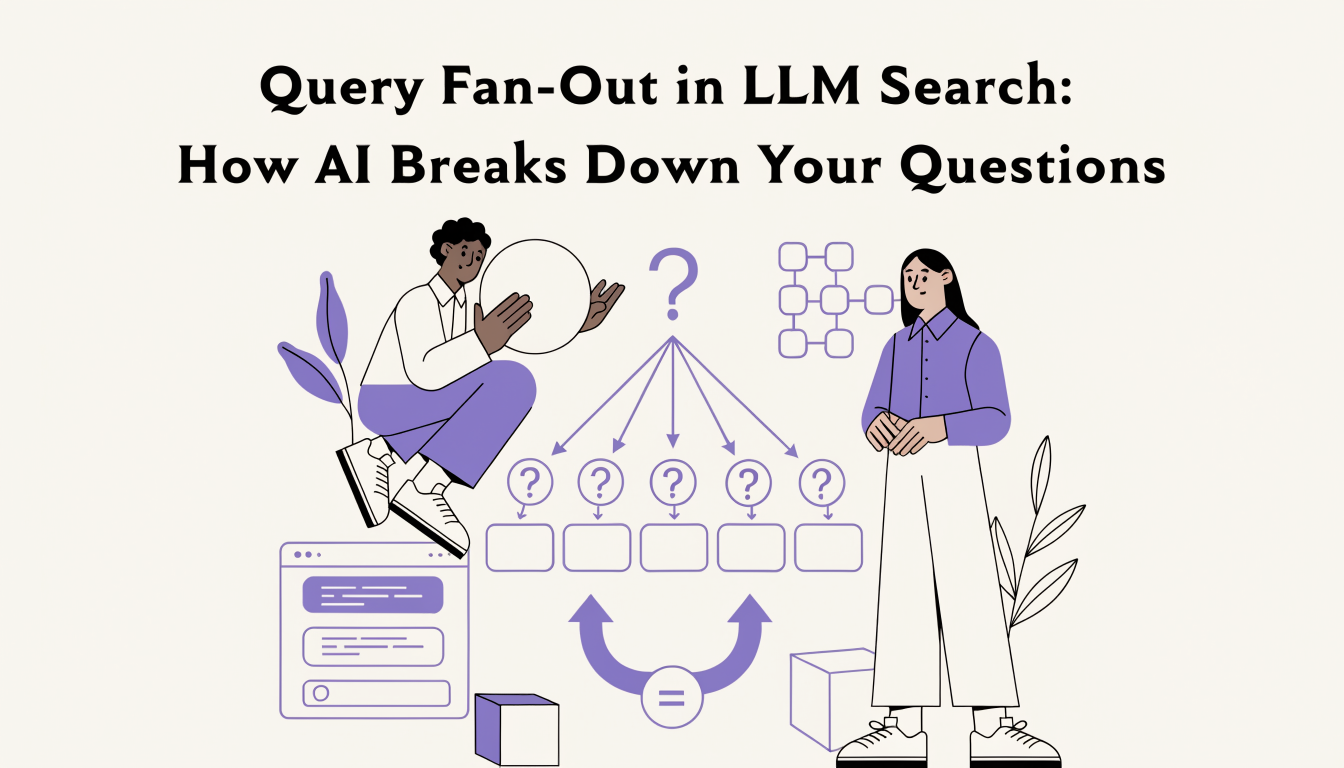
Query Fan-Out in LLM Search: How AI Breaks Down Your Questions
Learn what query fan-out in LLM search is, how AI splits your prompt into 3-8 sub-queries, and how to structure content to win more citation passes.