Financial Services SEO: Ranking When Regulations and Trust Are Everything
Last updated: 26 August 2026
Financial services SEO requires treating regulatory compliance as a ranking advantage rather than an obstacle. Google's quality raters reward sites with named authors holding verifiable credentials, transparent disclosures, and cited sources. These elements satisfy both regulators and search algorithms simultaneously. The tension between compliance and visibility dissolves when you structure your content to meet both standards at once, which is why financial firms that align their legal requirements with SEO fundamentals consistently outrank competitors cutting corners.
Word count: 78
The Short Answer: How Financial Services Sites Rank Despite Compliance Rules
Financial services sites rank by treating compliance requirements as a structural SEO asset, not a constraint. Accurate disclosures, named authors with verifiable credentials, and cited sources satisfy both regulators and Google's quality raters at the same time. The two goals reinforce each other more often than they conflict.
Google classifies finance content as YMYL (Your Money or Your Life), a designation that raises the bar for what qualifies as a trustworthy result. Pages in this category are held to a stricter E-E-A-T standard: Experience, Expertise, Authoritativeness, and Trustworthiness. A generic blog post from an anonymous writer does not clear that bar, regardless of keyword density. Seology's 2026 SEO analysis for financial services confirms that YMYL classification directly shapes how Google's quality raters evaluate finance pages, making author credentials and factual accuracy ranking factors in practice, not just in theory.
The four things that move the needle fastest:
- Named, credentialed authors on every substantive page (bio, license number, firm affiliation)
- Disclosure language that doubles as structured, crawlable content rather than buried fine print
- Schema markup for financial products, FAQs, and organization identity
- Topical depth on a narrow subject cluster rather than thin coverage across many topics
One honest caveat: none of these produce overnight results. Finance is a competitive vertical where domain authority accumulates slowly, and a new site targeting "best mortgage rates" will wait months before seeing meaningful movement regardless of content quality.
Why SEO for Financial Services Requires a Different Approach

Financial services SEO operates under constraints that most industries never encounter. Google classifies money-related content as YMYL, which means quality thresholds are materially higher than for a recipe blog or a travel site. A thin page about mortgage refinancing carries real-world consequences if it misleads a reader, and Google's quality raters treat it accordingly. Add regulatory compliance requirements on top, and you have a content environment where the standard SEO playbook breaks down fast.
YMYL Pages Face a Higher Bar
Google's quality rater guidelines treat financial content as high-stakes by default. Pages covering loans, investment advice, insurance, or tax guidance are evaluated not just for relevance but for demonstrated expertise, authoritativeness, and trustworthiness: the E-E-A-T framework. Wolf Financial's institutional SEO analysis makes this gap explicit: generalist SEO approaches consistently underestimate YMYL complexity, leaving finance sites exposed to quality-related ranking drops that a retail e-commerce site would never face.
The practical implication is that author credentials, source citations, and editorial review processes are ranking inputs, not optional polish.
How the 2023 Helpful Content Rollout Hit Finance Sites
Google's September 2023 Helpful Content Update disproportionately affected YMYL verticals. Sites that had built traffic on thin, keyword-stuffed explainers about personal finance topics saw significant ranking losses, while pages with clear authorship, cited data, and genuine depth held or improved.
The numbers from that period are instructive: Seoprofy's SEO ROI research puts the financial services sector's return on search investment at 1,031%, second-highest of any industry. That figure signals how much organic visibility is worth protecting and how costly a quality-related penalty becomes.
The update rewarded content that demonstrated first-hand expertise. For a fintech explaining how its lending model works, that means named authors with verifiable credentials, not anonymous "editorial teams."
The Compliance Constraint
This is where financial services SEO gets genuinely complicated. Legal and marketing teams often want different things from the same page.
Marketing wants clear, persuasive language that converts. Legal wants disclaimers, hedged claims, and language that survives regulatory review. The tension is real: a compliance-approved page can read as evasive, which hurts both user engagement and E-E-A-T signals. A page optimized purely for conversion may contain claims that a compliance officer would flag immediately.
Priceweber's financial services SEO guide frames this directly: regulatory compliance requirements are one of the core reasons financial services SEO demands a different approach than most industries. The practical resolution most teams land on is a two-track review process, where SEO and content strategy are set before legal review, and compliance edits are scoped to risk language rather than structure or depth.
The trade-off is speed. A two-track review adds time to every content cycle. For firms in fast-moving categories like crypto, embedded finance, or variable-rate lending, that lag can mean publishing after a news cycle has already passed. Teams that move faster accept more compliance risk; teams that move slower accept more competitive risk. The right balance depends on your firm's regulatory exposure and how aggressively competitors are publishing.
E-E-A-T and Expertise Requirements for Finance Content

Google's Search Quality Evaluator Guidelines classify financial content as YMYL, which means quality raters apply stricter scrutiny than they would to a recipe blog. For finance pages to rank, the author's real-world credentials, the site's institutional trust signals, and the content's factual accuracy all need to be verifiable, not just asserted. Getting one of those three wrong is usually enough to suppress a page.
What 'Experience' Means Depends on Who's Writing
The first "E" in E-E-A-T, Experience, reads differently depending on the publishing context. For a licensed financial advisor writing a retirement planning guide, experience means documented client work: years in practice, AUM managed, regulatory licenses held (CFP, CFA, Series 65). The author bio should name those credentials explicitly, not bury them in a generic "about" page.
A fintech blog operates under different expectations. A product team writing about open banking APIs can demonstrate experience through case studies, integration data, or named client outcomes. "We processed 2.1 million transactions through our Plaid integration in 2024" is a credibility signal. "We have extensive experience in fintech" is not.
Quality raters are trained to ask whether the author has first-hand exposure to the topic, not just familiarity with it. A ghostwritten article with no named author, or one attributed to a generic "editorial team," will score poorly on this dimension regardless of how accurate the content is.
Credentials, Licenses, and Disclosures
Regulatory licenses are the most concrete trust signal available to financial publishers. CFP, CFA, RIA registration, FINRA broker-dealer status: these should appear in author bios, not just on an "about" page that raters may never visit. The bio needs to be on the article itself.
Disclosures matter too, and their absence is a red flag. A page recommending investment products without an affiliate disclosure or a "not financial advice" statement will draw scrutiny from quality raters. Mint Copywriting Studios' financial SEO breakdown notes that compliance-driven disclosures, when written clearly and placed near the content they qualify, actually reinforce trust rather than undermine it. The instinct to hide disclaimers in footers works against E-E-A-T.
One trade-off worth naming: smaller RIAs and independent advisors often lack the institutional backlink profile that large banks accumulate passively. Strong author credentials can partially offset a thin domain authority, but they don't fully substitute for it. A solo CFP with a well-structured bio will outrank a generic fintech blog on a narrow query, but will still lose to a Vanguard or Fidelity page targeting the same term. Credentials help; they don't override domain-level authority entirely.
Structured Data and Meta Tags That Surface Expertise
Schema markup is where on-page expertise signals become machine-readable. For finance content, the most relevant schema types are Person (for author credentials), Article with author and dateModified properties, and FAQPage for answer-first content blocks.
The Person schema should include hasCredential pointing to a recognized credential body (CFP Board, CFA Institute), jobTitle, and worksFor with the firm's Organization schema. This is what allows AI citation systems like Perplexity and ChatGPT to parse authorship when they pull a passage from your page. A page with no structured author data is harder for an AI engine to attribute, and unattributed content gets cited less often.
Meta tags play a supporting role. The author meta tag and Open Graph article:author property reinforce what schema declares. Neither replaces schema, but both add redundancy that crawlers appreciate. Fullyvested's 2026 financial services SEO guide flags dateModified as particularly important for finance content, since outdated tax or regulatory information is a direct quality signal to both raters and automated systems. A page last modified in 2021 covering 2024 contribution limits is a liability, not an asset.
Keep the dateModified accurate. Updating it without updating the content is a known pattern that quality systems have become better at detecting.
Regulatory Compliance and Technical SEO: A Step-by-Step Approach

Financial services SEO requires technical hygiene and compliance awareness to work together, not separately. Canonical URL errors across duplicate product pages can suppress rankings before a single disclaimer is written. Disclaimers structured poorly dilute topical relevance. And a content calendar built without mapping regulated topics to safe search intent creates legal exposure. Fix all three in sequence and the technical foundation actually holds.
Step 1: Audit Your CMS for Canonical URL Handling Across Duplicate Product Pages
Mortgage lenders, insurance providers, and investment platforms routinely generate near-identical pages: the same product, filtered by state, term length, or customer segment. Without explicit canonical tags, search engines index every variant and split authority across all of them.
Start with a Screaming Frog crawl filtered to rel=canonical. Flag any page where the canonical points to itself but shares more than 70% of body content with another URL. That threshold catches the real duplicates without over-flagging legitimate regional pages. Then check your CMS template logic: many financial CMS builds generate canonical tags dynamically from URL parameters, which breaks the moment a campaign appends UTM strings.
The trade-off is time. A mid-size lender with 400 product pages can take three to four weeks to audit, remediate, and re-crawl. Prioritize pages with existing ranking history first; those are the ones losing equity right now.
Step 2: Structure Compliance Disclaimers So They Inform Without Diluting Topical Relevance
Disclaimers are required in regulated industries, but their placement and markup matter for SEO. A 200-word legal block dropped at the top of a page before any substantive content pushes your main topic further down the DOM, which affects how crawlers weight the page's primary subject.
The practical fix is to place disclaimers immediately after the content they qualify, not before it. Use a <aside> or a clearly labeled <div> with a role="note" attribute so crawlers can distinguish disclaimer text from editorial content. Keep disclaimer language concise: one to two sentences that satisfy your compliance team's requirements, not a paragraph that restates every possible risk scenario.
If your legal team requires longer disclosures, consider a collapsible component that renders the full text in the DOM (so it's crawlable) but defaults to collapsed for users. This preserves compliance without burying your topical signal under boilerplate.
Step 3: Map Your Content Calendar to Regulated Topics and Safe Search Intent
Not every keyword your audience searches is one you can safely target. A registered investment advisor cannot publish content that reads as personalized investment advice without triggering SEC or FINRA review requirements. A mortgage lender cannot make rate claims that aren't tied to specific APR disclosures.
Before you build a content calendar, run your target keyword list through two filters. First, does the search intent behind this query require a specific regulatory disclosure? Second, does your firm's license type permit you to publish content that satisfies that intent? A broker-dealer can write about stock selection criteria; an unregistered fintech cannot write the same content without legal exposure.
The output of this mapping exercise is a tiered keyword list: green (publish freely), yellow (publish with specific disclosures), and red (escalate to compliance before drafting). This structure lets your content team move quickly on green-tier topics while keeping legal review focused on the queries that actually carry risk.
Frequently Asked Questions
How long does SEO for financial services take to show results?
Most financial services sites see measurable organic traffic growth between six and twelve months after a structured SEO program begins. The timeline is longer than most industries because domain authority in finance accumulates slowly and competition for high-value queries like "best HELOC rates" or "fiduciary financial advisor" is intense. Pages targeting narrow, lower-competition queries in a specific subject cluster tend to rank faster than broad terms.
Do compliance disclaimers hurt SEO?
Disclaimers do not hurt SEO when they are placed correctly and kept concise. The problem arises when a long legal block appears before any substantive content, pushing your topical signal further down the page. Place disclaimers immediately after the content they qualify, keep them to one or two sentences where possible, and use semantic HTML to distinguish them from editorial text. Done that way, they reinforce trust signals rather than dilute them.
What schema markup should a financial services site prioritize?
Start with Person schema on every author bio page, Article schema with author and dateModified properties on all editorial content, and FAQPage schema on any page with a question-and-answer section. If you offer specific financial products, LoanOrCredit, BankAccount, or InvestmentOrDeposit schema from Schema.org's financial vocabulary can make product pages more parseable to both search engines and AI citation systems. Organization schema with your regulatory registration details adds an additional layer of institutional credibility.
Can a small RIA or independent advisor compete with large banks in search?
Yes, on narrow queries. A solo CFP writing detailed, credentialed content about Roth conversion strategies for clients near retirement will outrank a generic bank page on that specific query. Large institutions dominate broad, high-volume terms because of domain authority accumulated over years. The practical strategy for smaller firms is to build a tight subject cluster around a specific client type or financial situation, publish consistently with full author credentials, and earn backlinks from professional associations or local press. Competing on "best savings account" is not realistic; competing on "Roth conversion strategy for federal employees in Virginia" is.
How does Google's YMYL classification affect a fintech startup's SEO strategy?
YMYL classification means your content is held to a higher standard from day one, regardless of how new your domain is. A fintech startup cannot rely on volume or velocity to build rankings the way a consumer brand might. Every page needs a named author with relevant credentials, cited sources for any factual claims, and accurate disclosures. The upside is that most fintech startups competing in a specific niche (embedded lending, payroll-linked savings, crypto custody) face competitors who are equally new, so strong E-E-A-T execution can establish authority faster than it would in a mature category.
What is the biggest technical SEO mistake financial services sites make?
Duplicate product pages without canonical tags are the most common and most damaging technical error. Lenders, insurers, and investment platforms generate near-identical pages filtered by state, term, or customer segment, and without explicit canonicalization, search engines split ranking authority across all variants. The second most common mistake is leaving dateModified schema stale on pages covering time-sensitive information like contribution limits, interest rate benchmarks, or regulatory thresholds. Both errors are fixable with a systematic crawl audit, but they compound quietly over time if left unaddressed.
If you want a structured SEO program built around your firm's compliance requirements and subject-matter expertise, talk to Seorav to see how a finance-specific approach applies to your site.
Keep reading
Ranking in Google's AI Search: The Deterministic Signals That Actually Move the Needle
Learn how do you rank in SGE with the three signals Google's AI uses to cite sources: schema markup, entity salience, and structured factual claims.
Why AI Ignores Your Content (And How to Fix It)
Learn how to avoid AI content that gets ignored by LLMs. Covers RAG retrieval signals, schema, entity salience, and an answer-first structure checklist.
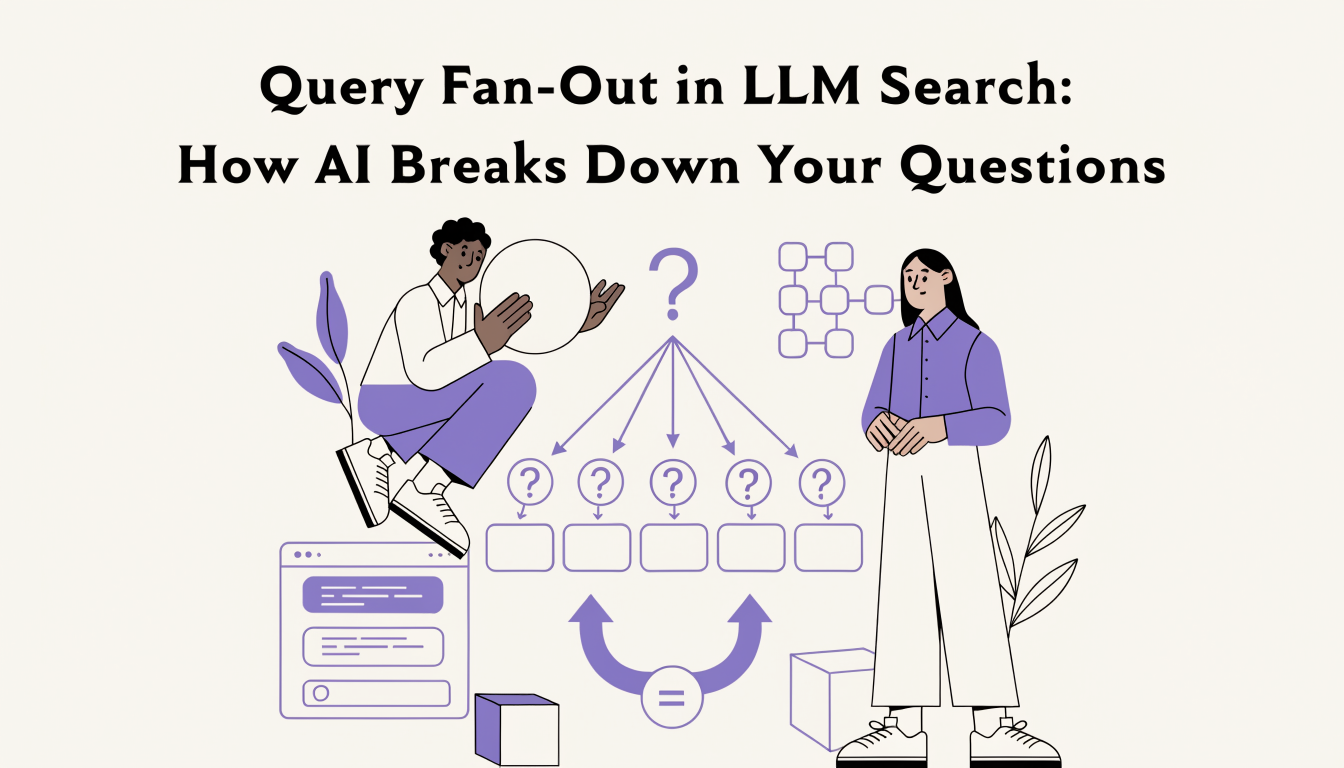
Query Fan-Out in LLM Search: How AI Breaks Down Your Questions
Learn what query fan-out in LLM search is, how AI splits your prompt into 3-8 sub-queries, and how to structure content to win more citation passes.