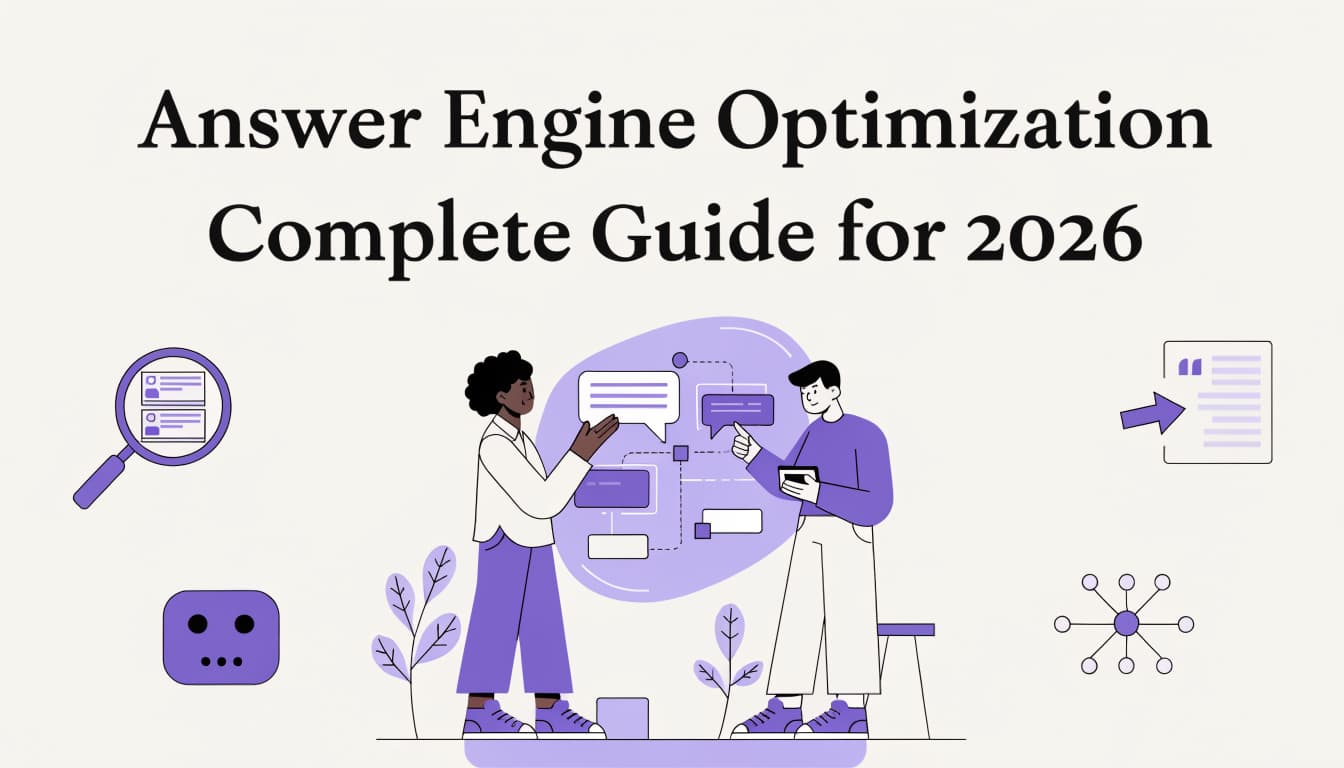
Answer Engine Optimization Complete Guide for 2026
Last updated: 25 July 2026
Answer Engine Optimization (AEO) is the practice of structuring, formatting, and signaling your content so that AI-powered answer engines — ChatGPT, Perplexity, Google AI Overviews, Bing Copilot — extract and cite it directly. The single most important thing to get right is answer-first writing: place a complete, standalone answer within the first 100 words of every page.
According to a 2024 BrightEdge study, AI Overviews appeared in roughly 42% of all Google search results by mid-year, up from near-zero in 2023. That growth makes AEO one of the highest-leverage investments a content team can make heading into 2026.
What Is Answer Engine Optimization (AEO)?
Traditional SEO optimizes for ranking positions. AEO optimizes for citation — being the source an AI quotes when a user asks a question. Answer engines parse your page, extract a direct answer, and either quote you verbatim or paraphrase your content. You may receive traffic, or you may receive brand visibility with zero clicks. Both outcomes matter.
The three engines most worth targeting in 2026 are:
- Google AI Overviews — integrated into standard search, highest volume.
- Perplexity AI — growing fast among researchers and professionals, cites sources inline.
- ChatGPT with Browse — used by over 100 million weekly active users as of early 2024.
Each engine has slightly different citation logic, but all three reward the same core signals: clear structure, demonstrated expertise, and direct answers to specific questions.
Before You Start: Prerequisites
Before applying AEO tactics, confirm these foundations are in place:
- Crawlable pages — Your robots.txt and meta tags must not block AI crawlers. OpenAI's crawler is
GPTBot; Google's AI crawler isGoogle-Extended. Check your robots.txt file and allow both unless you have a legal reason not to. - Indexable content — Content buried in JavaScript-rendered elements or behind login walls is invisible to most AI scrapers.
- HTTPS and page speed — Pages loading in under 2.5 seconds (Core Web Vitals LCP target) are processed more reliably.
- A clear topical focus — Each page should answer one primary question, not five loosely related ones.
Step 1: Research the Questions Worth Answering
AEO begins with question research, not keyword research. The goal is to find the exact phrasing people type into AI chat interfaces — which differs from how they phrase Google queries.
How to find the right questions
Open ChatGPT or Perplexity and type your topic as a conversational question. Note the follow-up questions the AI suggests. These are real user intent signals. Also:
- Pull the "People Also Ask" boxes from Google for your topic. Each PAA entry is a candidate AEO target.
- Use AlsoAsked.com (free tier available) to map question clusters visually.
- Check Reddit threads in your niche — the questions users ask each other mirror what they ask AI.
Concrete example: For a page about home equity loans, a keyword researcher might target "home equity loan rates." An AEO researcher targets "How does a home equity loan work if I already have a mortgage?" — the conversational, specific version that AI users actually type.
Prioritize questions with a clear, factual answer. Vague opinion questions are harder for AI to extract and cite reliably.
Step 2: Write Answer-First Content
Every page targeting an AEO query must open with a direct answer — not a definition, not background, not a hook. The answer should:
- Be 40–60 words long (fits in most AI citation windows).
- Contain the question's key noun phrase.
- Stand alone without the rest of the article for context.
Example of answer-first structure
Question targeted: What is a debt-to-income ratio and why does it matter for mortgages? Answer-first opener (good): A debt-to-income ratio (DTI) is the percentage of your gross monthly income that goes toward debt payments. Lenders use it to assess risk; most conventional mortgage programs require a DTI below 43%. A lower ratio improves your approval odds and can qualify you for better rates.
After the opener, expand with context, examples, and nuance. But never bury the core answer mid-article.
Step 3: Structure Content for AI Parsing
AI engines parse HTML hierarchy. They look for <h2> and <h3> tags that match the user's question, then extract the text immediately below. Structure your page accordingly.
Formatting rules that improve citation rates
- Use question-format H2s where appropriate: "How do I calculate DTI?" outperforms "DTI Calculation."
- Follow each H2 with a 50–80 word answer paragraph before any lists or tables.
- Use numbered lists for processes and bulleted lists for features or comparisons. AI engines quote lists cleanly.
- Add a summary table for comparison content. Perplexity in particular pulls table data into its answers.
- Keep sentences under 25 words in answer paragraphs. Longer sentences get truncated.
Schema markup reinforces structure. At minimum, add FAQPage schema to any page with Q&A sections and HowTo schema to process pages. Google's documentation confirms that structured data helps AI Overviews identify relevant passages.
Step 4: Build Topical Authority Through Content Clusters
A single well-optimized page rarely earns consistent AI citations. AI engines cross-reference multiple signals, including how many related pages on your domain cover the same topic. A site with 20 pages on personal finance will be cited more often for a personal finance question than a site with one page.
Build content clusters: one comprehensive "pillar" page per major topic, supported by 5–15 "spoke" pages covering subtopics in depth. Link them together with descriptive anchor text.
Real trade-off: Building a full cluster takes 2–4 months minimum for a small team. If you need AEO results faster, prioritize your single highest-traffic topic and build depth there before expanding.
Step 5: Earn and Demonstrate E-E-A-T Signals
Google's E-E-A-T framework (Experience, Expertise, Authoritativeness, Trustworthiness) directly influences which sources AI Overviews cite. ChatGPT and Perplexity use similar — though less publicly documented — trust signals.
Practical E-E-A-T actions:
- Add author bios with credentials, publication history, or professional affiliations.
- Cite primary sources (government data, peer-reviewed research, official documentation) inside your content.
- Earn mentions and links from established publications in your niche — a backlink from a .edu or major trade publication is a trust signal AI training data weights heavily.
- Keep factual content updated. A page last updated in 2021 citing 2020 statistics will lose citations to a fresher competitor.
Step 6: Optimize for Specific Answer Engine Formats
Each major engine has distinct preferences worth understanding:
| Engine | Preferred content type | Citation signal | Practical tip |
|---|---|---|---|
| Google AI Overviews | Structured, authoritative web pages | Existing organic ranking helps | Optimize for featured snippets first |
| Perplexity AI | Any crawlable page, prefers cited sources | Page freshness, inline citations | Add a "last updated" date and cite data sources |
| ChatGPT Browse | News, blogs, documentation | Domain authority | Get covered by publications ChatGPT already trusts |
| Bing Copilot | Bing-indexed pages | Bing ranking signals | Submit sitemap to Bing Webmaster Tools |
For Google AI Overviews specifically, CXL's research on AEO tactics found that pages already ranking in the top 10 organic results are significantly more likely to be cited — making traditional SEO and AEO complementary, not competing strategies.
Step 7: Measure AEO Performance
AEO metrics differ from standard SEO metrics. You cannot track AI citations in Google Search Console the same way you track clicks.
Measure these instead:
- Brand mention tracking — Use tools like Mention or Google Alerts to catch when AI-generated content quotes your brand or URL.
- Direct and branded search growth — If AI engines cite you, branded searches often increase even without click-through.
- Featured snippet ownership — Pages earning featured snippets are the most likely candidates for AI Overview citation. Track snippet ownership in Semrush or Ahrefs.
- Referral traffic from Perplexity — Perplexity does send referral traffic. Segment it in GA4 under
perplexity.aias a referral source.
Set a 90-day baseline before making structural changes, then compare month-over-month.
Common Mistakes That Kill AEO Results
- Burying the answer. Opening with a 200-word preamble before answering the question is the most common and most damaging error.
- Blocking AI crawlers. Some site owners add
GPTBot: disallowto block OpenAI's crawler for privacy reasons — a valid choice, but it eliminates ChatGPT citation eligibility entirely. - Over-optimizing for one engine. Tactics that work for Google AI Overviews (high domain authority, structured data) also work for Perplexity and Bing. Build for the fundamentals, not one platform's quirks.
- Ignoring page freshness. AI engines favor recently updated content for time-sensitive topics. A page on "best practices for 2024" that hasn't been touched since January 2024 will lose ground to a page updated in Q4 2024.
- Thin spoke pages. A content cluster only works if each spoke page is genuinely useful on its own. Pages under 400 words rarely earn citations.
What Realistic Results Look Like
A well-executed AEO strategy typically produces measurable results within 60–120 days for established domains. New domains with little authority may take 6–12 months before earning consistent AI citations. The realistic outcome is not replacing your SEO traffic — it is adding a new visibility layer where your brand appears in AI-generated answers, building recognition among users who may never click but will remember your name.
AEO is not a one-time project. Answer engines update their citation logic frequently, and content that earns citations today may lose them if a competitor publishes something more current or more structured.
If you want expert help building and executing an AEO strategy tailored to your domain and industry, see how seorav.com can help. The team works with content and SEO teams to close the gap between what AI engines currently cite and what your brand deserves to own.
Frequently Asked Questions
What is Answer Engine Optimization (AEO) and how is it different from SEO?
AEO optimizes content to be cited or quoted by AI-powered answer engines like ChatGPT, Perplexity, and Google AI Overviews. Traditional SEO targets ranking positions in a list of blue links. AEO targets citation — being the source an AI uses when generating a direct answer. The two practices overlap significantly; pages that rank well in organic search are more likely to be cited by AI engines.
Which answer engines should I prioritize in 2026?
Prioritize Google AI Overviews first due to sheer volume — they appear in roughly 42% of Google searches. Perplexity AI is the second priority, especially for research-oriented audiences, because it sends measurable referral traffic and cites sources inline. ChatGPT with Browse matters for brand awareness. Bing Copilot is worth targeting if your audience skews toward enterprise or Microsoft-ecosystem users.
Do I need special tools for Answer Engine Optimization?
No single tool is purpose-built exclusively for AEO, but several help. AlsoAsked.com maps question clusters. Semrush and Ahrefs track featured snippet ownership, which correlates with AI citation likelihood. Google Alerts and Mention track brand citations in AI-generated content. GA4 can segment Perplexity referral traffic. Schema markup validators (Google's Rich Results Test) confirm your structured data is readable.
How long does it take to see results from AEO?
Established domains with existing authority typically see measurable changes — increased branded searches, featured snippet gains, Perplexity referral traffic — within 60 to 120 days of consistent AEO implementation. New or low-authority domains should expect 6 to 12 months. AEO is not a quick fix; it compounds over time as your topical authority grows and more content earns citations.
Is there a free Answer Engine Optimization guide or course I can download?
Most comprehensive AEO resources are published as blog articles rather than downloadable PDFs. The guides from CXL and Frase cover fundamentals well. For a structured learning path, look for SEO courses on platforms like CXL Institute or Search Engine Journal that have added AEO modules in 2024–2025. Applying the steps in this guide directly to one target page is more valuable than any passive course.
Can AEO hurt my organic search traffic?
AEO itself does not reduce organic traffic — it adds a citation layer on top of existing SEO. However, AI Overviews can reduce click-through rates for informational queries because users get answers without clicking. The net effect varies by industry. Transactional and navigational queries still drive clicks. Informational queries may see lower CTR but higher brand awareness. Track both traffic and branded search together.
Keep reading
Ranking in Google's AI Search: The Deterministic Signals That Actually Move the Needle
Learn how do you rank in SGE with the three signals Google's AI uses to cite sources: schema markup, entity salience, and structured factual claims.
Why AI Ignores Your Content (And How to Fix It)
Learn how to avoid AI content that gets ignored by LLMs. Covers RAG retrieval signals, schema, entity salience, and an answer-first structure checklist.
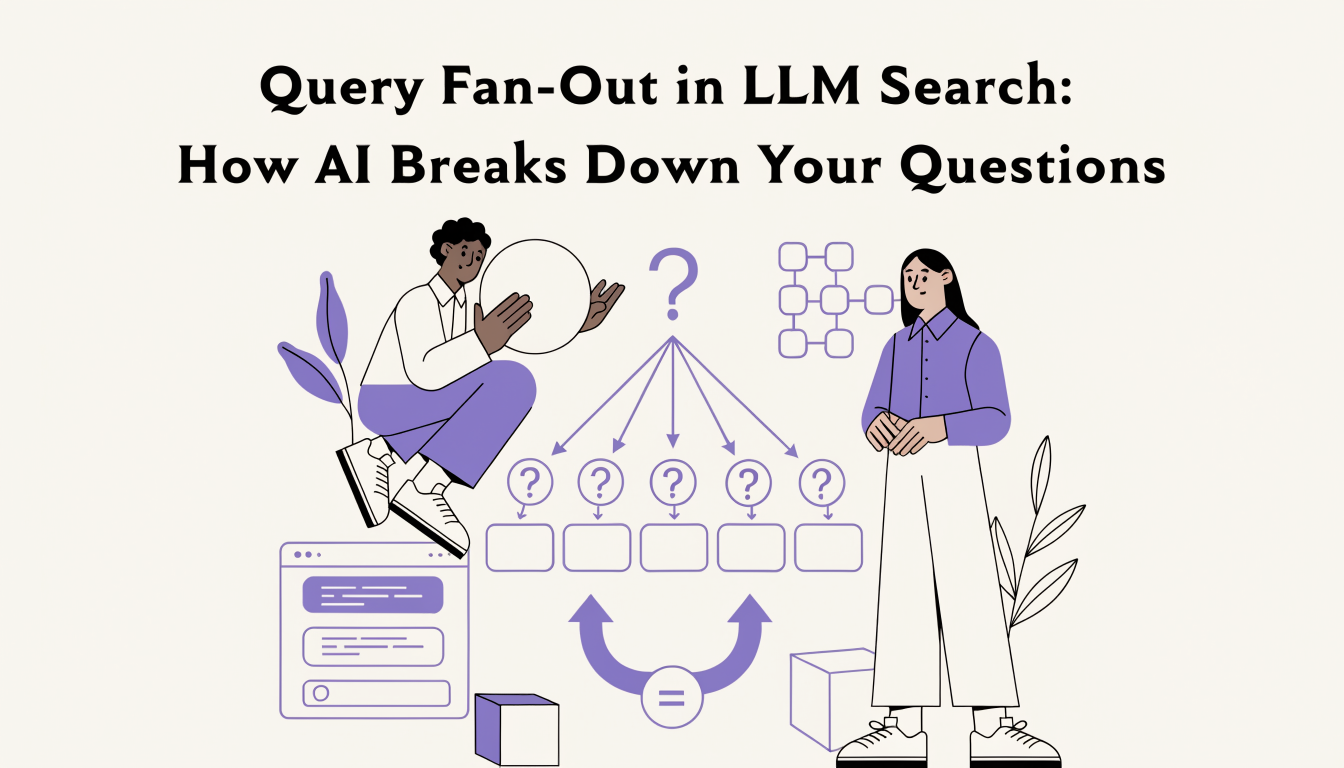
Query Fan-Out in LLM Search: How AI Breaks Down Your Questions
Learn what query fan-out in LLM search is, how AI splits your prompt into 3-8 sub-queries, and how to structure content to win more citation passes.