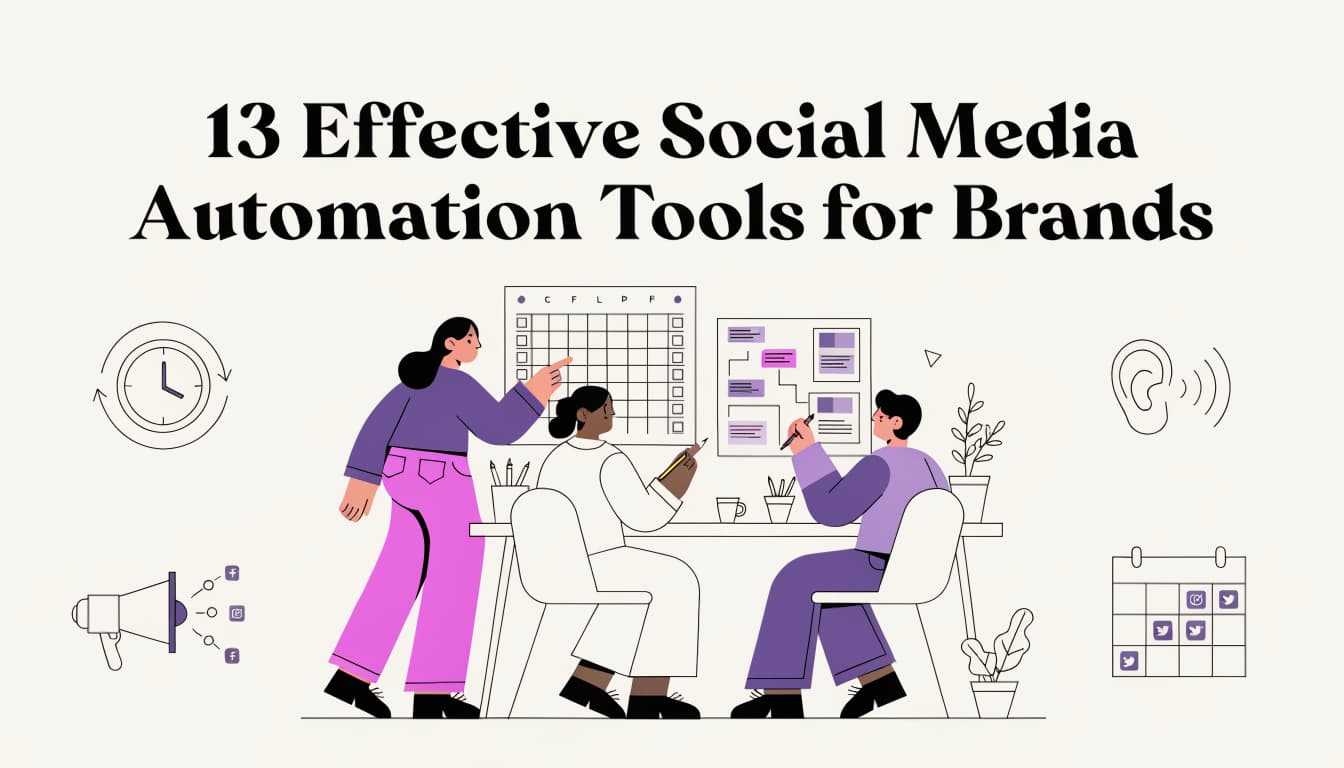
13 Effective Social Media Automation Tools for Brands
Last updated: 24 July 2026
The 13 effective social media automation tools for brands covered in this guide range from free schedulers to enterprise-grade listening platforms. Choosing the right one depends on your team size, channel mix, and how much of your workflow you actually want to hand off to software — not every task benefits from automation.
Why Social Media Automation Matters Right Now
Brands publishing across four or more platforms face a compounding workload: original posts, repurposed content, comment replies, DMs, analytics pulls, and reporting. Manual management at that scale typically costs a mid-sized marketing team 15–20 hours per week, based on industry estimates from social media management research.
Automation tools cut that time by handling scheduling, approval workflows, and basic engagement triage — freeing strategists to focus on content quality and community building. The risk is over-automation: brands that schedule everything and monitor nothing tend to miss real-time conversations that damage or build reputation within hours.
The 13 Effective Social Media Automation Tools for Brands
Below is a structured breakdown. "Free tier" means a genuinely usable plan exists, not just a trial.
| Tool | Best For | Free Tier | Standout Feature |
|---|---|---|---|
| Buffer | Small teams, scheduling | Yes | Clean queue management |
| Hootsuite | Enterprise management | No (30-day trial) | Unified inbox + analytics |
| Sprout Social | Premium scheduling + CRM | No | Smart Inbox with sentiment tagging |
| Sendible | Agencies | No | Client reporting dashboards |
| Agorapulse | Mid-size brands | Limited | Social inbox with ROI tracking |
| ContentStudio | Content discovery + publishing | Yes (limited) | AI-assisted content curation |
| Loomly | Approval workflows | No | Post idea suggestions |
| Zoho Social | SMBs on Zoho ecosystem | Yes | Native CRM integration |
| Brand24 | Social listening | No | Real-time mention alerts |
| Planable | Content collaboration | Yes (50 posts) | Visual content calendar |
| MeetEdgar | Content recycling | No | Category-based content rotation |
| Later | Visual/Instagram-first brands | Yes | Link-in-bio landing page |
| Statusbrew | Customer support teams | No | Rule-based comment automation |
Scheduling and Queue Management
Buffer and Later dominate the free-tier scheduling space. Buffer's queue system lets you set time slots once and drop content in; Later's visual grid preview is particularly useful for brands where Instagram aesthetic consistency matters. Neither offers deep analytics on free plans — you get post-level data but not audience demographic breakdowns.
Unified Inbox and Engagement
Hootsuite and Sprout Social both aggregate comments, mentions, and DMs across platforms into one inbox. Sprout's Smart Inbox adds sentiment tagging, which helps community managers prioritise urgent or negative messages. According to Sprout Social's own research, the most effective brands use automation for scheduling and reporting while keeping human response for direct engagement — a distinction worth building into your workflow from day one.
Listening and Monitoring
Brand24 tracks keyword mentions across social, news, blogs, and forums in near real-time, with an "Mention Storm" alert for sudden spikes. This matters during product launches or PR events when a single hour of silence can cost credibility. Statusbrew takes a different angle: it lets you auto-hide or auto-reply to comments based on keyword rules, which is valuable for high-volume brand pages managing toxic comments at scale.
Agency and Collaboration Tools
Sendible and Planable are built with multi-client or multi-stakeholder workflows in mind. Planable's visual calendar shows content exactly as it will appear on each platform, and its approval system lets clients comment or approve without accessing your main account. Sendible generates white-label PDF reports — a practical time-saver if you're billing clients monthly.
Content Recycling
MeetEdgar solves a real problem: most brands publish a post once and abandon it. MeetEdgar stores content in category libraries and reshares it on a rotating schedule, with variation options so the same post doesn't appear word-for-word twice. For evergreen content — how-to guides, testimonials, product features — this can extend the useful life of each piece by months.
Applying the 5-3-2 Rule Alongside Automation
The 5-3-2 rule is a content mix framework: for every 10 posts, five should be curated content from others in your industry, three should be original brand content, and two should be personal or humanising posts. It was popularised for Twitter/X but applies to any feed-based platform.
Automation tools like ContentStudio and Agorapulse support this through content discovery feeds and category-based scheduling. You can set up a ContentStudio stream to surface relevant industry articles, then queue the best ones automatically — covering the "five curated" portion without daily manual searches.
Choosing the Right Tool: Trade-offs Brands Often Miss
No single tool is best for every brand. Sprout Social's analytics are genuinely powerful, but its entry-level plan starts at a price point that's hard to justify for teams posting fewer than 20 times per week. Hootsuite covers more platforms than almost any competitor, but its interface is dense and has a real learning curve for new users.
Free tools like Buffer and Later are excellent for solo operators or very small teams, but they cap publishing volume and don't offer team collaboration features. If you're a small business expecting to grow, building your workflow around a free tier can create painful migration work six months later.
Zoho Social is worth considering specifically if your brand already uses Zoho CRM — the native integration means social leads flow directly into your sales pipeline without a Zapier workaround. Outside that ecosystem, it offers less than competitors at similar price points.
Measuring What Actually Works
Track these four metrics monthly, regardless of which tool you use:
- Engagement rate per post — likes, comments, shares divided by reach. Industry benchmarks vary widely by platform: Instagram averages around 0.5–1% for brand accounts, LinkedIn often sits lower.
- Response time — how quickly your team replies to mentions and DMs. Faster response correlates with higher customer satisfaction scores.
- Publishing consistency — did you hit your planned posting frequency? Automation's primary value is here.
- Content mix ratio — are you actually following your planned 5-3-2 or similar split, or defaulting to promotional posts?
Most tools listed above export these metrics in CSV or PDF format. Agorapulse's ROI tracking goes further, connecting social clicks to website conversions via UTM parameters — useful if you want to tie social spend to revenue.
Common Failure Modes
The biggest failure mode is treating automation as a "set and forget" system. Scheduled posts go out during breaking news events, brand crises, or public holidays without human review — and the optics can be severe. Build a pause protocol: whoever manages your social accounts should know how to instantly suspend the queue in Hootsuite, Buffer, or whichever tool you use.
A second failure mode is tool sprawl. Brands often accumulate three or four overlapping subscriptions — a scheduler, a separate listening tool, a separate reporting tool — when one mid-tier platform would cover all three. Audit your stack annually.
Your First 30 Days: A Realistic Action Plan
Week 1: Audit your current posting frequency, channel mix, and team size. Map which tasks consume the most time — scheduling, reporting, or engagement.
Week 2: Trial one scheduling tool (Buffer or Later for small teams; Agorapulse or Sprout Social for mid-size) and migrate your content calendar into it. Do not automate engagement yet.
Week 3: Add a listening layer. Even Brand24's entry plan gives you keyword alerts that catch brand mentions your scheduling tool won't surface. Set up at least your brand name and top product names as tracked terms.
Week 4: Pull your first automated report. Compare engagement rate and publishing consistency against the previous month. Adjust your content mix based on what performed — then lock in your tool stack for the next quarter before adding anything else.
Brands that follow this sequence typically stabilise their workflow within 60 days and see measurable consistency improvements before month three.
If you want expert guidance on building an automation strategy tailored to your brand's channels and goals, visit seorav.com — the team can help you select the right stack and avoid the common pitfalls that slow most brands down.
Frequently Asked Questions
What is the best social media automation tool?
There is no single best tool — it depends on your team size and goals. Buffer and Later are strong choices for small businesses needing free scheduling. Sprout Social leads for premium analytics and CRM-style engagement management. Agorapulse offers the best balance of features and usability for mid-size brands. Evaluate based on the platforms you actually use and how much team collaboration your workflow requires.
What are the top 5 automation tools for social media?
Based on feature depth, reliability, and broad platform support, five consistently strong options are: Buffer (scheduling simplicity), Hootsuite (enterprise-scale management), Sprout Social (analytics and engagement), Agorapulse (mid-size brand workflows), and Brand24 (social listening and monitoring). Each serves a different primary need, so the best combination for most brands is a scheduler paired with a listening tool.
What is the 5-3-2 rule on Instagram and social media?
The 5-3-2 rule is a content mix framework: for every 10 posts, five should be curated content from third-party sources relevant to your audience, three should be original brand content, and two should be personal or humanising posts. It was originally developed for Twitter but applies across feed-based platforms. Tools like ContentStudio and Agorapulse support this mix through category-based scheduling and content discovery feeds.
Are there good free social media automation tools for brands?
Yes, several tools offer genuinely usable free tiers. Buffer's free plan supports up to three channels with a basic post queue. Later offers free scheduling with a visual grid preview, useful for Instagram-first brands. Planable allows up to 50 posts free before requiring a paid plan. Zoho Social has a limited free option for single-brand users. Free plans typically exclude team collaboration, advanced analytics, and bulk scheduling.
What is the most effective social media marketing tool for small businesses?
For small businesses, Buffer or Zoho Social tend to offer the most value relative to cost. Buffer's clean interface and free starting tier make it accessible without training overhead. Zoho Social is especially effective if the business already uses Zoho CRM, since social leads flow directly into the sales pipeline. For businesses that need listening alongside scheduling, pairing Buffer with a free Brand24 trial covers most core needs.
How many social media automation tools does a brand actually need?
Most brands need no more than two: one scheduling and publishing tool, and one listening or monitoring tool. Adding a third for reporting is worthwhile only if your existing tools don't export usable data. Tool sprawl — accumulating four or more overlapping subscriptions — is a common and expensive mistake. Audit your stack every six months and consolidate where features overlap.
Keep reading
Ranking in Google's AI Search: The Deterministic Signals That Actually Move the Needle
Learn how do you rank in SGE with the three signals Google's AI uses to cite sources: schema markup, entity salience, and structured factual claims.
Why AI Ignores Your Content (And How to Fix It)
Learn how to avoid AI content that gets ignored by LLMs. Covers RAG retrieval signals, schema, entity salience, and an answer-first structure checklist.
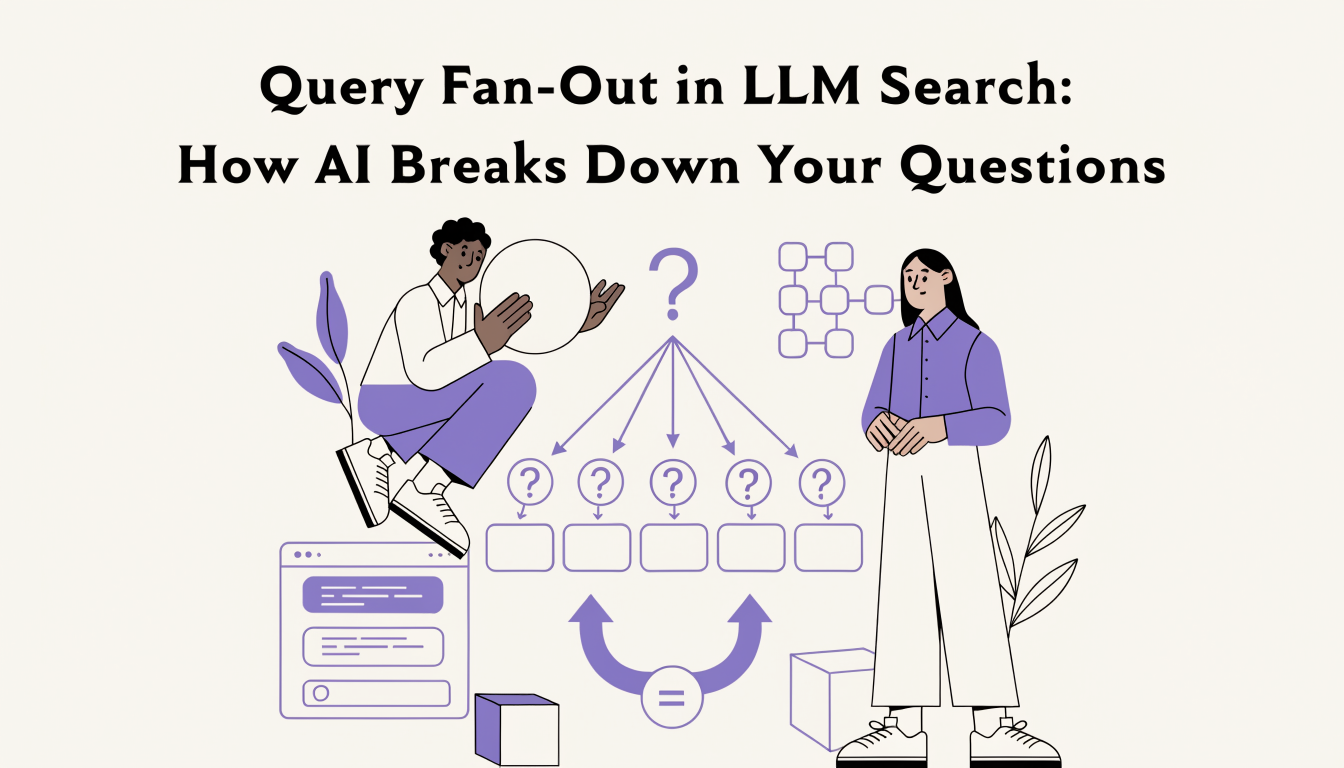
Query Fan-Out in LLM Search: How AI Breaks Down Your Questions
Learn what query fan-out in LLM search is, how AI splits your prompt into 3-8 sub-queries, and how to structure content to win more citation passes.