12 Overlooked SEO Mistakes Shared by SEO Professionals
Last updated: 26 July 2026
The 12 overlooked SEO mistakes shared by SEO professionals are not the obvious ones you read about in beginner guides. They are quieter errors — ones that survive audits, persist through redesigns, and cost rankings for months before anyone notices. Fix these, and most sites see measurable movement within one to two crawl cycles.
Why These Mistakes Stay Hidden
Common SEO checklists focus on what is easy to see: missing title tags, broken links, slow load times. Those are real problems, but most experienced practitioners have already fixed them. What remains are structural and strategic errors that blend into normal-looking sites. They are hard to spot because they do not trigger obvious warnings in standard crawl tools, and they often look like deliberate choices rather than mistakes.
Understanding this gap matters because SEO in 2026 is not dead — it is more competitive. Google processes roughly 8.5 billion searches per day, and the sites that win are the ones that close the gap between "technically fine" and "genuinely optimised."
The 12 Overlooked SEO Mistakes Shared by SEO Professionals
1. Wasting Internal Link Authority on Low-Value Pages
Most sites have hundreds of internal links pointing to contact pages, privacy policies, and login screens. Every link is a vote. Redirecting that authority toward high-priority landing pages can lift rankings without a single new backlink. Audit your internal link distribution with a tool like Screaming Frog and look at which pages receive the most internal links — you may be surprised.
2. Ignoring Crawl Budget on Large Sites
Google does not crawl every page of a large site every day. Sites with thousands of URLs often waste crawl budget on paginated archives, faceted navigation, or near-duplicate product filters. Use Google Search Console's crawl stats report to see what Googlebot actually visits. If it is spending time on thin or duplicate pages, those pages are eating budget that should go to your money pages.
3. Publishing Content Without a Clear Search Intent Match
A page can be well-written and still rank poorly if it does not match what searchers actually want. A blog post answering "how to fix X" will not rank for a query where users want a tool to fix X automatically. Before writing, check the top 5 results for your target keyword and identify whether they are informational, transactional, or navigational. Match the format, not just the topic.
4. Treating All Backlinks as Equal
A link from a page with zero organic traffic contributes almost nothing. Professionals who audit real projects consistently find link profiles padded with links from sites that Google itself ignores. When evaluating link quality, prioritise referring page traffic over domain authority scores. A link from a niche page that receives 500 visits per month outperforms a link from a high-DA page that gets none.
5. Skipping Conversion Rate Optimisation After Rankings Improve
SEO and CRO are treated as separate disciplines, but they share the same goal: turning a searcher into a customer. A page ranking in position 3 with a 1% conversion rate earns less revenue than a page in position 6 with a 4% rate. Once a page ranks, test headlines, CTAs, and page structure. Traffic without conversion is a vanity metric.
6. Over-Optimising Anchor Text in Internal Links
Exact-match anchor text used too consistently across internal links can trigger over-optimisation signals. Vary anchor text naturally — use synonyms, partial matches, and contextual phrases. This is especially important for pages you are actively trying to rank for competitive terms.
7. Neglecting E-E-A-T Signals on Key Pages
Google's quality rater guidelines emphasise Experience, Expertise, Authoritativeness, and Trustworthiness. Yet many sites still publish author-less articles, lack clear About pages, and hide contact information. Adding named authors with credentials, citing primary sources, and displaying trust signals (accreditations, case studies, verified reviews) can move the needle on competitive queries where topical authority is the differentiator.
8. Ignoring the 80/20 Rule in Content Strategy
The 80/20 rule in SEO means roughly 20% of your pages drive 80% of your organic traffic. Most sites have far too many pages competing against each other for similar queries — a pattern called keyword cannibalism. Identify your top-performing 20% in Google Search Console, then consolidate, redirect, or prune the rest. Fewer, stronger pages consistently outperform a sprawling content archive.
9. Setting and Forgetting Technical Fixes
A redirect fixed in January can break again after a site migration in March. Schema markup added to a template can vanish after a CMS update. Technical SEO is not a one-time task. Schedule a lightweight monthly crawl — even a free Screaming Frog crawl of your top 500 URLs — to catch regressions before they compound.
10. Not Using Log File Analysis
Server log files show exactly which URLs Googlebot requested and when. Most SEO practitioners never look at them. Log analysis reveals pages Googlebot visits frequently but that never rank (often a crawl waste signal), and pages that rank well but are rarely crawled (a freshness risk). Tools like Screaming Frog Log File Analyser or Semrush's log file feature make this accessible without a developer.
11. Misreading Position Changes as Traffic Changes
A page moving from position 8 to position 4 does not always double traffic. Click-through rate curves vary dramatically by query type. Branded queries, navigational queries, and queries with featured snippets all have different CTR distributions. Always cross-reference position data with actual impressions and clicks in Search Console before concluding that a ranking improvement is working.
12. Underestimating the Compound Effect of Site Speed on Mobile
Core Web Vitals are a confirmed ranking factor, but many sites treat them as a pass/fail checkbox. The real damage is cumulative: a site that scores 65 on Largest Contentful Paint loses a fraction of users on every page load, every day. On mobile, where more than 60% of searches now originate, a one-second delay in LCP is associated with higher bounce rates. Fix the biggest speed issues first — usually unoptimised images and render-blocking scripts — rather than chasing a perfect score.
Measuring Success and Common Failure Modes
Track these four metrics monthly to know whether fixes are working:
| Metric | Tool | What to Watch |
|---|---|---|
| Crawl coverage | Google Search Console | % of indexed vs. submitted URLs |
| Organic CTR | Search Console | CTR by page, not just average |
| Core Web Vitals | PageSpeed Insights | LCP, CLS, INP per URL type |
| Conversion rate from organic | GA4 | Sessions vs. goal completions by landing page |
The most common failure mode is fixing one layer while ignoring another. A site can have perfect technical health and terrible content intent-matching, or excellent content and a crawl budget problem that means Google never sees new posts. SEO works as a system. Isolating fixes without checking their interaction is why many sites plateau after an initial improvement.
One honest caveat: not every mistake on this list applies equally to every site. A 10-page service site has no crawl budget problem. A news site with thousands of daily posts has no cannibalism issue. Prioritise the mistakes that match your site's actual architecture and traffic profile.
Your First 30 Days: A Realistic Action Plan
Start with data, not assumptions. In the first week, pull a crawl report and your Search Console data side by side. Identify your top 20% of pages by organic traffic and your bottom 20% by crawl frequency versus impressions. That gap is your first priority.
In weeks two and three, fix the internal link distribution. Map authority toward your highest-value pages, correct any over-optimised anchor text, and consolidate any clear cases of keyword cannibalism (two pages targeting the same primary keyword with overlapping content).
In week four, audit E-E-A-T signals on your top five landing pages. Add or update author information, check that trust signals are visible above the fold, and verify that schema markup is intact after any recent CMS changes.
This is not a complete SEO overhaul — it is a focused correction of the mistakes most likely to be silently costing you rankings right now. After 30 days, re-run the crawl and compare Search Console impressions week over week. You will have a baseline for what is actually moving.
If you want a structured review of which of these mistakes are active on your site, see how seorav.com can help — the team works through exactly this kind of technical and strategic audit for sites that have stalled despite doing the basics right.
Frequently Asked Questions
What are the most common SEO mistakes that professionals still see in 2026?
The most common mistakes professionals encounter are keyword cannibalism (multiple pages competing for the same query), poor internal link distribution, and content that does not match search intent. Technical issues like crawl budget waste and unresolved Core Web Vitals problems are also frequent. These persist because they do not trigger obvious errors in standard audits — they require deliberate investigation to surface.
Is SEO dead or evolving in 2026?
SEO is evolving, not dying. Google still processes billions of searches daily, and organic search remains one of the highest-converting acquisition channels for most industries. What has changed is the bar for quality: thin content, manipulative link building, and keyword stuffing no longer work. Sites that invest in genuine topical authority, strong E-E-A-T signals, and technical precision continue to grow organically.
What is the 80/20 rule in SEO?
The 80/20 rule in SEO refers to the pattern where roughly 20% of a site's pages generate about 80% of its organic traffic. The practical implication is that most sites have too many low-value pages diluting crawl budget and competing internally for similar queries. Identifying your top-performing 20% and consolidating or pruning the rest is one of the highest-leverage actions in content strategy.
Why do SEO fixes sometimes stop working after a few months?
SEO fixes often regress because they are treated as one-time tasks rather than ongoing maintenance. A CMS update can remove schema markup. A site migration can break redirects. New content can introduce fresh cannibalism. Scheduling a lightweight monthly crawl of your top URLs — even just 500 pages — catches these regressions before they compound into significant ranking drops.
How do you identify keyword cannibalism on your own site?
Export your Google Search Console performance data and filter by query. If two or more URLs are appearing for the same primary keyword with meaningful impressions, you likely have cannibalism. Confirm by checking which page Google chooses to rank over time — if it fluctuates between two URLs, that is a strong signal. The fix is usually a canonical tag, a redirect, or consolidating the content into one stronger page.
Keep reading
Ranking in Google's AI Search: The Deterministic Signals That Actually Move the Needle
Learn how do you rank in SGE with the three signals Google's AI uses to cite sources: schema markup, entity salience, and structured factual claims.
Why AI Ignores Your Content (And How to Fix It)
Learn how to avoid AI content that gets ignored by LLMs. Covers RAG retrieval signals, schema, entity salience, and an answer-first structure checklist.
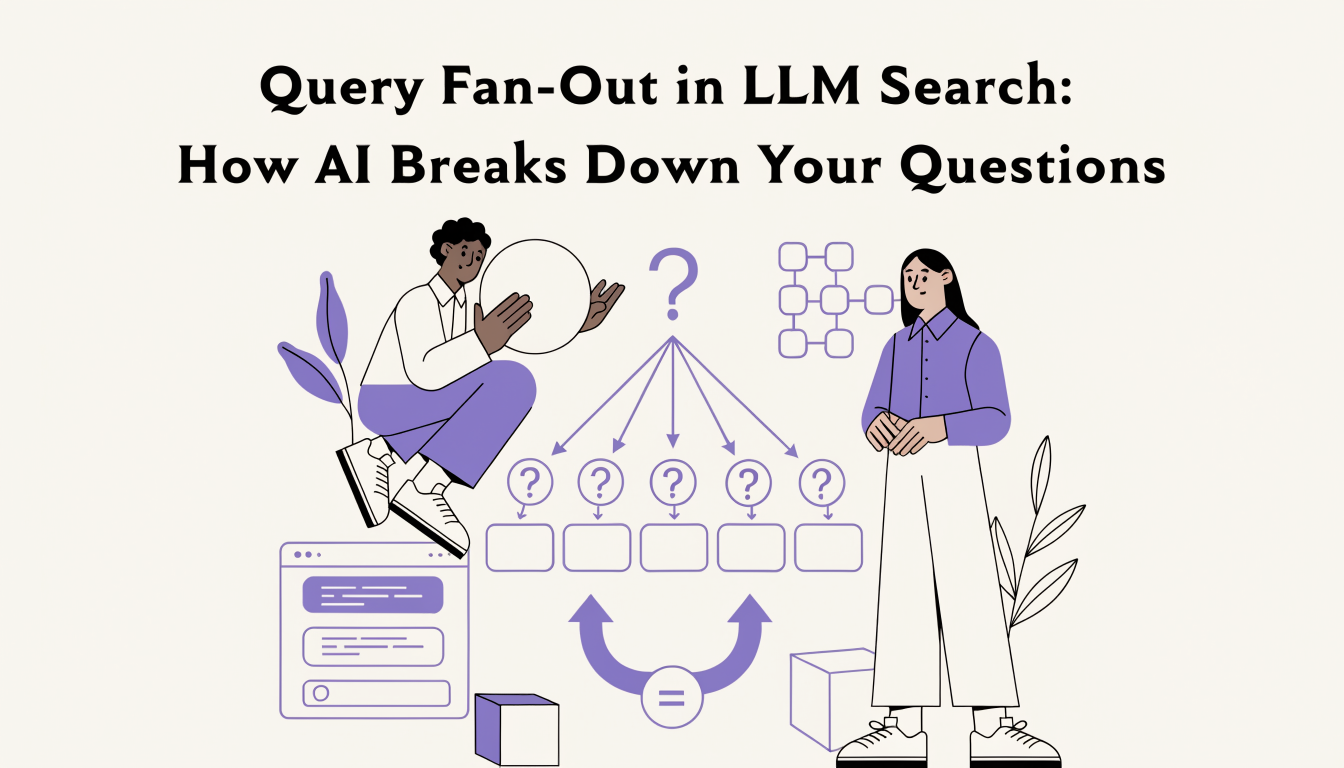
Query Fan-Out in LLM Search: How AI Breaks Down Your Questions
Learn what query fan-out in LLM search is, how AI splits your prompt into 3-8 sub-queries, and how to structure content to win more citation passes.