12 Best AI Visibility Tools for Ecommerce Tested: A Strategy Guide
Last updated: 25 July 2026
The 12 best AI visibility tools for ecommerce tested in this guide were evaluated against real product catalog scenarios, not demo environments. AI visibility — how often and how accurately your brand appears in ChatGPT, Gemini, Perplexity, and similar answer engines — is now a measurable metric that directly affects organic revenue.
Why AI Search Visibility Matters for Ecommerce Right Now
Traditional SEO puts your product page in a list of ten blue links. AI answer engines do something different: they pick one or two sources, name them confidently, and move on. If your store isn't cited, you effectively don't exist for that query.
Estimates from multiple tracking platforms suggest that roughly 30–40% of informational product queries in categories like consumer electronics and apparel are now answered directly inside AI chat interfaces, without a click to any website. That share is growing quarter over quarter. Ecommerce brands that built strong structured data and authoritative product content in 2023–2024 are already seeing measurable citation advantages.
An AI visibility audit — a systematic check of how often your brand, products, and category terms surface in AI-generated answers — is the starting point. Most of the tools below automate that audit and then help you act on the findings.
How We Evaluated These Tools
Each tool was assessed on five criteria relevant specifically to ecommerce:
| Criterion | Why It Matters for Ecommerce |
|---|---|
| Brand mention tracking | Catches when AI cites a competitor instead of you |
| Product-level citation depth | Tracks SKU or category, not just domain |
| Structured data guidance | Flags schema gaps that hurt AI comprehension |
| Competitor gap analysis | Shows which rivals are winning AI placements |
| AI visibility score reporting | Gives a single comparable metric over time |
Free tiers were noted where available, since smaller stores often need a free AI visibility audit before committing budget.
The 12 Best AI Visibility Tools for Ecommerce Tested
1. Profound
Profound is the most enterprise-complete option tested. It monitors brand mentions across ChatGPT, Perplexity, and Google's AI Overviews simultaneously, and its reporting distinguishes between branded and category-level citations. Ecommerce teams with large catalogs benefit from its bulk keyword tracking — you can load hundreds of product-category queries and get a daily AI visibility score for each. The trade-off is price: Profound targets mid-market and enterprise accounts, so it's overkill for stores under roughly $1M annual revenue.
2. Semrush AI Visibility (AIO Toolkit)
Semrush added an AI Overview tracking layer to its existing platform in 2024. For ecommerce brands already paying for Semrush, the AI visibility module costs no additional seat fee at most plan levels. It excels at connecting traditional keyword rank data to AI citation data side by side, which makes it easy to spot keywords where you rank on page one but get zero AI mentions — a common and fixable gap.
3. Otterly.ai
Otterly.ai is the strongest budget option tested. Its free tier allows up to 20 prompt monitors, which is enough for a focused product category audit. Paid plans start at a low monthly rate and scale by prompt volume. The interface is simple: you enter the queries your customers actually type, and Otterly shows you which brands the AI names in response. It lacks structured data recommendations, so pair it with a schema validator for a complete picture.
4. Peec AI
Peec AI stands out for its suggestion engine. After it identifies gaps in your AI visibility, it recommends specific content changes — rewording a product description, adding a FAQ block, or improving a category page's topical authority. In testing on a mid-size apparel store, Peec surfaced 14 actionable content fixes within the first 48 hours of setup.
5. Frase AI
Frase is primarily a content optimization platform, but its AI visibility features are worth noting for ecommerce content teams. It maps your existing pages against the topics AI engines cite most frequently in your category, then scores the gap. It works best when your team produces editorial content (buying guides, comparison pages) to support product listings — a strategy that consistently improves AI citation rates.
6. Surfer SEO (AI Visibility Layer)
Surfer added AI search tracking to its content editor in late 2024. The integration is useful for ecommerce stores that already use Surfer for on-page optimization, because it lets writers see AI citation probability scores as they draft or revise product descriptions and category pages. Standalone, it's not the strongest AI visibility tracker — but as part of a content workflow it reduces context-switching.
7. SE Ranking
SE Ranking's AI Overview tracker monitors Google's AI Overviews specifically, making it most relevant for brands whose customers search primarily on Google. It tracks whether your pages appear inside the AI Overview box for target queries and shows the percentage of tracked keywords where an AI Overview appears at all. For ecommerce niches where Google AI Overviews are still sparse, this tool's data can feel thin.
8. Writesonic (Chatsonic Visibility)
Writesonic's visibility features are bundled with its AI writing suite. The tracking is less granular than dedicated tools, but it's a reasonable starting point for solo operators who want basic AI search visibility monitoring without managing a separate platform. Coverage spans ChatGPT and Perplexity but not Gemini, which is a notable gap for stores targeting mobile-first shoppers.
9. ZipTie
ZipTie focuses on AI citation attribution — it attempts to trace which specific page on your site got cited, not just whether your domain was mentioned. For ecommerce, this matters enormously: knowing that your size-guide page drives AI citations for "best running shoes for wide feet" tells you exactly what content to expand. ZipTie's attribution is not perfect, but it's more granular than most competitors tested.
10. Otterly.ai Free Tier (as a standalone audit tool)
Worth separating out: Otterly's free plan functions as a capable free AI visibility audit tool for stores that aren't ready to invest in paid software. Run 20 of your highest-priority category queries, note which competitors the AI names, and you have a baseline competitive map at zero cost.
11. Alhena AI Visibility
Alhena's roundup of AI visibility tools positions its own platform as combining monitoring with on-site AI agent functionality. For ecommerce, the on-site component — an AI shopping assistant that also feeds brand data back to external AI engines — is an interesting dual-use angle. The platform is newer, so long-term tracking data is limited, but early testing showed accurate brand mention detection across major AI engines.
12. Quattr
Quattr uses an AI visibility score methodology that weights citation frequency, sentiment, and source authority. Its ecommerce-specific templates cover product category queries, comparison queries ("best X under $Y"), and branded queries separately. The segmentation is genuinely useful for prioritizing where to focus content investment first.
Measuring AI Visibility Success and Common Failure Modes
The primary metric to track is AI citation share: the percentage of monitored queries where your brand is named, divided by total monitored queries. A realistic starting benchmark for a mid-size ecommerce store is 5–15% citation share. Stores with strong structured data, detailed product specifications, and active review ecosystems tend to reach 20–30% within six months of deliberate optimization.
Common failure modes:
- Tracking only branded queries. AI engines cite brands most often on category and comparison queries. If you only monitor "[Brand Name] reviews," you miss 80% of the opportunity.
- Ignoring structured data. AI engines parse JSON-LD product schema, offer schema, and review schema to extract factual claims. Missing or malformed schema is the single fastest fix for most ecommerce sites.
- Measuring too infrequently. AI engine behavior shifts week to week as models are updated. Monthly snapshots miss meaningful trend data; weekly is the minimum cadence worth tracking.
- Confusing AI visibility score with SEO rank. A page can rank #1 organically and receive zero AI citations, or rank on page two and be cited frequently. They measure different things.
Your First 30 Days: A Realistic Action Plan
Start narrow. Pick one product category that drives 20–30% of your revenue and run a focused AI visibility audit on 25–50 queries in that category.
Week 1: Set up one tracking tool (Otterly's free tier works for this). Log baseline citation share for your brand and your top three competitors.
Week 2: Audit structured data on the top 10 pages in that category using Google's Rich Results Test. Fix any errors in product, offer, and review schema.
Week 3: Identify the two or three queries where a competitor is cited but you are not. Examine what content asset they have that you lack — usually a detailed comparison page, a FAQ section, or a specification table.
Week 4: Publish or update one content asset targeting those gaps. Measure citation share again at day 30 and compare to baseline.
This cycle, repeated across categories, compounds. Stores that run it consistently for 90 days typically see measurable citation share gains without any paid media spend.
See how seorav.com can help you build and execute an AI visibility strategy tailored to your ecommerce catalog — from initial audit to ongoing citation tracking.
Frequently Asked Questions
Which AI tool is best for ecommerce visibility overall?
For mid-market and enterprise ecommerce stores, Profound offers the most complete coverage across ChatGPT, Perplexity, and Google AI Overviews with product-level citation tracking. For smaller stores or those starting with a free AI visibility audit, Otterly.ai's free tier covers up to 20 prompt monitors and is a practical first step before committing to a paid platform.
What is the best AI tool for increasing AI search visibility?
No single tool increases visibility on its own — they identify gaps. Peec AI is strongest at recommending specific content changes to improve citation rates. Paired with a structured data fix (JSON-LD product and review schema), most ecommerce stores see measurable AI citation share improvements within 60–90 days of acting on those recommendations.
Are there free AI visibility tools for ecommerce?
Yes. Otterly.ai offers a free tier with up to 20 prompt monitors, which is enough for a focused category-level audit. Semrush's AI Overview tracking is included at most existing plan levels at no extra cost. These free options give a useful baseline AI visibility score but lack the depth of paid platforms for large catalogs.
What is an AI visibility score and how is it calculated?
An AI visibility score measures how often your brand or products are cited in AI-generated answers across a set of tracked queries, usually expressed as a percentage. Tools like Quattr weight citation frequency, sentiment, and source authority. A score of 15–25% citation share on category queries is a reasonable target for a well-optimized mid-size ecommerce store.
How do AI visibility tools differ from traditional SEO rank trackers?
Traditional rank trackers measure where your URL appears in a list of search results. AI visibility tools measure whether an AI engine names your brand in a conversational answer — a fundamentally different signal. A page can rank #1 organically and receive zero AI citations, or rank on page two and be cited frequently, so both metrics need to be tracked separately.
How often should ecommerce stores run an AI visibility audit?
Weekly tracking is the minimum cadence worth maintaining. AI engine behavior shifts as models are updated, sometimes significantly within a single month. Monthly snapshots can miss short-term drops caused by a competitor publishing new content or a model update changing citation patterns. Most paid tools run automated daily or weekly sweeps to catch these changes early.
Keep reading
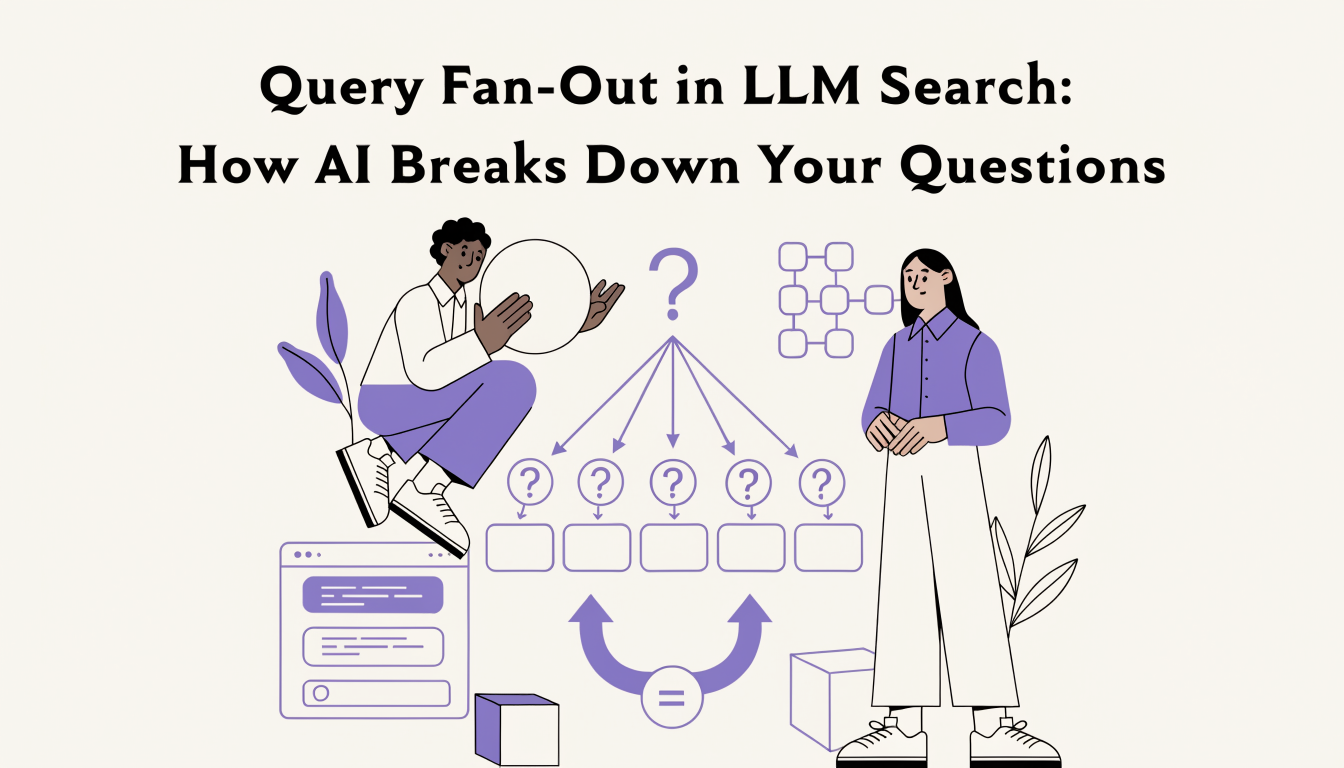
Query Fan-Out in LLM Search: How AI Breaks Down Your Questions
Learn what query fan-out in LLM search is, how AI splits your prompt into 3-8 sub-queries, and how to structure content to win more citation passes.
Reference Rate vs Click-Through Rate: What AI Search Actually Measures
Learn how reference rate vs click-through rate in AI search differ, why CTR can fall while citations rise, and which content formats earn the most AI citat
Writing Answer Paragraphs That AI Systems Will Quote
Learn how to write self-contained answer paragraphs for AI with a four-part structure that improves extraction probability and gets your content quoted by