10 Content Analysis Tools to Improve Your Content ROI

Last updated: 25 July 2026
The 10 content analysis tools to improve your content ROI covered in this guide span readability, search performance, audience behavior, and competitive intelligence. Used together, they replace guesswork with repeatable decisions — and most have a free tier worth testing before you commit budget.
Why Content ROI Is Hard to Measure (and Why That's Changing)
Most content teams track vanity metrics: page views, social shares, time on page. Those numbers feel good but rarely connect to revenue. A 2023 survey by Content Science Review found that fewer than 30% of content teams could directly attribute pipeline or revenue to specific content assets — meaning the majority are flying blind.
The gap exists because content ROI requires at least three data streams working together: search visibility data, on-page engagement data, and conversion data. Most tools cover one stream well. The strategy below is to pick tools that cover all three without creating an unmanageable analytics stack.
What Content Analysis Tools Actually Do
Content analysis tools examine your existing and planned content across dimensions like keyword relevance, readability, engagement patterns, backlink authority, and competitive positioning. Some are diagnostic — they tell you what's broken. Others are prescriptive — they suggest what to write next. The best ones do both.
A clear distinction matters here: content analytics tools measure what content has already done (traffic, conversions, scroll depth). Content optimization tools measure what content could do if improved. You need representatives from both categories to close the loop between creation and performance.
The 10 Content Analysis Tools to Improve Your Content ROI
1. Google Search Console
Free and authoritative. Search Console shows which queries drive impressions and clicks, average position, and click-through rate by page. The "Performance" report lets you filter by page to find high-impression, low-CTR content — a reliable signal that a title or meta description needs work. Most teams under-use the "Search Appearance" tab, which surfaces indexing issues that silently kill organic reach.
2. Google Analytics 4 (GA4)
GA4 replaced Universal Analytics in July 2023 and introduced an event-based model that makes funnel analysis more flexible. The "Engagement rate" metric (sessions where a user spent 10+ seconds or triggered a conversion) is a more honest engagement signal than bounce rate ever was. Use it to identify which content pages actually hold attention versus which ones lose readers immediately.
3. Hemingway Editor
Hemingway scores your writing by grade level and highlights passive voice, complex sentences, and adverb overuse. Research consistently links lower reading grade levels (aim for grade 7-9 for general audiences) with higher time-on-page and lower bounce rates. It's a blunt instrument — it won't help with keyword strategy — but it catches the readability problems that erode trust before a reader even reaches your CTA.
4. Ahrefs Content Explorer
Ahrefs Content Explorer indexes over 15 billion web pages and lets you filter by Domain Rating, traffic, backlinks, and publish date. The practical use: search your topic, filter for pages with high traffic but few referring domains, and you've found content gaps where a well-structured article can rank without needing a massive link-building campaign.
5. Clearscope
Clearscope grades your content against the top-ranking pages for a target keyword, producing a report card of semantically related terms you're missing. An article scoring a B+ or above on Clearscope consistently outperforms lower-scoring drafts in controlled tests run by several mid-market SaaS companies. The trade-off: it's expensive at roughly $170/month for the Essentials plan, which makes it hard to justify for teams publishing fewer than 10 articles per month.
6. Hotjar (Heatmaps + Session Recordings)
Hotjar shows where users click, how far they scroll, and where they abandon a page. For long-form content, scroll maps reveal the "drop-off cliff" — the exact paragraph where most readers leave. Fixing that paragraph (or moving your key conversion element above it) can lift lead captures without changing a word of SEO copy. The free plan allows up to 35 daily sessions, which is enough for initial diagnostics on mid-traffic pages.
7. MarketMuse
MarketMuse uses AI to assess topical authority across your entire site, not just individual pages. It identifies topic clusters where you have thin coverage and models the traffic opportunity for filling those gaps. Unlike single-page tools, it helps you see the content portfolio as a whole — which matters because Google's Helpful Content system rewards sites with deep, consistent expertise in a subject area.
8. Screaming Frog SEO Spider
Screaming Frog crawls your site the way Googlebot does, surfacing duplicate content, broken internal links, missing meta descriptions, and redirect chains. The free version crawls up to 500 URLs. For content ROI specifically, the most valuable report is the "Response Codes" export — it shows every 404 and redirect, which are common sources of lost link equity on sites that have published content for more than two years.
9. BuzzSumo
BuzzSumo measures content performance by social engagement and backlink acquisition. Its "Content Analyzer" lets you enter any domain or topic and see which pieces attracted the most shares and links over a chosen period. Use it to audit competitors' best-performing content before planning your editorial calendar — it's faster than manual research and surfaces patterns (list posts, original data, expert roundups) that actually earn links in your niche.
10. Frase (for AI-Assisted Briefs)
Frase generates content briefs by analyzing the top search results for a keyword and extracting the questions, headings, and statistics those pages use. It's genuinely useful for speeding up research at the brief-writing stage. The limitation worth stating: Frase's AI-generated draft text is generic and usually needs significant rewriting. Treat it as a research accelerator, not a content generator, and the ROI is real.
Measuring Success and Avoiding Common Failure Modes
The most common failure is tracking too many metrics at once. For content ROI, three numbers matter most:
| Metric | What It Measures | Target Signal |
|---|---|---|
| Organic traffic growth (MoM) | Search visibility trend | +5-15% monthly for new content |
| Assisted conversions | Content's role in the funnel | Rising share of total conversions |
| Pages per session from content | Engagement depth | Above 2.0 indicates topical pull |
A second common failure: running tools in isolation. Search Console tells you a page has low CTR; Hotjar tells you users leave at paragraph three; Clearscope tells you the content is missing key terms. None of those insights is actionable alone. Build a monthly review ritual that pulls data from at least three sources before deciding whether to rewrite, consolidate, or retire a piece.
One honest caveat: these tools work best on sites with at least 1,000 monthly organic sessions. Below that threshold, the data is too sparse for statistical confidence. Early-stage sites should prioritize Search Console and Hemingway first, then layer in paid tools as traffic grows.
Your First 30 Days: A Realistic Action Plan
Week 1: Connect Google Search Console and GA4. Pull a list of your top 20 pages by impressions. Identify the five with CTR below 2% — those are your first rewrite targets.
Week 2: Run Screaming Frog on your domain. Fix every 404 and redirect chain you find. This is unglamorous work that consistently recovers lost ranking potential within 4-6 weeks.
Week 3: Use BuzzSumo or Ahrefs Content Explorer to map competitors' top-performing content from the past 12 months. Build a gap list of five topics your site hasn't covered.
Week 4: Pick one gap topic, run it through Clearscope or Frase to build a brief, write the piece to a Hemingway grade 8-9, and publish. Set a 90-day calendar reminder to evaluate its performance in Search Console.
That sequence costs roughly four hours per week and requires no paid tools in the first two weeks. It's a repeatable system, not a one-time project.
See how seorav.com can help you build a content analysis workflow tailored to your site's specific gaps and growth stage. A focused audit often surfaces quick wins that generic tool lists miss entirely.
Frequently Asked Questions
What are content analysis tools?
Content analysis tools are software platforms that evaluate your content's quality, search performance, readability, engagement, and competitive positioning. Some tools are diagnostic — identifying problems like thin content or broken links — while others are prescriptive, suggesting topics or optimizations. Used together, they help you understand why content performs well or poorly and guide decisions about what to create, update, or retire.
Which software is best for content analysis?
There is no single best tool — the right choice depends on your goal. For search visibility, Google Search Console is the most reliable free option. For on-page optimization, Clearscope and MarketMuse lead in accuracy. For technical audits, Screaming Frog is the industry standard. Most content teams get the best results by combining a free search data tool with one paid optimization platform and one engagement tool like Hotjar.
Which AI is best for content analysis?
MarketMuse and Clearscope are the most proven AI-powered content analysis platforms for improving search ROI, as both use machine learning to map topical coverage and semantic relevance. Frase is useful for brief generation and question research. General-purpose AI like ChatGPT can assist with drafting but lacks the indexed search data needed for reliable keyword-level content analysis. For measurable ROI, purpose-built tools outperform general AI assistants.
What are the top 10 analytics tools for content teams?
The ten tools that consistently deliver measurable content ROI improvements are: Google Search Console, Google Analytics 4, Hemingway Editor, Ahrefs Content Explorer, Clearscope, Hotjar, MarketMuse, Screaming Frog SEO Spider, BuzzSumo, and Frase. Free tools like Search Console and Hemingway should be implemented first. Paid platforms like Clearscope or MarketMuse make the most sense once your site reaches at least 1,000 monthly organic sessions.
How do you measure content ROI accurately?
Accurate content ROI measurement requires connecting at least three data streams: organic traffic trends (from Search Console or GA4), assisted conversions (from GA4's attribution reports), and engagement depth (scroll depth and pages per session). Tracking only traffic or only conversions misses how content contributes across the full funnel. A monthly review combining all three metrics gives a far more reliable picture than any single dashboard.
How long does it take to see results from content analysis improvements?
Technical fixes like resolving 404s and redirect chains typically show ranking improvements within 4-6 weeks. Rewritten or optimized articles usually see measurable traffic changes within 60-90 days, depending on crawl frequency and domain authority. New content targeting low-competition keywords can rank within 30-60 days. Setting 90-day review checkpoints in your calendar is a practical way to evaluate whether specific changes are working.
Keep reading
Ranking in Google's AI Search: The Deterministic Signals That Actually Move the Needle
Learn how do you rank in SGE with the three signals Google's AI uses to cite sources: schema markup, entity salience, and structured factual claims.

Why AI Ignores Your Content (And How to Fix It)
Learn how to avoid AI content that gets ignored by LLMs. Covers RAG retrieval signals, schema, entity salience, and an answer-first structure checklist.
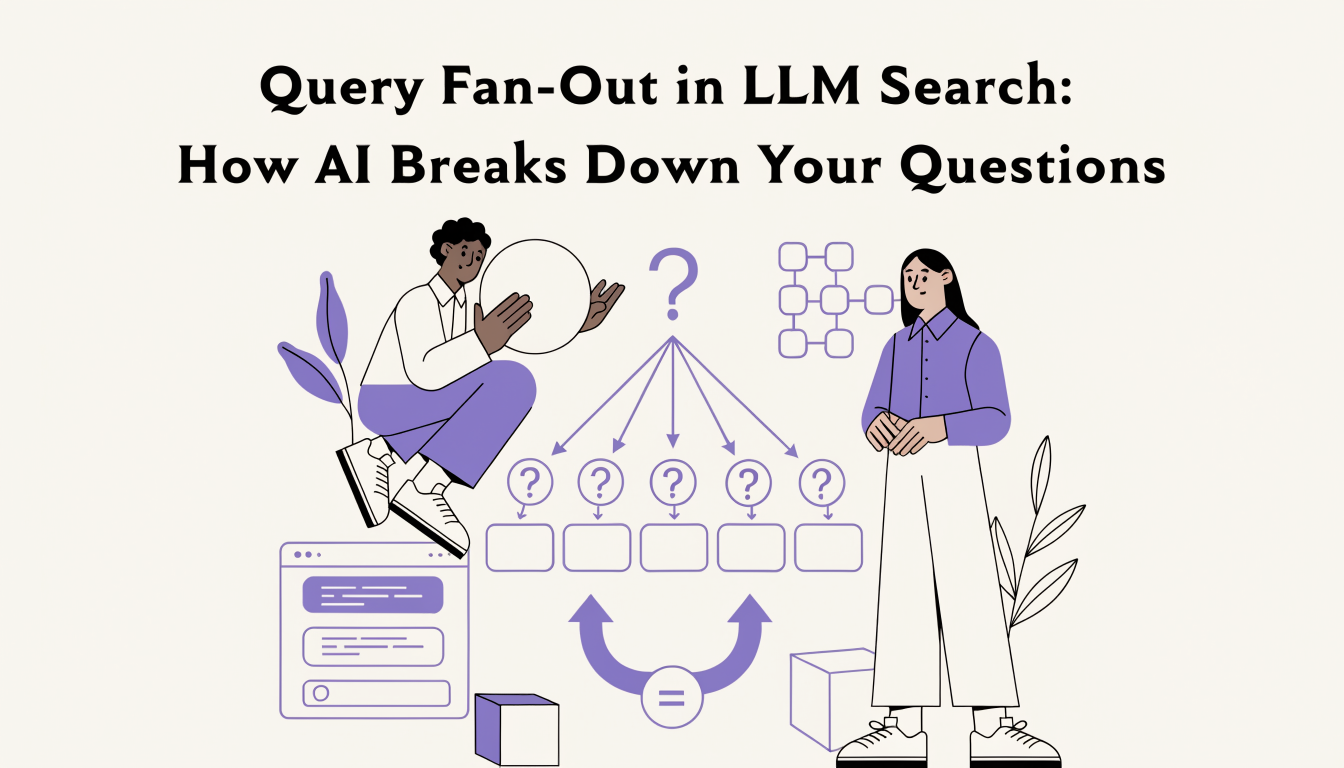
Query Fan-Out in LLM Search: How AI Breaks Down Your Questions
Learn what query fan-out in LLM search is, how AI splits your prompt into 3-8 sub-queries, and how to structure content to win more citation passes.