10 Best AI Visibility Tracking Tools Reviewed for 2025
Last updated: 24 July 2026
The 10 best AI visibility tracking tools reviewed in this guide are evaluated on four criteria: which AI platforms they monitor, how actionable their data is, whether a free tier exists, and what kind of team they suit best. Skip to the comparison table for a fast overview, or read each section for the strategic detail.
Why AI Visibility Tracking Matters Right Now
Search behavior shifted measurably when ChatGPT crossed 100 million monthly users in early 2023. Since then, Google AI Overviews, Perplexity, Claude, and Gemini have each carved out portions of the answer-engine market. Brands that rank on page one of traditional search can still be invisible in AI-generated responses — and most analytics platforms do not track that gap.
An AI visibility audit reveals which queries surface your brand in AI answers, which surface a competitor, and which return no brand mention at all. Without that data, content and SEO investments are partially blind. That is the core problem these tools solve.
10 Best AI Visibility Tracking Tools Reviewed
The table below summarizes each tool's primary strength, platform coverage, and free-tier availability. Detailed notes follow.
| Tool | Best For | AI Platforms Covered | Free Tier |
|---|---|---|---|
| Profound | Enterprise compliance + depth | ChatGPT, Gemini, Perplexity, Claude | No |
| Peec AI | Mid-market share-of-voice | ChatGPT, Perplexity, Google AI Overviews | Limited trial |
| Rankscale | Agency multi-client reporting | ChatGPT, Gemini | No |
| AirOps | Content teams running at scale | ChatGPT, Claude | No |
| SE Ranking AI Tracker | Budget-conscious teams | ChatGPT, Gemini, Google AI Mode | Yes (limited) |
| Frase | Monitor + fix in one workflow | ChatGPT, Google AI Overviews | Yes (limited) |
| Quattr | Technical SEO + AI overlap | ChatGPT, Google AI Overviews | No |
| ArcAI | Ecommerce brand mentions | ChatGPT, Perplexity | Limited trial |
| ScalePost | Social + AI mention correlation | ChatGPT | No |
| SEO Clarity | Enterprise content intelligence | ChatGPT, Gemini, Google AI Overviews | No |
Profound
Profound targets enterprise marketing and compliance teams. Its standout feature is structured citation tracking — it logs not just whether your brand appears in an AI answer, but the exact source the model cited. That matters for regulated industries where the provenance of an AI claim is a legal concern. Pricing is not publicly listed; expect a sales conversation before you see numbers.
Peec AI
Peec AI focuses on share-of-voice across AI platforms. It runs automated prompt batches — you define the queries, it returns how often your brand appears versus named competitors. The interface is cleaner than most enterprise alternatives, which makes it popular with mid-market marketing teams who need weekly reports without a data analyst on staff.
Rankscale
Rankscale is built for agencies managing multiple clients. Its multi-workspace architecture lets account managers switch between brands without data bleed. Coverage is currently limited to ChatGPT and Gemini, which is a real gap if your clients operate in markets where Perplexity has strong traction.
AirOps
AirOps sits at the intersection of AI visibility and content production. Teams use it to identify which prompts fail to surface their brand, then build or update content directly inside the same platform. The tight feedback loop is the main selling point. The trade-off: it is priced for content teams with volume, not for a solo strategist running occasional audits.
SE Ranking AI Visibility Tracker
SE Ranking's tracker covers ChatGPT, Gemini, Google AI Mode, and Google AI Overviews — one of the broader platform sets in the mid-market segment. A limited free tier is available, making it one of the few genuinely usable AI visibility tools free options for small teams testing the category before committing budget.
Frase
Frase's own comparison of AI visibility tools positions itself as the best choice for teams who want to monitor and fix problems inside one workflow. That framing is accurate for content-heavy teams. Where it falls short is depth of competitive benchmarking — you get your own brand's data clearly, but comparative share-of-voice reporting is thinner than dedicated tracking tools.
Quattr
Quattr approaches AI visibility from a technical SEO angle. It correlates traditional ranking signals with AI citation frequency, which helps teams prioritize which pages to update for AI answer eligibility. The platform is not primarily an AI tracker — it is a broad SEO intelligence tool that added AI tracking as a module — so teams looking for a dedicated solution may find the interface cluttered.
ArcAI
ArcAI is purpose-built for ecommerce, tracking brand mentions in product-related AI responses across ChatGPT and Perplexity. A 2026 ecommerce-focused review found that ecommerce brands need platform-specific coverage because product queries behave differently from informational queries in AI models. ArcAI addresses that gap directly, though its non-ecommerce use case is limited.
ScalePost
ScalePost correlates social media mention velocity with AI citation frequency — a useful signal for brand teams trying to understand whether earned media coverage influences how often AI models reference them. The correlation is directional, not causal, and ScalePost is transparent about that limitation. Coverage is currently ChatGPT-only.
SEO Clarity
SEO Clarity is an enterprise content intelligence platform that added AI visibility modules in 2024. It suits large teams already inside the SEO Clarity ecosystem. For a standalone AI tracking purchase, the contract size and onboarding overhead make it hard to justify unless you are already a customer.
How to Run an AI Visibility Audit
An AI visibility audit does not require an enterprise tool to start. A structured manual audit covers the basics in under two hours:
- List 20-30 queries where your brand should appear — product category questions, comparison queries, use-case prompts.
- Run each query in ChatGPT, Perplexity, and Google AI Overviews. Record whether your brand appears, which competitor appears instead, and whether a source is cited.
- Score each query: brand mentioned with citation, brand mentioned without citation, competitor mentioned, no brand mentioned.
- Use the results to prioritize content gaps — queries where a competitor is consistently cited are the highest-priority targets.
Automated tools accelerate this at scale, but the audit logic is the same. The difference is volume: a tool like Peec AI can run 500 prompt variations in the time a manual audit covers 30.
Metrics That Actually Tell You Something
Most teams start by tracking mention rate — the percentage of relevant queries where their brand appears. That is a useful baseline, but three additional metrics add strategic depth:
- Citation source rate: how often the AI model links to your domain as the source of its answer. Higher citation rates correlate with content authority.
- Competitive displacement rate: how often a named competitor appears in queries where you do not. This identifies specific content gaps, not just general underperformance.
- Answer position: in multi-brand AI responses, whether your brand appears first, second, or buried in a list matters for recall.
Common failure mode: teams track mention rate weekly, see it plateau, and conclude the tool is not working. The real issue is usually that content updates have not been made yet. Visibility tracking is a diagnostic, not a fix. The fix is content.
Where These Tools Fall Short
No current tool tracks all major AI platforms with equal depth. Gemini's AI Overviews, Claude's responses, and Perplexity's answer engine each have different update cadences and citation behaviors. A tool strong on ChatGPT coverage may miss Perplexity entirely — and Perplexity drives meaningful traffic in research-heavy verticals like finance and healthcare.
Free tiers are genuinely limited. SE Ranking's free option covers a small prompt volume. Most "free" plans are trial windows, not ongoing free access. Budget teams should plan for at least a basic paid tier within 60 days if they want consistent tracking data.
Your First 30 Days: A Realistic Action Plan
Week one: run a manual AI visibility audit across your top 25 queries. This costs nothing and gives you a baseline before any tool purchase.
Week two: select one tool from the table above that matches your platform coverage needs and team size. Most offer a trial period — use it to replicate your manual audit results and verify the tool catches what you found manually.
Week three: set up automated weekly tracking for your top 50 queries. Identify the three to five queries where a competitor is consistently cited instead of your brand.
Week four: brief your content team on those specific gaps. Each gap is a content brief: what question the AI is answering, what source it is citing, and what your page needs to say to become the preferred citation.
Thirty days in, you will have a repeatable process, a baseline metric set, and a content backlog tied directly to AI visibility gaps — which is more than most teams have after six months of tool subscriptions without a clear workflow.
If you want expert guidance on building that workflow for your specific industry, see how seorav.com can help — the team works with brands at every stage of AI visibility strategy, from first audit to ongoing tracking.
Frequently Asked Questions
Are there any AI visibility tracking tools that are genuinely free?
SE Ranking offers a limited free tier for its AI visibility tracker, covering ChatGPT, Gemini, and Google AI Mode. Frase also has a restricted free plan. Most other tools offer trial windows rather than ongoing free access. For small teams, a manual audit using the prompt-testing method described in this guide costs nothing and works well as a starting point before committing to a paid platform.
What is an AI visibility audit and how do I run one?
An AI visibility audit maps how often your brand appears in AI-generated answers for relevant queries. To run one, list 20-30 queries where your brand should appear, test each in ChatGPT, Perplexity, and Google AI Overviews, then record whether your brand is mentioned, cited, or replaced by a competitor. The results tell you which content gaps to prioritize. Automated tools like Peec AI scale this process to hundreds of queries.
Which AI platforms do these tracking tools cover?
Coverage varies significantly. SE Ranking and SEO Clarity cover ChatGPT, Gemini, and Google AI Overviews. Profound and Peec AI add Perplexity and Claude. Rankscale currently covers only ChatGPT and Gemini. No single tool tracks all major platforms with equal depth, so platform coverage should be the first filter when choosing a tool — match it to where your target audience actually searches.
How is AI visibility different from traditional SEO ranking?
Traditional SEO ranking measures your position in a list of blue links. AI visibility measures whether an AI model includes your brand in a synthesized answer — and whether it cites your domain as a source. A page can rank number one organically and still be absent from AI answers, because AI models select sources based on different signals, including content structure, topical authority, and how directly a page answers a specific question.
What metrics should I track to measure AI visibility progress?
Start with mention rate — the share of relevant queries where your brand appears. Then add citation source rate (how often your domain is linked as the AI's source), competitive displacement rate (how often a competitor appears where you do not), and answer position in multi-brand responses. Mention rate alone plateaus quickly; the other three metrics reveal why it is not moving and what to fix.
How do I choose the right AI visibility tool for my team size?
Small teams and solo strategists should start with SE Ranking's free tier or a manual audit. Mid-market teams with content volume benefit from Peec AI or Frase. Agencies managing multiple clients should evaluate Rankscale's multi-workspace setup. Enterprise teams with compliance requirements or large query volumes are better served by Profound or SEO Clarity. Budget and platform coverage matter more than feature count.
Keep reading
Ranking in Google's AI Search: The Deterministic Signals That Actually Move the Needle
Learn how do you rank in SGE with the three signals Google's AI uses to cite sources: schema markup, entity salience, and structured factual claims.
Why AI Ignores Your Content (And How to Fix It)
Learn how to avoid AI content that gets ignored by LLMs. Covers RAG retrieval signals, schema, entity salience, and an answer-first structure checklist.
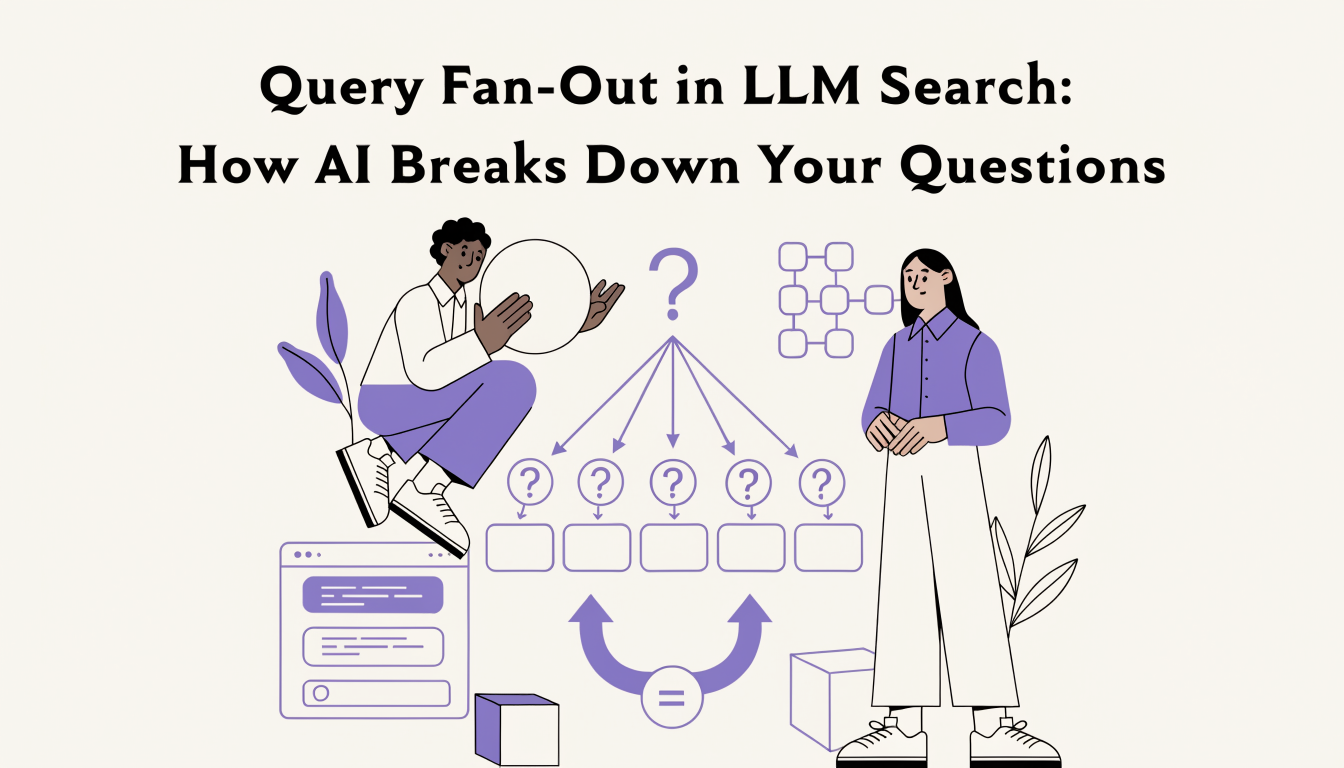
Query Fan-Out in LLM Search: How AI Breaks Down Your Questions
Learn what query fan-out in LLM search is, how AI splits your prompt into 3-8 sub-queries, and how to structure content to win more citation passes.