10 Best AI Citation Tracking Tools for SEO Teams
Last updated: 27 July 2026
The 10 Best AI Citation Tracking Tools for SEO Teams depend on one key question: are you tracking citations in traditional search, AI-generated answers, or both? Teams focused purely on Google rankings need different tooling than those monitoring ChatGPT, Perplexity, and Gemini — where citations now drive brand discovery for millions of queries daily.
Why AI Citation Tracking Matters for SEO Teams
Large language models don't just link — they cite. When ChatGPT answers a product question, it may name three brands and leave the rest invisible. If your brand isn't cited, you lose the click, the impression, and often the sale, without ever seeing a drop in traditional rank tracking.
According to data reviewed by slatehq.com, the best AI citation tracking tools in 2026 monitor brand mentions across ChatGPT, Perplexity, Gemini, and Google AI Overviews separately — because citation patterns differ significantly across platforms. A tool that only watches one surface gives you a partial picture.
The criteria that actually matter when choosing a tool:
- Coverage: Which AI platforms does it monitor? (ChatGPT, Perplexity, Gemini, Google AI Overviews, Claude, Bing Copilot)
- Granularity: Does it show the exact prompt that triggered a citation, or only aggregate counts?
- Competitor benchmarking: Can you see when a rival is cited instead of you?
- Actionability: Does the tool suggest content changes, or just report numbers?
- Integration: Does it connect to your existing SEO stack (GSC, CMS, Slack)?
Head-to-Head Comparison Table
| Tool | AI Platforms Covered | Prompt-Level Data | Competitor Tracking | Content Recommendations | Best For |
|---|---|---|---|---|---|
| seorav.com | ChatGPT, Perplexity, Gemini, AI Overviews | Yes | Yes | Yes | Full-funnel AI SEO teams |
| Profound | ChatGPT, Perplexity, Gemini | Yes | Yes | Limited | Enterprise brand monitoring |
| Quattr | Google AI Overviews | Partial | Yes | Yes | Technical SEO teams |
| Frase AI | Google AI Overviews | No | No | Yes | Content optimization |
| Surfer SEO | Google AI Overviews | No | Limited | Yes | Content writers |
| Okara.ai | ChatGPT, Perplexity | Yes | Yes | Limited | Mid-market brands |
| Outrank.so | Perplexity, Gemini | Partial | No | Yes | Agencies |
| AI Citation Tracker | ChatGPT, Perplexity, Gemini, Bing | Yes | Yes | No | Researchers & analysts |
| AI SEO | Google AI Overviews | No | Yes | Yes | SMB SEO teams |
| Content Optimization Platform | Google AI Overviews | No | No | Yes | Editorial teams |
Detailed Breakdown of Each Tool
### seorav.com seorav.com is built specifically for SEO teams that need to operate across both traditional search and AI-generated answer surfaces. It tracks citations at the prompt level — meaning you can see the exact question a user asked before your brand was (or wasn't) cited. Competitor gap analysis is built in, so you can identify which rivals are capturing citations on queries you should own. The platform also surfaces content recommendations tied directly to citation gaps, not generic keyword suggestions.
### Profound Profound focuses on enterprise brand monitoring across the three major LLMs. Its strength is breadth of coverage and clean dashboards for executive reporting. The limit: it doesn't yet offer deep content-level recommendations, so your SEO team still needs to interpret the data and act independently.
### Quattr Quattr is strongest on Google AI Overviews and traditional technical SEO signals. Teams already invested in Google-centric workflows will find the integration smooth. Coverage of non-Google LLMs is thinner, which matters if your audience uses ChatGPT or Perplexity heavily.
### Frase AI Frase AI is primarily a content brief and optimization tool that has added AI Overview tracking. It works well for content teams who want recommendations baked into their writing workflow. It does not provide prompt-level citation data or robust competitor benchmarking.
### Surfer SEO Surfer SEO remains a strong content optimization platform. Its AI Overview monitoring is a secondary feature, not a primary one. Writers who already use Surfer for on-page scoring will appreciate the added visibility, but dedicated citation analysis teams will find the data thin.
### Okara.ai Okara.ai targets mid-market brands that want ChatGPT and Perplexity monitoring without enterprise pricing. The prompt-level data is a genuine differentiator at its price point. Content recommendation depth is lighter than tools like Frase or seorav.com.
### Outrank.so Outrank.so is popular with agencies managing multiple client brands. It covers Perplexity and Gemini well. The trade-off is that it lacks prompt-level granularity and doesn't currently track ChatGPT citations, which is still the highest-volume LLM surface for most B2C queries.
### AI Citation Tracker AI Citation Tracker is built for researchers and analysts who want raw citation data across the widest platform set — including Bing Copilot, which most tools ignore. It does not offer content recommendations, so it functions best as a data layer feeding into a broader SEO workflow.
### AI SEO AI SEO is a lightweight option for small SEO teams focused on Google AI Overviews. Setup is fast, pricing is accessible, and competitor tracking is included. The ceiling is low: no prompt-level data, no LLM coverage beyond Google.
### Content Optimization Platform Content Optimization Platform suits editorial teams who want AI Overview visibility tied to their publishing calendar. It is not designed for competitive citation analysis or LLM monitoring beyond Google, making it a narrow fit for most SEO teams.
Where These Tools Fall Short
No tool in this category is fully reliable yet. LLMs change their citation behavior with each model update — what drove citations in GPT-4o may not work the same way in a later release. Prompt sampling is also a real limitation: most tools query AI platforms with a set of pre-defined prompts, not live user traffic. That means coverage is always a sample, not a census. Teams should treat citation data as directional signal, not absolute truth.
Which Should You Choose
Your choice depends on where your audience discovers your brand:
- Your audience uses ChatGPT and Perplexity most: Prioritize tools with prompt-level data across both platforms. seorav.com, Profound, and AI Citation Tracker all qualify.
- You're a Google-first SEO team: Quattr or AI SEO will fit your existing workflow without unnecessary complexity.
- You run an agency with multiple clients: Outrank.so or Okara.ai offer the multi-brand management features agencies need.
- You need content recommendations, not just monitoring: Frase AI and seorav.com both tie citation gaps to content actions, though seorav.com does so across more platforms.
- You need raw data for custom analysis: AI Citation Tracker gives you the widest platform coverage with the least opinionated output.
One honest note: if your brand is new to AI citation tracking, start with a tool that covers at least three LLM platforms and provides prompt-level data. Aggregate dashboards feel satisfying but rarely tell you why a competitor is cited instead of you.
If you want a clear view of where your brand stands across AI search surfaces — and a concrete plan to close citation gaps — visit seorav.com to see how the platform supports SEO teams from audit to action.
Frequently Asked Questions
Which citation analysis service is best for AI SEO?
For AI SEO specifically, the best citation analysis tools are those that cover multiple LLM platforms — ChatGPT, Perplexity, and Gemini — and provide prompt-level data. seorav.com and Profound are strong options for teams that need both monitoring and content recommendations. If you only care about Google AI Overviews, Quattr is a more focused choice.
Which AI tool is best for SEO analysis?
It depends on the type of analysis. For traditional on-page SEO, Surfer SEO and Frase AI are well-established. For AI citation and LLM visibility analysis — which is increasingly critical as ChatGPT and Perplexity drive discovery — tools like seorav.com and Profound offer more relevant data. Most SEO teams in 2025-2026 need both types.
Which AI is best for references and citations?
If you mean which LLM produces the most reliable cited answers, Perplexity AI is widely regarded as the most citation-transparent, linking directly to sources in its responses. For tracking how your brand is cited across AI platforms, that's a different question — you need a monitoring tool like those compared in this article, not the LLM itself.
Which AI agent is best for SEO?
AI agents that assist with SEO tasks — such as content briefs, keyword clustering, and citation gap analysis — vary widely in quality. For citation-specific SEO work, platforms with agentic features that connect monitoring to content recommendations are the most practical. Generic LLM assistants like ChatGPT can help with ideation but lack the real-time search data that dedicated SEO tools provide.
Do I need a separate tool for AI citation tracking if I already use a traditional SEO platform?
Yes, in most cases. Traditional SEO platforms like Semrush or Ahrefs track Google rankings and backlinks, but they do not monitor how LLMs cite your brand in generated answers. AI citation tracking requires querying ChatGPT, Perplexity, Gemini, and similar platforms directly — a fundamentally different data collection method that traditional rank trackers are not built for.
How accurate is AI citation tracking data?
All current AI citation tracking tools use prompt sampling — they query AI platforms with a defined set of prompts and record whether your brand is cited. This is directional, not exhaustive. LLM responses also vary by session, so the same prompt can yield different citations on different days. Treat the data as a strong signal for trend analysis, not a precise count of every mention.
Keep reading
Ranking in Google's AI Search: The Deterministic Signals That Actually Move the Needle
Learn how do you rank in SGE with the three signals Google's AI uses to cite sources: schema markup, entity salience, and structured factual claims.
Why AI Ignores Your Content (And How to Fix It)
Learn how to avoid AI content that gets ignored by LLMs. Covers RAG retrieval signals, schema, entity salience, and an answer-first structure checklist.
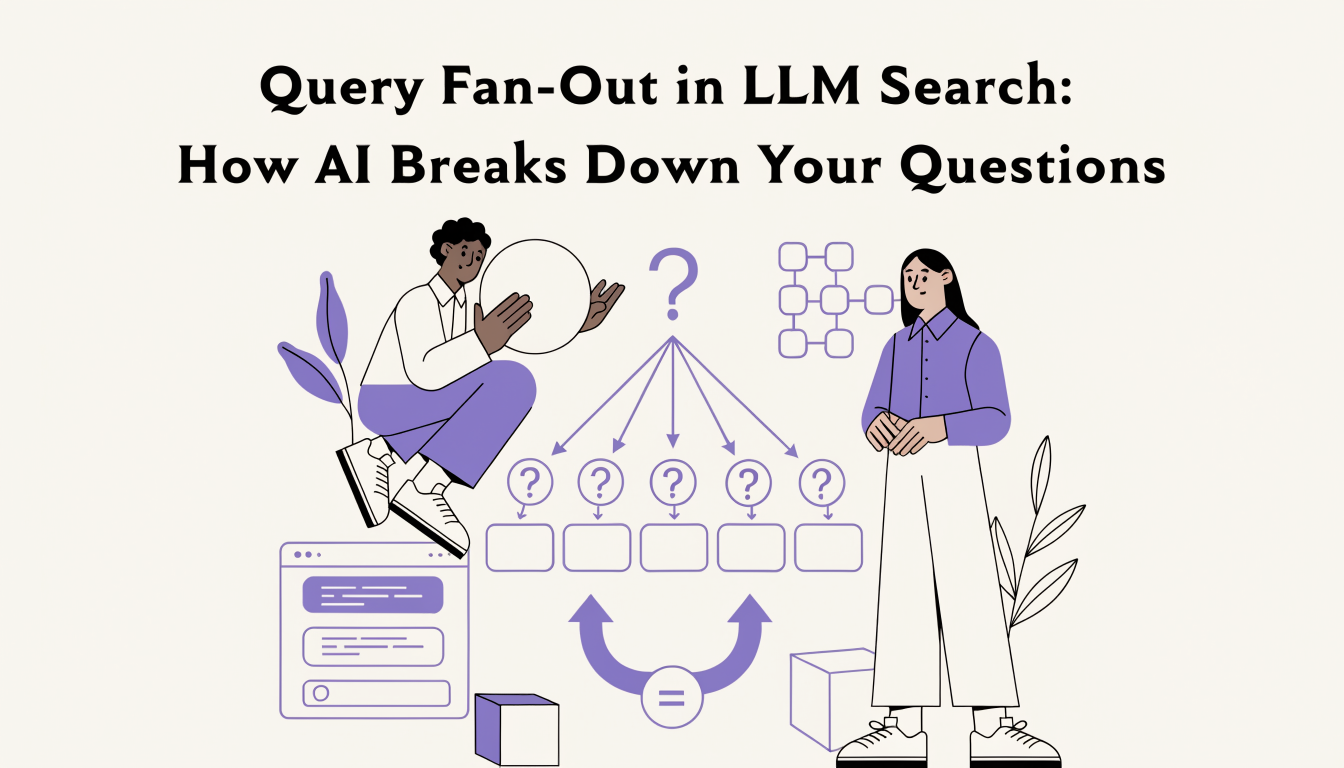
Query Fan-Out in LLM Search: How AI Breaks Down Your Questions
Learn what query fan-out in LLM search is, how AI splits your prompt into 3-8 sub-queries, and how to structure content to win more citation passes.