● Published2,434 wordsAEO 84 / 1008 sources citedFAQ schema
How to Build an Authority Backlinking Strategy That Actually Moves Rankings
The Authority Backlink Problem Most Teams Get Wrong
Most link-building fails because it chases volume over trust. A high count of low-quality links signals manipulation, not authority. The fix is a repeatable authority backlinking strategy that targets editorial relevance first: links from sources Google already treats as credible on your topic.
The volume-first mindset is widespread. Searchlab's 2026 link-building benchmarks↗ searchlab.nl show that 66% of SEO professionals still rate link building as one of the hardest parts of their workflow, and a significant share of that difficulty traces back to chasing quantity metrics rather than domain trust signals.
Google's 2024 core updates made this gap expensive. Sites with thin link profiles, meaning many links from low-relevance or low-authority domains, saw measurable ranking drops. The updates specifically targeted patterns that looked like scaled, non-editorial acquisition.
There is no instant fix here. Building a genuinely authoritative link profile takes months, not weeks. The upside is durability: links earned through editorial relevance tend to hold their value across algorithm updates, while volume-built profiles require constant maintenance just to stay flat.
Every link in a solid authority backlinking strategy should make sense to a human editor before it makes sense to a crawler. Tools like SEORav are built around exactly that principle.
When 300 Backlinks Made a Site Rank Worse
More backlinks can actively hurt rankings if the referring domains are low-quality. A SaaS content team that acquired 300 links in Q1 2024 saw organic traffic drop 18% over six weeks. Google's systems flagged the pattern: too many links from thin, unrelated sites built primarily for link exchange.
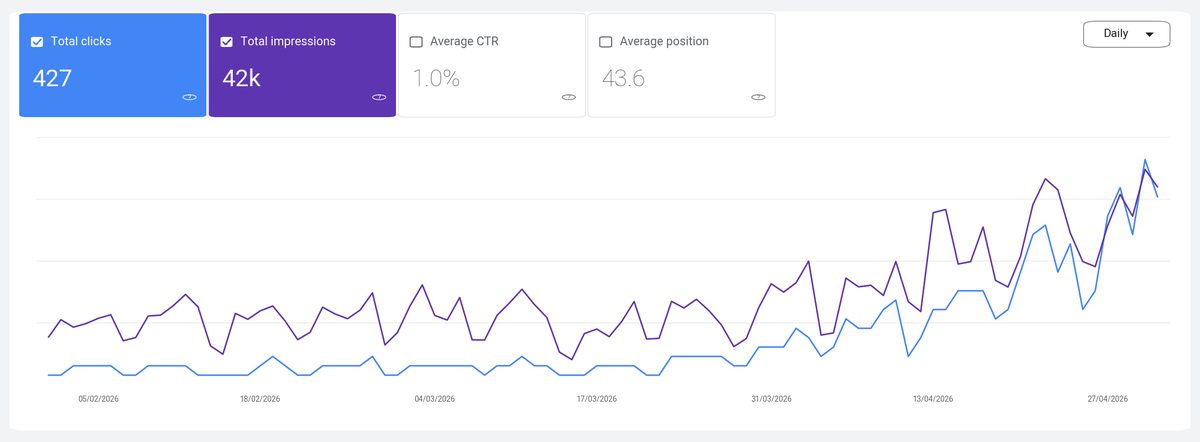
The Search Console data told a clear story. The team's referring domain report showed 74% of new links came from sites with fewer than 10 pages of real content, most of them publishing across a dozen unrelated verticals. Domain authority scores looked passable on the surface, but topical relevance was near zero.
This maps to a well-documented failure mode. Surfer SEO's page authority analysis↗ surferseo.com documents a case where over 2,000 backlinks from weak, link-building-only sites caused a brand's keywords to drop from page one to page five after Google penalized the domain.
The trade-off worth acknowledging: auditing referring domain quality takes real time, and smaller teams often skip it because the volume metric feels easier to report upward. A smaller set of contextually relevant links from real editorial sites will outperform a large batch of low-signal ones almost every time.
The Real Diagnosis: Why Most Link Profiles Fail the Authority Test
Most link profiles fail not because they lack volume, but because they confuse proxy metrics with actual ranking signals. Domain Authority is a third-party score, not a Google input. Google's link graph evaluates topical relevance, trust propagation, and anchor diversity together. A site with 40 highly relevant links from niche-specific sources will routinely outperform one with 400 links from unrelated high-DA domains.
DA Is a Proxy, Not a Goal
Moz created Domain Authority as a predictive model, not a ranking factor. Google has never used it. Teams optimize for DA and end up chasing links from high-scoring domains that have zero topical overlap with their content. A cybersecurity SaaS acquiring links from lifestyle blogs illustrates the failure mode clearly. The DA looks good in a spreadsheet. The ranking impact is close to zero.
How Google Reads Trust Beyond PageRank
Raw PageRank is one input. Google's link graph also evaluates the trust chain: who links to the site that links to you, whether the linking page is indexed and crawled regularly, and whether the surrounding content is semantically related to your target topic. A link from a frequently crawled resource page in your vertical carries more weight than a sitewide footer link from a DA 70 domain Google crawls once a month.
The Compounding Cost of Low-Relevance Links
Low-relevance links dilute anchor diversity because they tend to arrive with generic anchors like "click here" or "source". Over time, that pattern flattens your anchor profile and gives Google less signal about what your pages actually cover. A link profile full of low-trust sources can also suppress how often your own pages get recrawled.
The Common Mistakes That Stall an Authority Backlinking Strategy
Most authority backlinking strategies fail for three reasons: teams chase high domain rating scores without checking niche fit, treat link acquisition as a campaign with a finish line, and neglect the internal link structure that determines how much value any external link actually passes. Each mistake compounds the others.
Chasing DR Without Checking Topical Fit
A DR 85 link from a general lifestyle publication looks impressive in a report. It rarely moves rankings for a B2B SaaS product. A high-authority general link often contributes less than a mid-tier link from a tightly relevant source.
Treating Acquisition as a Sprint
Link building that stops after a campaign ends tends to decay. Referring domains drop off, editorial relationships go cold, and competitors who publish consistently on a topic gradually accumulate more citation equity. The safer model is an ongoing editorial relationship, not a one-time guest post push.
Ignoring Internal Architecture
External links bring authority to a page. Internal links distribute it. Teams that obsess over acquisition while leaving internal link architecture flat let equity pool in a few entry points instead of flowing to the pages that need ranking support.
A Four-Step Framework for Building Genuine Link Authority
Building genuine link authority requires four sequential steps: map topical gaps using competitor link-intersection analysis, create linkable assets grounded in original data, cultivate editorial relationships before any pitch lands in an inbox, and run a monthly audit to confirm link equity is actually flowing to the pages that need it.
Step 1: Map Your Topical Authority Gaps
Pull the backlink profiles of your three closest competitors and run an intersection analysis. Any domain linking to two or more of them but not to you is a gap worth investigating. Prioritize by domain authority and topical relevance, not raw volume.
Step 2: Create Linkable Assets Tied to Original Data
Recycled listicles do not earn editorial links in 2026. Publishers link to things they cannot produce themselves: proprietary survey data, original benchmarks, or a documented methodology. Data-led content earns links at roughly three times the rate of opinion-based posts.
Frequently asked questions
What makes a backlink count as an "authority" link?
Three things: topical relevance to your niche, an editorial placement inside real content rather than a footer or sidebar, and a linking domain with a healthy link profile of its own. A high-DA link with no contextual fit does not clear that bar.
How many authority backlinks do you need to rank on page one?
There is no single number. Median referring-domain counts vary widely by industry and by SERP position, and the quality distribution of your links matters far more than the raw count.
Does a no-follow link from a high-authority site still help SEO?
Yes, indirectly. Since 2019 Google treats no-follow as a hint rather than a strict directive, and the referral traffic and brand signal from a strong publication carry value even when direct PageRank transfer is limited.
How long does it take for a new authority backlink to affect rankings?
Usually two to twelve weeks, depending on how often the linking domain is crawled. Competitive SERPs often need several links before movement shows.
How is an authority backlinking strategy different from a standard campaign?
A campaign is time-boxed and volume-focused. A strategy is ongoing, relationship-driven, and filters for topical alignment, measuring ranking movement and organic lift per link instead of just link count.
Every SEORav article ships exactly like this: researched, cited, answer-first, and live on your own site.
Publish articles like this →